RefHub featured
Book guide and evaluation
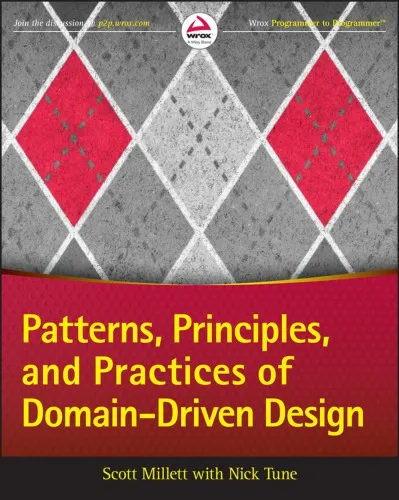
Patterns, Principles and Practices of Domain-Driven Design
Scott Millett,Nick Tune
English
Beginner
Software Architecture
4.7 / 5
0 reviews
2015
Published
795
pages
1910
views
Patterns Principles and Practices of Domain-Driven Design A Comprehensive Guide to Domain-Driven Design Detailed Summary of the Book Patterns Principles and Practices of Domain-Driven Design is a comprehensive guide to Domain-Driven Design DDD a software develo
Before you read
What will you get from this book?
Patterns Principles and Practices of Domain-Driven Design
A Comprehensive Guide to Domain-Driven Design
Detailed Summary of the Book
Patterns Principles and Practices of Domain-Driven Design is a comprehensive guide to Domain-Driven Design DDD a software development approach that focuses on understanding the core business domain and modeling it in code. Written by Scott Millett and Nick Tune the book provides a thorough introduction to the principles patterns and practices of DDD making it an essential resource for software developers architects and domain experts.
The book begins by introducing the fundamentals of DDD including the importance of understanding the business domain the role of the domain model and the concept of bounded contexts. It then delves into the principles of DDD such as the need for a shared language the importance of continuous learning and the role of feedback in the development process.
The authors also explore the various patterns and practices of DDD including entity value object and aggregate patterns as well as the use of repositories factories and domain events. They provide detailed examples and case studies to illustrate the application of these patterns and practices in real-world scenarios.
In addition to the technical aspects of DDD the book also covers the social and cultural aspects of software development including the importance of collaboration communication and continuous improvement. The authors emphasize the need for a shared understanding of the business domain and the importance of involving domain experts in the development process.
Key Takeaways
Some of the key takeaways from the book include
- Understanding the business domain is crucial to developing effective software solutions.
- A shared language and shared understanding of the business domain are essential for successful software development.
- Continuous learning and feedback are critical components of the DDD approach.
- Patterns and practices such as entity value object and aggregate patterns can help to simplify complex business domains.
- Collaboration and communication between developers domain experts and stakeholders are essential for successful software development.
Famous Quotes from the Book
Some notable quotes from the book include
"The domain model is not just a technical artifact but a shared understanding of the business domain that is used to guide the development of the software."
"The goal of DDD is not to create a perfect model of the business domain but to create a model that is good enough to support the development of effective software solutions."
"The use of patterns and practices such as entity value object and aggregate patterns can help to simplify complex business domains but they should not be used as a substitute for a deep understanding of the business domain."
Why This Book Matters
Patterns Principles and Practices of Domain-Driven Design is an essential resource for software developers architects and domain experts who want to improve their understanding of the business domain and develop more effective software solutions. The book provides a comprehensive introduction to the principles patterns and practices of DDD making it an ideal resource for those who are new to the subject.
The book also provides a wealth of practical advice and real-world examples making it a valuable resource for experienced developers who want to improve their skills and knowledge of DDD. The authors' emphasis on the social and cultural aspects of software development also makes the book a valuable resource for those who want to improve their collaboration and communication skills.
Overall Patterns Principles and Practices of Domain-Driven Design is a must-read for anyone who wants to develop a deeper understanding of the business domain and improve their software development skills.
Included in expert paths
Audio introductions
Persian Summary
Ask this book
Your question is answered in the context of this title and author. Each answer uses 2 points.
Sign in to ask the book assistant.
Your previous questions
you said : "This clarity on where to focus effort can also empower teams to look for open source off‐the‐shelf solutions for some of the less important parts of a system" give me some samples about this " open source off‐the‐shelf solutions"
In the context of a domain-driven design, it's essential to focus on the core domain and not reinvent the wheel for non-core functionality. Here are some examples of open source off-the-shelf solutions for less important parts of a system:
1. **Authentication and Authorization**: Instead of implementing custom authentication and authorization logic, consider using established open-source solutions like OAuth, OpenID Connect, or libraries like Keycloak.
2. **Payment Gateways**: For payment processing, you can leverage libraries like Stripe, PayPal, or Braintree, which provide well-tested and maintained functionality.
3. **Caching**: Implement caching using established libraries like Redis, Memcached, or Hazelcast, rather than building your own caching mechanism.
4. **Messaging Systems**: For messaging and event-driven architecture, consider using open-source solutions like Apache Kafka, RabbitMQ, or NATS.
5. **Search Functionality**: Instead of building a custom search functionality, you can integrate open-source search engines like Elasticsearch, Apache Solr, or Lucene.
6. **File Storage**: For file storage, you can use open-source solutions like MinIO, Ceph, or Apache HDFS, rather than building your own storage system.
7. **Logging and Monitoring**: Leverage open-source logging and monitoring tools like ELK Stack (Elasticsearch, Logstash, Kibana), Prometheus, or Grafana, rather than building your own logging and monitoring infrastructure.
By using these off-the-shelf solutions, you can focus your effort on the core domain and unique business logic, rather than reinventing the wheel for non-core functionality.
who are you?
I'm Scott Millett and Nick Tune, co-authors of the book "Patterns, Principles and Practices of Domain-Driven Design". Nice to meet you!
what's main keys that book refers ..?
Our book, "Patterns, Principles, and Practices of Domain-Driven Design", focuses on several key concepts that are essential to applying Domain-Driven Design (DDD) effectively. Here are some of the main keys that the book refers to:
1. **Domain Modeling**: Understanding the business domain, identifying the core domain, and creating a conceptual model of the domain that is shared by everyone involved in the project.
2. **Ubiquitous Language**: Developing a common language and set of concepts that are shared by the business stakeholders and the development team to ensure that everyone is talking about the same thing.
3. **Context Mapping**: Identifying the different contexts within the organization and how they relate to each other, in order to determine the boundaries of the domain model.
4. **Aggregates**: Defining the transactional boundaries and consistency rules for the data and behavior within the domain model, using aggregates as a fundamental building block.
5. **Domain Events**: Modeling the events that occur within the domain, and using them to trigger additional behavior, notify other parts of the system, and maintain the audit trail.
6. **Value Objects**: Using immutable objects to represent sets of values that have a specific meaning within the domain, and ensuring that they are thread-safe and can be safely shared.
7. **Entities**: Modeling the objects within the domain that have identity, state, and behavior, and understanding how they evolve over time.
These are some of the main concepts that are covered in-depth in the book, and are essential to applying DDD effectively in software development projects.
Reader reviews
0 reviews, 4.7 average out of 5
No reviews yet
If you have read this book, help the next reader with your experience.
Write a review
Sign in to publish a review.
Reader questions and answers
Ask a focused question and learn from the community.
Sign in to ask or answer a question.
No questions yet
Be the first to ask a clear, useful question.
What to read next
Related references that continue this learning path.