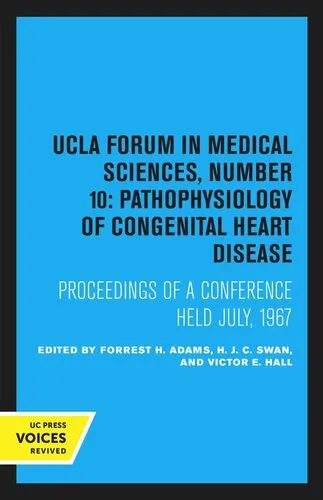
Book guide and evaluation
Pathophysiology of Congenital Heart Disease
Forrest H. Adams (editor);H. J. C. Swan (editor);Victor E. Hall (editor)
English
Beginner
Medical
4.7 / 5
0 reviews
2020
Published
462
pages
522
views
Introduction The journey through the complexities of the human heart, especially congenital defects, is nothing short of a profound exploration into the science of life itself. "Pathophysiology of Congenital Heart Disease," edited by Forrest H. Adams, H. J. C. Swan
Before you read
What will you get from this book?
Introduction
The journey through the complexities of the human heart, especially congenital defects, is nothing short of a profound exploration into the science of life itself. "Pathophysiology of Congenital Heart Disease," edited by Forrest H. Adams, H. J. C. Swan, and Victor E. Hall, stands as an essential resource that presents an in-depth analysis of congenital heart defects, exploring their causes, manifestations, diagnostic procedures, and treatment options. Crafted for both medical professionals and students, this book offers a comprehensive understanding of the multifaceted nature of heart disease from birth.
Detailed Summary of the Book
This book provides a structured exploration of congenital heart diseases, detailed through a combination of clinical findings and research data. It initiates the discussion with the fundamentals of cardiovascular embryology and anatomy, creating a foundation for understanding the subsequent pathological developments. Through meticulous chapters, the editors and contributors cover a broad spectrum of defects, ranging from simple conditions like atrial septal defects to complex anomalies such as tetralogy of Fallot and hypoplastic left heart syndrome.
Each chapter is thoughtfully organized to include the etiology and epidemiology of the diseases, followed by a deep dive into their pathophysiology. Clinical manifestations are thoroughly detailed, with particular attention to their progression from infancy to adulthood. The book also emphasizes modern diagnostic imaging techniques and their role in the early detection and assessment of congenital heart defects.
The editors do not shy away from complex subjects, addressing the genetic and molecular bases of these conditions. They discuss evolving treatment modalities, from surgical interventions to the latest medical therapies, highlighting the transformative impact of technological advancements in cardiology.
Key Takeaways
- Comprehensive coverage of both common and rare congenital heart defects.
- In-depth analysis of the genetic and environmental factors influencing heart disease development.
- Focus on advances in diagnostic imaging and surgical techniques.
- Insightful exploration of long-term patient management and outcomes.
- Discussion of future directions in research and treatment of congenital heart diseases.
Famous Quotes from the Book
"Understanding the heart's development from its embryonic stages offers profound insights into its vulnerabilities and potential failures."
"In the realm of congenital heart disease, knowledge is not merely power; it is the key to life-saving transformations."
Why This Book Matters
"Pathophysiology of Congenital Heart Disease" matters because it bridges the gap between complex medical science and practical clinical application. As congenital heart defect prevalence continues to pose significant challenges worldwide, understanding their pathophysiology remains crucial for improving patient care. The editors' meticulous approach integrates clinical case studies with cutting-edge research, making it an indispensable guide for cardiologists, surgeons, and healthcare professionals dedicated to enhancing the quality of life for individuals with congenital heart conditions.
The book inspires not only the acquisition of technical knowledge but also a profound appreciation of the heart's complexity and resilience. It challenges readers to think critically about current practices and encourages continued innovation in treatment. As a vital educational tool, it contributes significantly to shaping the future of cardiology and patient care.
Ask this book
Your question is answered in the context of this title and author. Each answer uses 2 points.
Sign in to ask the book assistant.
Reader reviews
0 reviews, 4.7 average out of 5
No reviews yet
If you have read this book, help the next reader with your experience.
Write a review
Sign in to publish a review.
Reader questions and answers
Ask a focused question and learn from the community.
Sign in to ask or answer a question.
No questions yet
Be the first to ask a clear, useful question.
What to read next
Related references that continue this learning path.
Annual Plant Reviews, The Moss Physcomitrella patens (Volume 36)
Celia Knight,Pierre-François Perroud,David Cove
2009
View book

Shadow and Substance in British Foreign Policy 1895-1939: Memorial Essays honoring C. J. Moss
B. McKercher,Dr. D. J. Moss
1984
View book