

Book guide and evaluation
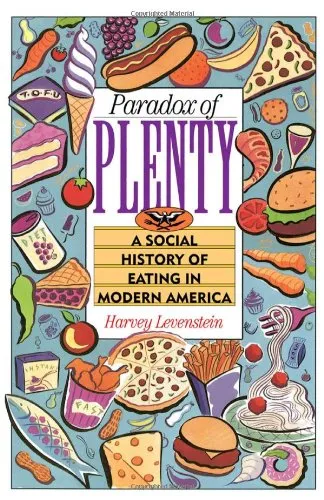
Paradox of Plenty: A Social History of Eating in Modern America
Harvey Levenstein
English
Beginner
Cooking & Culinary Arts
4.9 / 5
0 reviews
1994
Published
358
pages
212
views
Introduction to 'Paradox of Plenty: A Social History of Eating in Modern America' Food is more than mere sustenance; it is a mirror of culture, a testament to social transformations, and a battleground of conflicting ideologies. Few books delve as deeply into this dynamic inte
Before you read
What will you get from this book?
Introduction to 'Paradox of Plenty: A Social History of Eating in Modern America'
Food is more than mere sustenance; it is a mirror of culture, a testament to social transformations, and a battleground of conflicting ideologies. Few books delve as deeply into this dynamic interplay as Paradox of Plenty: A Social History of Eating in Modern America. Authored by Harvey Levenstein, this illuminating volume chronicles the evolution of American eating habits and the societal shifts that have accompanied them. The work is an essential read for those curious about how cultural forces, technological advancements, and shifting ideals have shaped the way Americans eat and think about food.
A Detailed Summary of the Book
The book traces the history of eating in modern America from the late 19th century through the late 20th century. Levenstein explores the paradoxical relationship Americans have with food: the simultaneous abundance and anxiety regarding its consumption. Divided into eras, the book examines the major influences on food production, consumption patterns, and cultural attitudes across decades, from industrialization to the rise of fast food and diet culture.
During the industrial revolution, mechanization and mass production transformed food availability, yet concerns over food purity and safety began to rise. In the early 20th century, nutrition “science” began to shape public attitudes about what constituted a healthy diet, while advertising and processed foods became dominant forces in the marketplace.
Moving into the mid-century, Levenstein delves into how convenience foods and fast-food chains took center stage, reshaping the everyday American diet. Wartime rationing and government campaigns left a lasting impression on how families planned meals. Finally, he brings us into the late 20th century, an era defined by an obsession with dieting, the rise of food activism, and an increasing awareness of the environmental and ethical implications of food production.
The book blends scholarly research with vivid anecdotes, anecdotes that make the historical journey both accessible and gripping for readers. From the mechanized assembly lines of canned goods to the emergence of organic food movements, Levenstein captures the tensions between progress and tradition, indulgence and restraint.
Key Takeaways
- The industrialization of agriculture and food production fundamentally changed eating habits, prioritizing convenience and cost over quality.
- Government policies, marketing strategies, and food industry lobbying have played a significant role in shaping what Americans eat.
- Diet trends often reflect deeper anxieties about health, body image, and moral values, underscoring the cultural significance of food.
- Despite an abundance of food, many Americans live in a state of contradiction, balancing the fear of overeating with a fascination for food culture.
- Food production raises critical ethical and environmental concerns, many of which remain unresolved today.
Famous Quotes from the Book
"One of the great paradoxes of modern America is that in a land of plenty, people have never been more afraid of food."
"The history of eating in America is not simply a tale of nourishment but a narrative of culture, power, and society."
"Convenience did not just change how Americans ate; it fundamentally altered the rhythms of daily life."
Why This Book Matters
Paradox of Plenty is more than just a history book. It is a sharp critique of the forces that govern what ends up on our plates and a reflection on the broader social and cultural tensions of modern America. Whether debating the ethics of industrial farming, the implications of processed foods, or the societal fixation on dieting, Levenstein offers a finely balanced perspective that is rich in detail and nuance.
For historians, it is a valuable insight into the intersection of food and society. For everyday readers, it provides an eye-opening revelation about how controlled and constructed modern eating habits truly are. Above all, it encourages readers to think more critically about the choices they make, not just at the dinner table, but as participants in the global food system.
As issues like food insecurity, obesity, and climate change take center stage in contemporary discussions, this book’s historical perspective offers important lessons that resonate today. By understanding the roots of America’s eating paradoxes, readers can glean insights relevant to both personal behavior and collective action.
Ask this book
Your question is answered in the context of this title and author. Each answer uses 2 points.
Sign in to ask the book assistant.
Reader reviews
0 reviews, 4.9 average out of 5
No reviews yet
If you have read this book, help the next reader with your experience.
Write a review
Sign in to publish a review.
Reader questions and answers
Ask a focused question and learn from the community.
Sign in to ask or answer a question.
No questions yet
Be the first to ask a clear, useful question.
What to read next
Related references that continue this learning path.



Modern Computer Vision with PyTorch: A Practical Roadmap From Deep Learning Fundamentals to Advanced Applications and Generative AI, 2nd Edition
V Kishore Ayyadevara,Yeshwanth Reddy
2023
View book