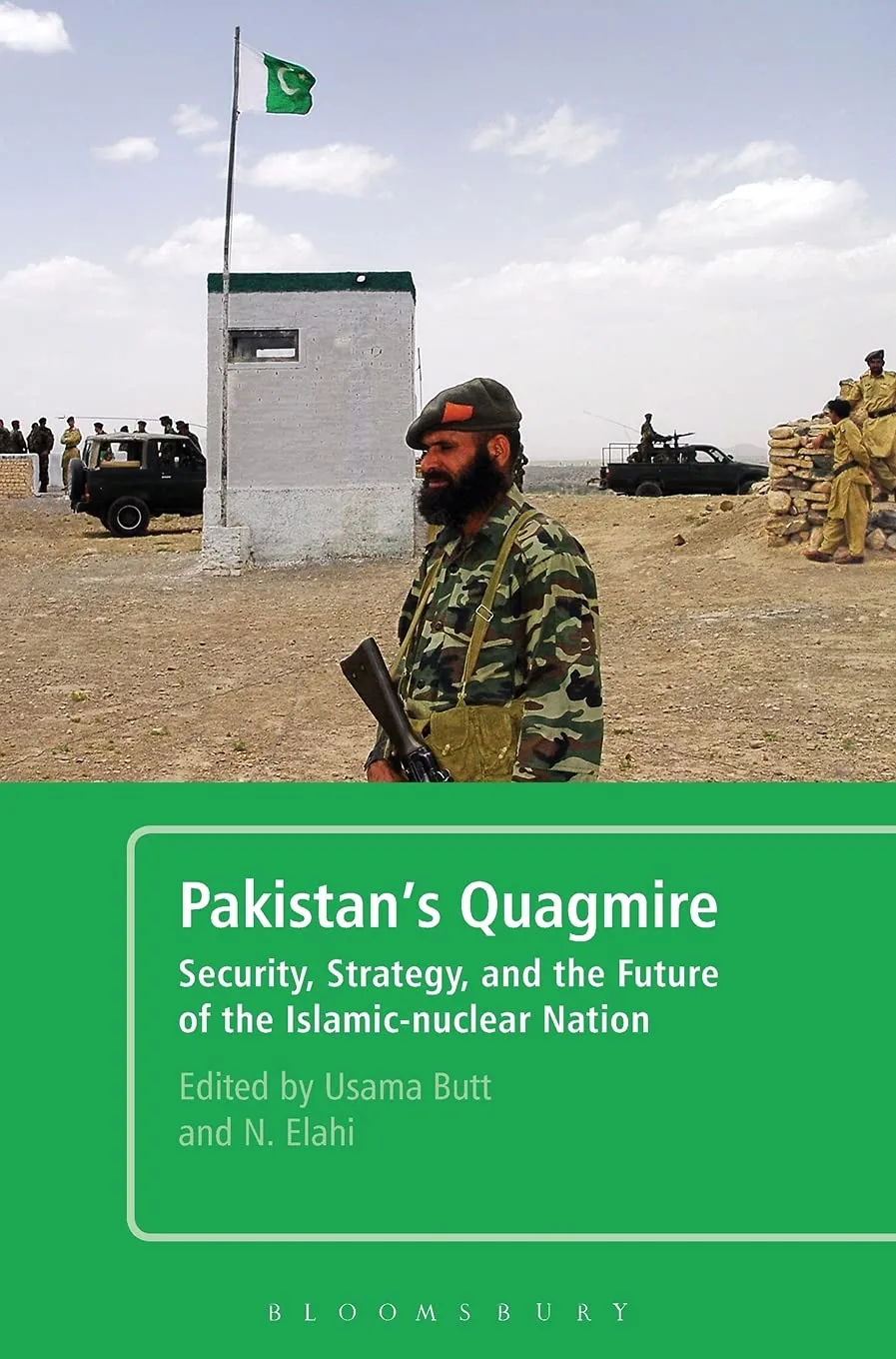
Pakistan's Quagmire: Security, Strategy, and the Future of the Islamic-Nuclear Nation
Usama Butt (editor),N. Elahi (editor)
2010
View book
Book guide and evaluation
Christophe Jaffrelot
0 reviews
Published
pages
views
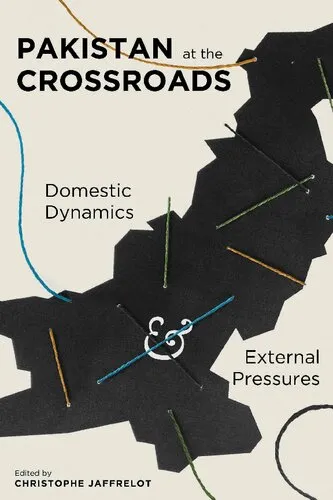
Introduction to 'Pakistan at the Crossroads: Domestic Dynamics and External Pressures' Christophe Jaffrelot’s ‘Pakistan at the Crossroads: Domestic Dynamics and External Pressures’ is a seminal work that delves deep into the intricate tapestry of Pakistan’s domesti
Before you read
Christophe Jaffrelot’s ‘Pakistan at the Crossroads: Domestic Dynamics and External Pressures’ is a seminal work that delves deep into the intricate tapestry of Pakistan’s domestic and international challenges. This book offers a comprehensive understanding of the political, historical, and socio-economic forces that have shaped Pakistan’s trajectory since its creation in 1947. Situated at the intersection of religion, culture, and geopolitics, Pakistan’s identity has continued to evolve amidst an array of internal and external pressures, making the country a critical study in modern nation-building.
This volume brings together some of the foremost scholars and experts on Pakistan to explore its political roots, societal dynamics, and foreign relations. By examining a confluence of domestic challenges like civil-military relations, provincial dissent, and the rise of extremism, alongside external pressures including its ties with neighboring India, China, and the United States, Jaffrelot seeks to unravel the central question of Pakistan's stability and future direction. Through well-researched chapters, the book presents an intricate picture of a nation constantly balancing between democratic aspirations and authoritarian underpinnings, making it essential for readers interested in South Asia and global politics.
‘Pakistan at the Crossroads’ is divided into several thought-provoking chapters that systematically examine Pakistan’s domestic and foreign policy dynamics. Christophe Jaffrelot begins by contextualizing Pakistan’s political evolution, highlighting the foundational role of Islam in its identity and governance. The book scrutinizes the growing civil-military imbalance, where the military establishment continues to dominate civilian administrations, curbing the evolution of democracy.
The author also sheds light on the complex interplay of regionalism and nationalism. From Balochistan to Sindh, the provincial struggles reflect a deeper crisis of representation and governance. In addition, the growing menace of extremism, intertwined with sectarian tensions, is critically analyzed as a significant challenge for Pakistan’s unity and international reputation. Several chapters address socio-economic obstacles, such as growing inequality, rampant corruption, and institutional decay, which hinder Pakistan’s progress on the global stage.
On the international front, Jaffrelot examines the pressures exerted by Pakistan’s entanglement with its powerful neighbors—India, Afghanistan, and China—and its fraught partnership with the United States. Pakistan’s strategic geography, while a blessing for its geopolitical importance, has also left it vulnerable to constant meddling by global powers. Overall, the book illustrates how Pakistan’s domestic troubles interweave with its external relations in creating a persistently precarious balance.
“Pakistan’s predicament is not just rooted in its history; it is constantly being renegotiated by those who hold power.”
“The military’s supremacy is both a symptom and a cause of the country’s struggles with democracy.”
“Pakistan’s geography makes it indispensable, and yet its internal turmoil renders it unreliable to the international community.”
Pakistan occupies a central position in global geopolitics due to its strategic location and its role in major international events, from the Cold War to the post-9/11 world order. ‘Pakistan at the Crossroads’ provides essential insights into understanding why the country has persistently struggled with governance, identity, and stability. It is an indispensable text for policy analysts, historians, political scientists, and anyone seeking to grasp the challenges faced by a nuclear-armed state navigating its internal chaos and external pressures.
Moreover, Jaffrelot’s work stands out for its balanced approach—neither idealizing nor demonizing Pakistan, but instead providing a nuanced examination of its multi-faceted reality. It serves as a reminder of the importance of strengthening democratic institutions, promoting socio-economic reforms, and addressing extremism to ensure Pakistan’s long-term stability and prosperity. In a world increasingly interconnected, the insights offered by this meticulously researched book are invaluable for understanding the stakes of a stable and prosperous South Asia.
Your question is answered in the context of this title and author. Each answer uses 2 points.
0 reviews, 4.5 average out of 5
Sign in to publish a review.
Ask a focused question and learn from the community.
Related references that continue this learning path.
Usama Butt (editor),N. Elahi (editor)