
The Harriet Lane Handbook, 19th Edition
Johns Hopkins Hospital,Kristin Arcara,Megan Tschudy MD
2011
View book
Book guide and evaluation
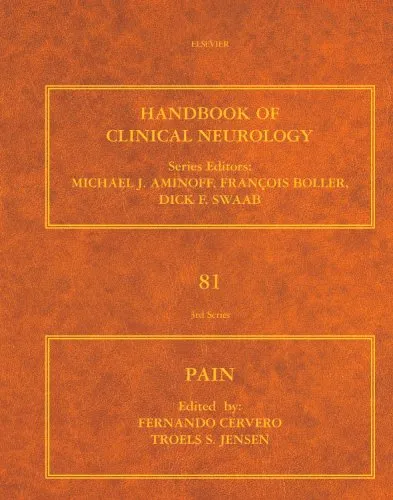
Fernando Cervero,Troels Staehelin Jensen
0 reviews
Published
pages
views
The profound and intricate nature of pain, both as a clinical symptom and a field of scientific inquiry, is masterfully explored in the comprehensive volume "Pain: Handbook of Clinical Neurology." Authored by renowned experts Fernando Cervero and Troels Staehelin Jensen, this b
Before you read
The profound and intricate nature of pain, both as a clinical symptom and a field of scientific inquiry, is masterfully explored in the comprehensive volume "Pain: Handbook of Clinical Neurology." Authored by renowned experts Fernando Cervero and Troels Staehelin Jensen, this book serves as an essential guide for clinicians, researchers, and anyone seeking to deepen their understanding of pain's complex neural mechanisms and its multifaceted treatment approaches.
This book is an authoritative reference in the field of pain management and neuroscience. It collates an extensive body of research and clinical findings to present a thorough analysis of pain from various perspectives. The authors delve into the neurobiological foundations of pain, examining the intricacies of the nervous system and how it processes pain signals. They explore different types of pain, such as acute, chronic, neuropathic, and nociceptive pain, providing insight into their distinct mechanisms and manifestations.
Furthermore, the handbook discusses the psychological and social dimensions of pain, emphasizing the importance of a holistic approach to pain management. It also addresses cutting-edge treatment modalities, including pharmacological interventions, psychological therapies, and emerging technologies like neurostimulation and gene therapy. Throughout the book, the authors advocate for personalized treatment plans that consider individual patient profiles, ensuring the most effective and compassionate care.
“Pain is not just a physical experience but a multifaceted one that touches every aspect of our existence.”
“Understanding the neurobiological mechanisms of pain can unlock potential pathways for innovative treatments.”
“The goal of pain management should always be to enhance the quality of life for patients, respecting their individual experiences and needs.”
In an era where chronic pain affects millions worldwide, understanding pain's underlying causes and effective treatment options is of paramount importance. "Pain: Handbook of Clinical Neurology" stands out as a vital resource by bridging the gap between theoretical knowledge and clinical practice. It reinforces the necessity for an interdisciplinary approach in medical practice, one that incorporates neural science, psychology, and a patient-centered philosophy.
This book is not only a testament to the advances in neuroscience but also a guidebook for future innovations in pain management. By fostering a deeper understanding of pain, it empowers healthcare professionals to make informed decisions, ultimately improving patient care and outcomes. Moreover, its emphasis on personalized and compassionate care speaks to its relevance in contemporary medicine, where the patient's voice and experience are increasingly recognized as central to treatment success.
Your question is answered in the context of this title and author. Each answer uses 2 points.
0 reviews, 4.7 average out of 5
Sign in to publish a review.
Ask a focused question and learn from the community.
Related references that continue this learning path.
Johns Hopkins Hospital,Kristin Arcara,Megan Tschudy MD