Harrison's Principles of Internal Medicine 16th Edition
Dennis L. Kasper,Eugene Braunwald,Stephen Hauser,Dan Longo,J. Larry Jameson,Anthony S. Fauci
2004
View book
Book guide and evaluation
David A. Warrell,Timothy M. Cox,John D. Firth,Sir David Weatherall,Edward J. Benz Jr. M.D.
0 reviews
Published
pages
views
Introduction to the Oxford Textbook of Medicine The "Oxford Textbook of Medicine" is a pivotal reference work that has shaped the perceptions and practices of physicians globally. This comprehensive medical textbook is renowned for encapsulating the vast array of contemp
Before you read
The "Oxford Textbook of Medicine" is a pivotal reference work that has shaped the perceptions and practices of physicians globally. This comprehensive medical textbook is renowned for encapsulating the vast array of contemporary medical knowledge into a coherent, accessible format. Designed as a definitive guide for internists, general practitioners, and specialists, the text covers an extensive range of topics within internal medicine, expertly curated by leading authorities in the field.
The "Oxford Textbook of Medicine" serves as an authoritative resource, fulfilling the educational needs of clinicians and researchers worldwide. The book is organized into thematic sections, each delving into distinct areas of medical science. These sections cover the fundamentals of clinical medicine, evidence-based approaches, diagnosis, therapeutics, and patient management. Complex subjects such as genetic disorders, infectious diseases, organ-specific conditions, and systemic diseases are explored in depth. By integrating up-to-date research with clinical insights, this textbook aids in bridging the gap between scientific discovery and practical medical applications.
One of the primary takeaways from the "Oxford Textbook of Medicine" is the emphasis on a holistic approach to patient care. It encourages clinicians to consider not just the disease but the individual experiencing it, promoting compassionate and patient-centered care.
Moreover, the textbook underscores the importance of continual learning and adaptability in the ever-evolving landscape of medical science. The breadth of the covered topics reflects the dynamic nature of medicine and the necessity for practitioners to remain informed about the latest advancements and clinical practices.
The textbook is replete with insightful statements that encapsulate its ethos. A standout quote often highlighted is, "The right balance of science and humanity is paramount in medicine. Knowledge cures diseases, but compassion and understanding heal patients."
Another memorable quote is, "Doctors hold the power to diagnose, but they must always choose collaboration over isolation, as the synthesis of knowledge comes from sharing ideas and experiences."
The significance of the "Oxford Textbook of Medicine" lies in its comprehensive coverage and enduring utility as a reference source across diverse medical specialties. It is not only a staple in academic environments but also a fundamental resource in clinical settings, helping practitioners make informed decisions.
Furthermore, this textbook is pivotal in shaping medical curricula worldwide, influencing the education and training of upcoming generations of doctors. It fosters a deep understanding of the principles and practices of modern medicine, equipping healthcare professionals with tools to deliver high-quality care.
In the context of medical literature, its role as a bridge between theoretical knowledge and real-world clinical practice cannot be overstated. As medical challenges grow increasingly complex, the "Oxford Textbook of Medicine" remains a beacon of clarity and guidance.
Your question is answered in the context of this title and author. Each answer uses 2 points.
0 reviews, 4.7 average out of 5
Sign in to publish a review.
Ask a focused question and learn from the community.
Related references that continue this learning path.
Dennis L. Kasper,Eugene Braunwald,Stephen Hauser,Dan Longo,J. Larry Jameson,Anthony S. Fauci
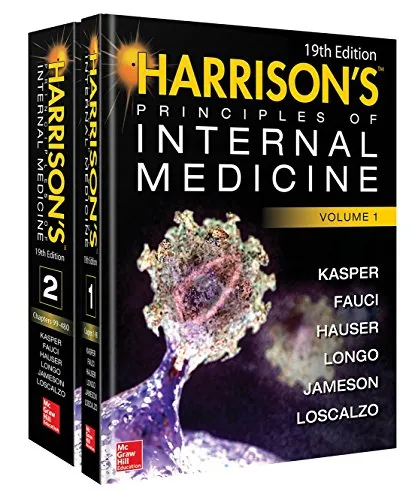
Dennis Kasper,Anthony Fauci,Stephen Hauser,Dan Longo,J. Jameson,Joseph Loscalzo