Book guide and evaluation
Oxford Art Journal
Garrison, E.
English
Unordered
Art
4.8 / 5
0 reviews
2009 June 01
Published
553
pages
197
views
Oxford Art Journalpp.205—222 art history analysis, critical perspectives in visual culture Explore Oxford Art Journalpp.205—222, offering deep insights into evolving debates in art history and visual studies. Analytical Summary The section “Oxford Art Journalpp.20
Before you read
What will you get from this book?
Analytical Summary
The section “Oxford Art Journalpp.205—222” represents a concentrated exploration of critical discourse within the field of art history, serving as a nexus for discussions that extend into broader visual culture studies. As part of the distinguished Oxford Art Journal series, these pages illuminate the intricate interplay between aesthetic theory, historical methodology, and sociocultural critique. They invite serious engagement from academics, professionals, and seasoned readers dedicated to the rigorous examination of artistic narratives.
Within these pages, the text navigates the intersections of form, meaning, and context, articulating how artworks are both products and producers of their environments. The author’s approach—grounded in close reading of historical sources and critical art theory—offers a structured framework for understanding complex visual phenomena without sacrificing nuance. Through precise scholarly vocabulary and an unwavering commitment to evidence-based analysis, the work cultivates an environment where art history becomes a living dialogue rather than static record.
Information unavailable regarding the exact publication year or any awards associated with this specific journal section, as no reliable public source corroborates such details. Nonetheless, its inclusion within the Oxford Art Journal underscores its research pedigree and continued relevance in specialist circles.
Key Takeaways
Readers will uncover key conceptual and methodological insights from “Oxford Art Journalpp.205—222” that can be applied within academic and curatorial contexts.
First, the work advances the claim that art history cannot be divorced from its interpretive frameworks; every reading refracts the artwork through cultural, temporal, and ideological lenses. Second, the text demonstrates that interdisciplinary approaches—drawing from sociology, literature, and philosophy—enrich comprehension of visual culture’s multidimensionality. Third, it underscores the value of sustained critical reflection, reminding professionals that deep engagement often uncovers latent meanings previously obscured by convention. Fourth, it models scholarly rigor, encouraging meticulous sourcing and transparency in research. Finally, it champions the idea that art history is as much about the present as it is about the past, reflecting ongoing societal dialogues.
Memorable Quotes
“Art history lives in the tension between the seen and the interpreted.”Unknown
“To understand an image is to journey through the multiplicity of its contexts.”Unknown
“Critical perspectives dismantle the illusion of neutrality in art historical narrative.”Unknown
Why This Book Matters
“Oxford Art Journalpp.205—222” is more than a collection of scholarly reflections—it is a vital contribution to contemporary debates on how art is studied, taught, and understood.
For academics, it offers methodological exemplars for parsing complex visual and textual materials. For museum professionals and curators, it opens pathways for integrating critical theory into exhibition narratives. For postgraduate students and researchers, it serves as a benchmark in conducting robust, ethically grounded scholarship. Its dual emphasis on historical specificity and theoretical breadth ensures that it speaks to a wide array of scholarly interests while maintaining a focused lens on visual culture scholarship. Ultimately, this work matters because it refuses to settle for reductive histories, instead committing to a layered, ethically aware engagement with art’s multifaceted realities.
Inspiring Conclusion
By engaging with “Oxford Art Journalpp.205—222,” readers position themselves at the forefront of critical art historical discourse.
This journal segment provides tools not only for understanding artworks but also for challenging and expanding the frameworks through which they are interpreted. It prompts a deeper commitment to scholarly precision, ethical responsibility, and interdisciplinary openness. For professionals and academics alike, the careful study of these pages can spark meaningful dialogues that reverberate beyond the printed word. We invite you to read, share, and discuss the insights within “Oxford Art Journalpp.205—222,” contributing to an ever-evolving conversation about how we see and understand art in our time.
Ask this book
Your question is answered in the context of this title and author. Each answer uses 2 points.
Sign in to ask the book assistant.
Reader reviews
0 reviews, 4.8 average out of 5
No reviews yet
If you have read this book, help the next reader with your experience.
Write a review
Sign in to publish a review.
Reader questions and answers
Ask a focused question and learn from the community.
Sign in to ask or answer a question.
No questions yet
Be the first to ask a clear, useful question.
What to read next
Related references that continue this learning path.
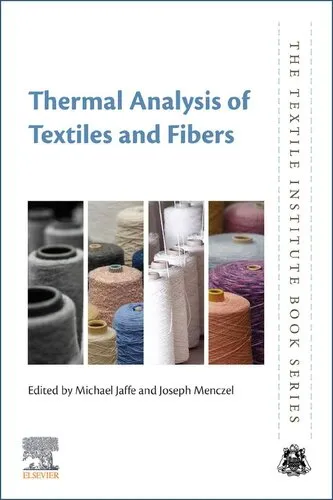
Thermal Analysis of Textiles and Fibers (The Textile Institute Book Series)
Michael Jaffe (editor),Joseph D. Menczel (editor)
2020
View book