
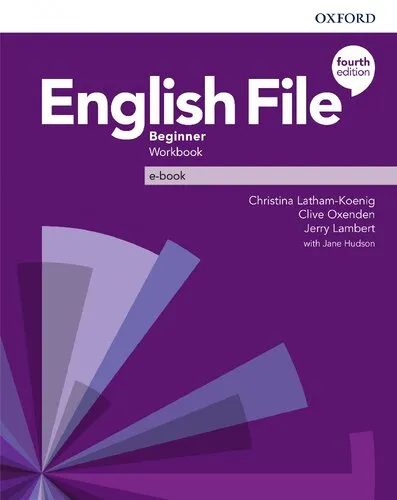
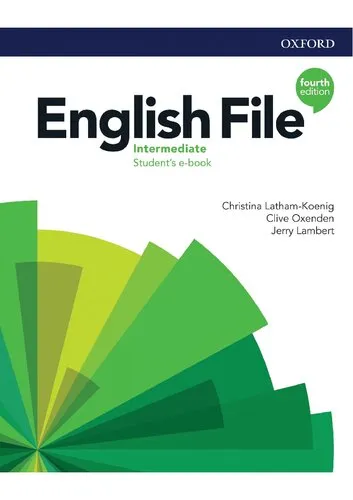
English File Fourth Edition Beginner Workbook
Christina Latham-Koenig,Clive Oxenden,Jerry Lambert,with Jane Hudson
2020
View book
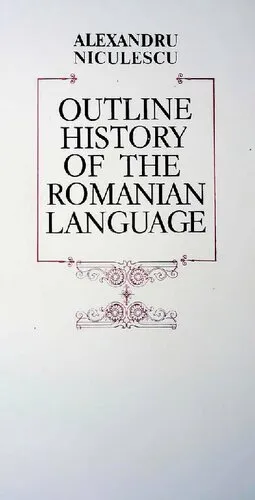
Book guide and evaluation
Alexandru Nicolescu;Andrei Bantaș, (transl.)
0 reviews
Published
pages
views
Introduction to "Outline History of the Romanian Language" The Romanian language, with its rich history and cultural significance, stands as a testament to the resilience and evolution of a people deeply rooted in the Latin tradi
Before you read
The Romanian language, with its rich history and cultural significance, stands as a testament to the resilience and evolution of a people deeply rooted in the Latin tradition. "Outline History of the Romanian Language" by Alexandru Nicolescu and translated by Andrei Bantaș is a comprehensive exploration of the linguistic and historical development of Romanian. This book provides readers with an in-depth look at how Romanian evolved over centuries, touching upon its Latin roots, its interactions with neighboring cultures, and the sociopolitical contexts that shaped it into the language we know today. Engaging and meticulously researched, this work sheds light on one of Eastern Europe's most fascinating languages.
"Outline History of the Romanian Language" offers a rich, detailed narrative starting from the Roman conquest of Dacia in 106 AD, which laid the foundation for the formation of the Romanian language. The book traces the evolution of Romanian through subsequent centuries, examining the profound Latin influence on its structure and vocabulary. It also discusses external influences from Slavic, Hungarian, Greek, and Turkish languages, providing insights into how the Romanian lexicon and syntax reflect these interactions.
Nicolescu divides the history of the Romanian language into several key periods: the Latin period, the transition phase during the migration of various peoples, the emergence of medieval Romanian, and finally, the modern era of linguistic standardization. He focuses not only on phonetics and grammar but also on social and historical forces like the occupation of Dacia, the fragmentation of the Roman Empire, and the rise of Romanian nationalism. The narrative skillfully weaves together linguistic analysis with historical anecdotes, making it accessible to linguists and casual readers alike.
"Romanian stands as a beacon of continuity, a testament to the Latin legacy in an ocean of Slavic tongues."
"Languages are the diaries of civilizations. Romanian holds within it the story of an empire’s fall and a nation’s rise."
"Outline History of the Romanian Language" is not just a linguistic treatise; it is a bridge between history, identity, and culture. At its core, the book serves as a reminder of the resilience of Romanian identity throughout centuries of conquest, migration, and cultural exchange. It is invaluable for linguists and historians, offering a clear roadmap of the language’s evolution while situating it within broader regional and European contexts. For readers curious about Romania and its people, this book is both a gateway and a compelling narrative of how language shapes—and is shaped by—history.
Your question is answered in the context of this title and author. Each answer uses 2 points.
0 reviews, 3.8 average out of 5
Sign in to publish a review.
Ask a focused question and learn from the community.
Related references that continue this learning path.
Christina Latham-Koenig,Clive Oxenden,Jerry Lambert,with Jane Hudson
Mike Boyle,Christina Latham-Koenig,Clive Oxenden
Christina Latham-Koenig,Clive Oxenden,Kate Chomacki
Christina Latham-Koenig,Clive Oxenden,Kate Chomacki