Book guide and evaluation
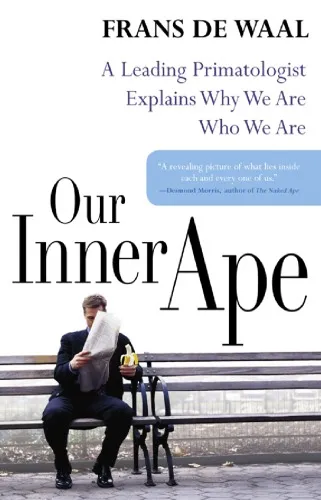
Our inner ape: a leading primatologist explains why we are who we are
Waal,Frans B. M
English
Advanced
Politics
4.6 / 5
0 reviews
2005
Published
304
pages
510
views
Introduction to "Our Inner Ape: A Leading Primatologist Explains Why We Are Who We Are" Written by Frans de Waal, "Our Inner Ape" offers a fascinating exploration into the depths of human nature and its origins. By delving into the behavior of our closest primate relatives, ch
Before you read
What will you get from this book?
Introduction to "Our Inner Ape: A Leading Primatologist Explains Why We Are Who We Are"
Written by Frans de Waal, "Our Inner Ape" offers a fascinating exploration into the depths of human nature and its origins. By delving into the behavior of our closest primate relatives, chimpanzees and bonobos, this book provides a unique perspective on human instincts, morality, and social behaviors.
Detailed Summary of the Book
In "Our Inner Ape," Frans de Waal invites us to look into a mirror held up by our closest animal relatives—chimpanzees and bonobos. These two species share a vast amount of genetic information with humans and yet display a vast array of differing behaviors. De Waal, a renowned primatologist, draws on decades of observational research to highlight how certain aspects of human nature are mirrored in these primates.
The book is divided into sections that address various elements of human nature such as empathy, aggression, power dynamics, and sexual behavior. De Waal underscores the stark differences between chimpanzees and bonobos, using these contrasts to illuminate the duality in human behavior. Chimpanzees are often aggressive and hierarchical, while bonobos exhibit social harmony and empathy, thus reflecting the spectrum of human societal structures.
Through vivid storytelling and scientific insight, de Waal engages the reader’s curiosity, examining where human kindness and cruelty stem from, and how history and evolution have sculpted human psychological traits.
Key Takeaways
- The Dual Nature of Humanity: By studying our primate relatives, we learn that humans have an inherent duality influenced by both aggressive and nurturing tendencies.
- Empathy and Cooperation: Bonobos highlight the importance of empathy and collaboration as powerful tools for social cohesion and peace.
- Power Dynamics: Observations of chimpanzees reveal insights into human ambition, leadership, and social structures.
- Origins of Morality: Our basic sense of right and wrong can be traced back to the evolution of social behaviors in primates.
Famous Quotes From the Book
"We have inner demons to tame and inner angels to embrace."
"Our moral behavior is built on our social nature."
Why This Book Matters
"Our Inner Ape" is more than just a scientific text; it is a profound exploration of what it means to be human. By juxtaposing human behavior with that of our closest relatives, de Waal challenges readers to reflect on their own nature and societal norms. His approachable style, enriched with anecdotes and empirical research, makes complex scientific concepts accessible to a broader audience.
This book is particularly significant in fostering an understanding of the biological underpinnings of human behavior. It encourages empathy and awareness, urging us to consider how our actions reflect both our evolutionary past and potential future. In a world rife with conflict, this work serves as an important reminder of our natural propensity for peace and cooperation.
Overall, "Our Inner Ape" is an essential read for anyone interested in anthropology, psychology, or evolutionary biology, as well as those who are simply curious about the human condition.
Ask this book
Your question is answered in the context of this title and author. Each answer uses 2 points.
Sign in to ask the book assistant.
Reader reviews
0 reviews, 4.6 average out of 5
No reviews yet
If you have read this book, help the next reader with your experience.
Write a review
Sign in to publish a review.
Reader questions and answers
Ask a focused question and learn from the community.
Sign in to ask or answer a question.
No questions yet
Be the first to ask a clear, useful question.
What to read next
Related references that continue this learning path.
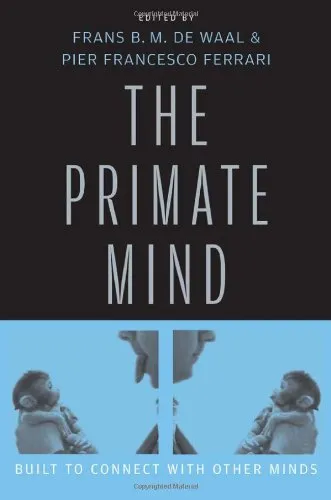
The Primate Mind: Built to Connect with Other Minds
Frans B. M. de Waal,Pier Francesco Ferrari
2012
View book