From Old English to Standard English: A Course Book in Language Variation Across Time
Dennis Freeborn (auth.)
1992
View book
Book guide and evaluation
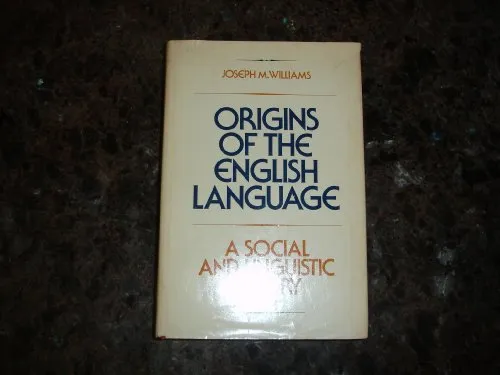
Joseph M Williams
0 reviews
Published
pages
views
Origins of the English language, a social and linguistic history History of English linguistics, Evolution of English language Origins of the English language, a social and linguistic history explores how English evolved through social and linguistic forces. Analytic
Before you read
The work Origins of the English language, a social and linguistic history by Joseph M. Williams offers an in-depth exploration of how the English language developed from its earliest roots to its modern form, emphasizing the intricate interplay of linguistic evolution and social dynamics.
Through meticulous research and clear exposition, Williams examines the transformation of English across centuries, tracing its journey from Indo-European origins through Old English, Middle English, Early Modern English, and contemporary usage. Each stage is presented within its social and historical context, ensuring readers grasp not only the structural changes but also the cultural forces at play.
The book situates linguistic changes alongside momentous historical events such as political shifts, migrations, and technological advancements, showing how language reflects the lived reality of its speakers. In doing so, it goes beyond a strict linguistic account, weaving in anthropology, sociology, and history to enrich understanding.
While highly analytical, the narrative remains accessible, balancing scholarly rigor with a readable style. This makes it valuable for academics, language professionals, and engaged general readers aiming to appreciate the deep roots and evolving nature of English.
This book delivers several core insights that illuminate both the structural progression of English and the societal influences shaping it.
First, linguistic transformation is inseparable from historical context; shifts in pronunciation, grammar, and vocabulary often mirror socio-political movements.
Second, English is not monolithic—its evolution includes regional variations, dialectal diversity, and contact with other languages through trade, conquest, and colonization.
Third, understanding the past of English helps predict future trends, offering valuable perspectives for educators, translators, and linguists.
Lastly, the book underscores that language is a living entity, continually shaped by its speakers, their identities, and interactions.
“Language is history written in the sounds we speak.” Unknown
“To understand a language is to understand the people who speak it.” Unknown
“Social forces shape words just as winds shape the land.” Unknown
Origins of the English language, a social and linguistic history stands out for bridging the gap between linguistic theory and historical reality.
For academics, it offers a solid foundation for teaching and research, linking structural linguistic analysis with socio-historical insights. For professionals in education, language policy, or translation, it presents contextual knowledge essential for nuanced communication strategies.
Its relevance also extends to cultural historians, providing evidence of how language change mirrors societal transformation. Given the global dominance of English today, understanding these roots is both intellectually enriching and practically useful.
In reading Origins of the English language, a social and linguistic history, one gains more than knowledge about linguistic structures; one witnesses a narrative of human history told through words.
This authoritative yet inviting work reminds us that English is a product of countless interactions, migrations, and innovations. Whether you are an academic, a historian, or a language enthusiast, exploring its development is a gateway to understanding how societies evolve.
Now that you’ve glimpsed the depth and scope of this exploration, take the next step—read the book, discuss its insights, and share your reflections with peers. In doing so, you contribute to the ongoing conversation about the origins, evolution, and future of the English language.
Your question is answered in the context of this title and author. Each answer uses 2 points.
0 reviews, 4.3 average out of 5
Sign in to publish a review.
Ask a focused question and learn from the community.
Related references that continue this learning path.
Dennis Freeborn (auth.)