

Solutions Architect's Handbook - Third Edition: Kick-start your career with architecture design principles, strategies, and generative AI techniques
Saurabh Shrivastava,Neelanjali Srivastav
2024
View book
Book guide and evaluation
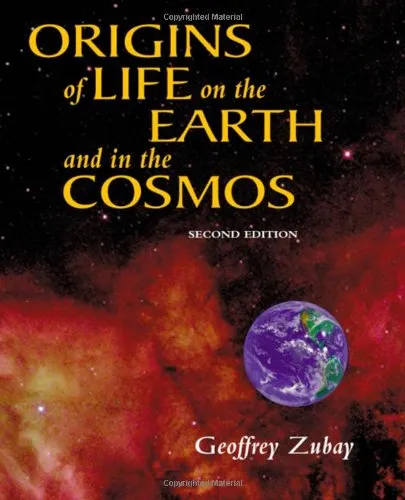
Geoffrey Zubay
0 reviews
Published
pages
views
Introduction to 'Origins of Life: On Earth and in the Cosmos' Understanding the origins of life is one of the most profound scientific questions of our time. In 'Origins of Life: On Earth and in the Cosmos,' I delve into the complex and fascinating journey of how life began, e
Before you read
Understanding the origins of life is one of the most profound scientific questions of our time. In 'Origins of Life: On Earth and in the Cosmos,' I delve into the complex and fascinating journey of how life began, existed, and possibly could exist beyond our planet. This book serves as an exploration of both the known and theoretical aspects of life's beginnings, weaving together chemistry, biology, geology, and cosmology.
The book is structured to explore the interdisciplinary nature of life's origins, providing a comprehensive overview that is both scientifically accurate and accessible to a wide audience. It begins by examining the conditions of early Earth and the chemical processes that could lead to the formation of life. Throughout the chapters, I present various theories and experiments that shed light on possible paths from non-life to life.
The discussion progresses from simple molecules to complex biological systems, considering both aquatic and terrestrial environments. I explore the synthesis of amino acids, nucleotides, and other organic molecules in prebiotic conditions, as well as the role of minerals and clays as catalysts in these processes. The book also covers the hypothesized RNA world, a stage in which ribonucleic acid (RNA) played a crucial role in the formation of life.
In addition to terrestrial origins, the book extends to a cosmic perspective, considering the possibility of life's building blocks being delivered to Earth via comets, meteorites, and interstellar dust. I also delve into the potential for life beyond Earth, discussing astrobiology and the search for extraterrestrial life in the universe.
"The question of how life began is a puzzle that has intrigued humans for centuries, inviting us to explore the boundaries of science and philosophy."
"In the vastness of the cosmos, the origins of life are but a tiny spark of possibility, yet it is this spark that ignites our imagination and drives our scientific inquiry."
'Origins of Life: On Earth and in the Cosmos' is essential reading for anyone interested in the fundamental questions of existence. It serves not only as a scientific treatise but also as a philosophical journey into what it means to be alive. By integrating various scientific fields, the book provides a holistic view of life's origins that appeals to both experts and enthusiasts.
The book encourages readers to think beyond traditional disciplines, fostering a deeper appreciation for the interconnectedness of all scientific inquiry. As humanity continues to search for life beyond Earth, understanding our own origins becomes increasingly relevant. This book offers a foundation for such understanding, promoting curiosity and further exploration in future generations.
Your question is answered in the context of this title and author. Each answer uses 2 points.
0 reviews, 4.5 average out of 5
Sign in to publish a review.
Ask a focused question and learn from the community.
Related references that continue this learning path.
Saurabh Shrivastava,Neelanjali Srivastav
Bruce Alberts,Dennis Bray,Karen Hopkin,Alexander Johnson,Julian Lewis,Martin Raff,Keith Roberts,Peter Walter
John Barrow,Simon Conway Morris,Stephen Freeland,Charles Harper
Committee on the Physics of the Universe,National Research Council