

Design Sprint: A Practical Guidebook for Building Great Digital Products
Richard Banfield;C. Todd Lombardo;Trace Wax
2015
View book
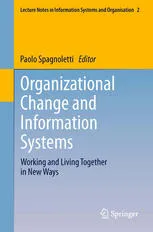
Book guide and evaluation
Paolo Spagnoletti (auth.),Paolo Spagnoletti (eds.)
0 reviews
Published
pages
views
Welcome to the introduction of "Organizational Change and Information Systems: Working and Living Together in New Ways". This book is a deep dive into the intersection of organizational change and information systems, exploring how technology and people come together to foster
Before you read
Welcome to the introduction of "Organizational Change and Information Systems: Working and Living Together in New Ways". This book is a deep dive into the intersection of organizational change and information systems, exploring how technology and people come together to foster innovation and transformation in contemporary organizations. Authored and edited by Paolo Spagnoletti, the book offers diverse perspectives and case studies that showcase how organizations can navigate the complexities of modern change management in a digital-first world.
The book delves into the symbiotic relationship between organizational change and the evolution of information systems. It is grounded in the understanding that businesses today operate in dynamic environments where adaptation is not optional—it is imperative. This book addresses the convergence of human dynamics and technological advancements, emphasizing how they influence one another in the realm of organizational transformation.
The content is structured around multiple key themes: redesigning organizational structures, aligning business strategies with IT capabilities, and fostering a culture that embraces digital transformation. By integrating research findings, real-world case studies, and emerging theories, it acts as a bridge between academic understanding and practical applications. The book is particularly relevant to managers, IT professionals, and scholars investigating the impact of information systems in creating agile and resilient organizations.
From the changing role of leadership in technology-driven environments to the ethical challenges posed by information systems, the book tackles these topics with nuance and clarity. Through its multidisciplinary lens, it provides actionable insights, frameworks, and methodologies to empower organizations as they navigate the complexities of change in an ever-evolving world.
Readers of "Organizational Change and Information Systems: Working and Living Together in New Ways" will walk away with several key insights:
Some notable and thought-provoking quotes from the book include:
"Change is neither entirely human nor entirely technological—it is a co-evolution where one is incomplete without the other."
"Every successful transformation is powered by a balance of technological capability and human ingenuity."
"Organizations that fail to adapt to the convergence of human and digital systems risk becoming obsolete in an increasingly connected world."
The relevance of "Organizational Change and Information Systems: Working and Living Together in New Ways" cannot be overstated in an age defined by digital disruption. With the proliferation of technologies such as artificial intelligence, big data, and the Internet of Things, businesses everywhere are grappling with the unprecedented pace and scale of change. Traditional methods of change management are no longer enough to address the challenges created by this new reality.
This book provides a robust framework for understanding and implementing change that reflects today's technological advancements and organizational needs. It equips professionals with the knowledge and tools necessary to foster collaboration between human and digital agents, ensuring that transitions are not only smoother but also more sustainable in the long run.
Moreover, by integrating theoretical and practical insights, the book contributes to broader conversations about the future of work, ethical decision-making, and innovation in the 21st century. It empowers readers to think critically about not just how to implement change but also why such change is essential for organizational resilience and growth.
Your question is answered in the context of this title and author. Each answer uses 2 points.
0 reviews, 4.5 average out of 5
Sign in to publish a review.
Ask a focused question and learn from the community.
Related references that continue this learning path.
Richard Banfield;C. Todd Lombardo;Trace Wax

Hormess, Markus;Lawrence, Adam;Schneider, Jakob;Stickdorn, Marc
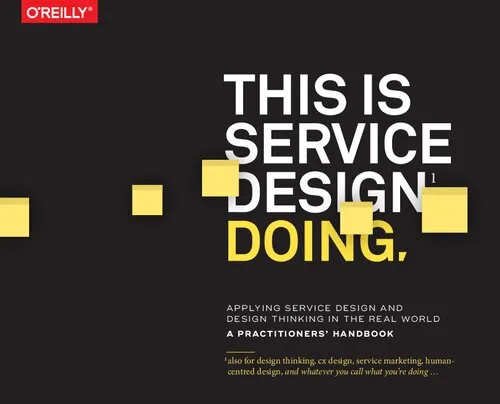
Marc Stickdorn,Markus Edgar Hormess,Adam Lawrence,Jakob Schneider