Book guide and evaluation
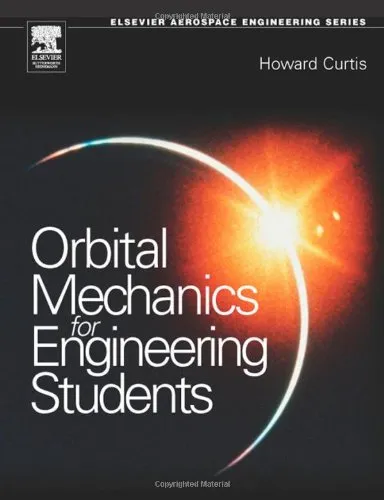
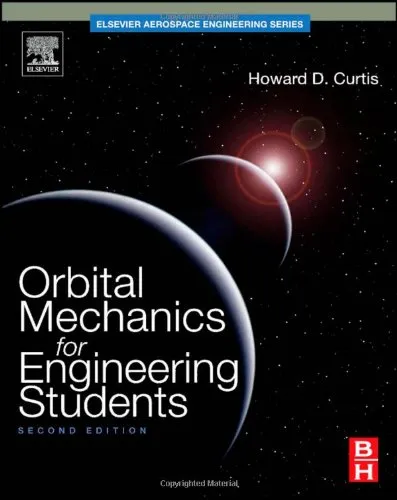
Orbital Mechanics for Engineering Students, Second Edition (Aerospace Engineering)
Howard Curtis
English
Beginner
Classical Mechanics
4.6 / 5
0 reviews
2009
Published
740
pages
606
views
Introduction Welcome to the second edition of "Orbital Mechanics for Engineering Students," a comprehensive and accessible resource for students and professionals passionate about aerospace engineering. This revised edition delves deeper into the principles and applications of
Before you read
What will you get from this book?
Introduction
Welcome to the second edition of "Orbital Mechanics for Engineering Students," a comprehensive and accessible resource for students and professionals passionate about aerospace engineering. This revised edition delves deeper into the principles and applications of orbital mechanics, providing both theoretical and practical insights into the subject.
Detailed Summary of the Book
The book begins by presenting the fundamental principles of orbital mechanics, covering everything from basic physics and gravity to more complex topics like space trajectory design and satellite operations. The initial chapters lay a solid groundwork, discussing Newton's laws, two-body problem solutions, and other essential concepts in depth.
This edition incorporates updated content and real-world examples to aid comprehension and application. Readers will find sections dedicated to modern technological advancements and their impact on orbital mechanics, enriching their understanding of the subject's contemporary relevance.
The middle chapters transition into more advanced topics such as interplanetary trajectories and rendezvous mechanics. Here, students will appreciate the clarity with which these complex ideas are articulated. Animated by numerous solved examples, these sections help demystify challenging concepts and encourage a hands-on learning experience.
Later chapters delve into practical applications, focusing on satellite positioning, attitude dynamics, and mission planning. These topics are particularly beneficial for students aiming to engage directly with the aerospace industry, as they relate theory to prevalent practices in the field.
Key Takeaways
Readers of "Orbital Mechanics for Engineering Students" will gain a wealth of knowledge that spans both foundational principles and contemporary applications. Key takeaways include:
- An in-depth understanding of the mathematical and theoretical underpinnings of orbital mechanics.
- Practical skills for the application of orbital mechanics in real-world aerospace scenarios.
- A grasp of modern challenges and innovations in space mission management and satellite navigation.
- A thorough comprehension of complex orbital maneuvers and interplanetary travel planning.
Famous Quotes from the Book
Inspiring readers through both insight and eloquence, the following quotes capture the essence of the book:
"Orbital mechanics is not merely the study of motion in space, it is the canvas upon which the dreams of exploration are painted."
"Understanding the complexities of our universe begins with understanding the paths we carve through it."
Why This Book Matters
In a world increasingly driven by technology and exploration, "Orbital Mechanics for Engineering Students" stands as an essential text for aspiring aerospace engineers. Its importance spans across educational frameworks and industrial applications. The book is meticulously crafted to serve as a bridge between theoretical physics and practical engineering, showing students how their academic pursuits translate into tangible innovations that can shape the future.
Moreover, the text's emphasis on both classical and modern techniques ensures that readers are prepared to confront the current and future challenges within aerospace engineering. By equipping students with critical analytical skills and a comprehensive understanding of orbital dynamics, it empowers them to contribute effectively to a field that extends humanity's reach into the cosmos.
"Orbital Mechanics for Engineering Students" is more than just an educational resource; it is a gateway into the world of space exploration, encouraging a new generation of engineers to dream big, think critically, and innovate relentlessly.
Ask this book
Your question is answered in the context of this title and author. Each answer uses 2 points.
Sign in to ask the book assistant.
Reader reviews
0 reviews, 4.6 average out of 5
No reviews yet
If you have read this book, help the next reader with your experience.
Write a review
Sign in to publish a review.
Reader questions and answers
Ask a focused question and learn from the community.
Sign in to ask or answer a question.
No questions yet
Be the first to ask a clear, useful question.
What to read next
Related references that continue this learning path.