
Book guide and evaluation
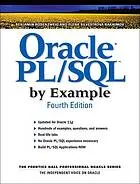
Oracle PL/SQL by example
Benjamin Rosenzweig;Elena Silvestrova Rakhimov
English
Beginner
SQL
4.3 / 5
0 reviews
2009
Published
736
pages
745
views
This integrated learning solution teaches all the Oracle PL/SQL skills you need, hands-on, through real-world labs, extensive examples, exercises, and projects! Completely updated for Oracle 11g, Oracle PL/SQL by Example , Fourth Edition covers all the fundamentals, from PL/SQL s
Before you read
What will you get from this book?
This integrated learning solution teaches all the Oracle PL/SQL skills you need, hands-on, through real-world labs, extensive examples, exercises, and projects! Completely updated for Oracle 11g, Oracle PL/SQL by Example , Fourth Edition covers all the fundamentals, from PL/SQL syntax and program control through packages and Oracle 11g’s significantly improved triggers. One step at a time, you’ll walk through every key task, discovering the most important PL/SQL programming techniques on your own. Building on your hands-on learning, the authors share solutions that offer deeper insights and proven best practices. End-of-chapter projects bring together all the techniques you’ve learned, strengthening your understanding through real-world practice. This book’s approach fully reflects the authors’ award-winning experience teaching PL/SQL programming to professionals at Columbia University. New database developers and DBAs can use its step-by-step instructions to get productive fast; experienced PL/SQL programmers can use this book as a practical solutions reference. Coverage includes • Mastering basic PL/SQL concepts and general programming language fundamentals, and understanding SQL’s role in PL/SQL • Using conditional and iterative program control techniques, including the new CONTINUE and CONTINUE WHEN statements • Efficiently handling errors and exceptions • Working with cursors and triggers, including Oracle 11g’s powerful new compound triggers • Using stored procedures, functions, and packages to write modular code that other programs can execute • Working with collections, object-relational features, native dynamic SQL, bulk SQL, and other advanced PL/SQL capabilities • Handy reference appendices: PL/SQL formatting guide, sample database schema, ANSI SQL standards reference, and more
Ask this book
Your question is answered in the context of this title and author. Each answer uses 2 points.
Sign in to ask the book assistant.
Reader reviews
0 reviews, 4.3 average out of 5
No reviews yet
If you have read this book, help the next reader with your experience.
Write a review
Sign in to publish a review.
Reader questions and answers
Ask a focused question and learn from the community.
Sign in to ask or answer a question.
No questions yet
Be the first to ask a clear, useful question.
What to read next
Related references that continue this learning path.
Effective SQL: 61 Specific Ways to Write Better SQL
John L. Viescas,Douglas J. Steele,Ben G. Clothier
2016
View book

