
Book guide and evaluation
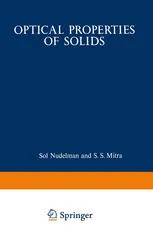
Optical Properties of Solids: Papers from the NATO Advanced Study Institute on Optical Properties of Solids Held August 7–20, 1966, at Freiburg, Germany
H. Jones (auth.),Sol Nudelman,S. S. Mitra (eds.)
English
Beginner
Physics
5.0 / 5
0 reviews
1969
Published
638
pages
296
views
Introduction "Optical Properties of Solids" is an influential compilation of scholarly papers presented during the NATO Advanced Study Institute held in Freiburg, Germany in August 1966. This book captures the significant discuss
Before you read
What will you get from this book?
Introduction
"Optical Properties of Solids" is an influential compilation of scholarly papers presented during the NATO Advanced Study Institute held in Freiburg, Germany in August 1966. This book captures the significant discussions and emerging theories from this pivotal conference, offering readers a comprehensive understanding of the optical behaviors of solid materials. Edited by H. Jones, Sol Nudelman, and S. S. Mitra, the volume brings forth a blend of fundamental principles, innovative research findings, and future directions in the field of solid-state optics.
At its core, the book addresses the intricacies of how solids interact with light, encompassing both theoretical frameworks and experimental observations. As new materials and technologies emerged in the mid-20th century, understanding these optical properties became crucial for the advancement of areas including electronics, communication, and materials science. This pivotal collection not only documents the state-of-the-art techniques and knowledge of that era but also sets the groundwork for future research and technological developments.
Detailed Summary of the Book
The volume is structured to guide readers through the multifaceted aspects of optical properties of solids. It starts with foundational theories that describe light-matter interactions, providing essential context for understanding the subsequent experimental findings and discussions. Key topics include the electronic structure of solids, phonons and their interactions with light, and the impact of impurities and defects on optical characteristics.
As the discussions deepen, the book explores specialized areas such as the optical behavior of semiconductors, metals, and insulators, offering insights into the diverse responses of different solid-state materials. Emphasis is placed on the role of band theory and the influence of lattice dynamics, which are crucial for explaining phenomena like optical absorption and reflectivity. The contributors — leading scientists in the field — present both analytical models and results from cutting-edge experiments, ensuring a well-rounded exploration of the subject.
Key Takeaways
- In-depth exploration of the interaction between light and crystalline solids.
- A comprehensive overview of theoretical and practical approaches to studying optical properties.
- Analyses of the optical effects stemming from electronic band structure and lattice imperfections.
- Insights into technological applications such as semiconductor devices and optical communications.
- An interdisciplinary approach, combining principles from physics, materials science, and engineering.
Famous Quotes from the Book
"Understanding the optical properties of solids is not just a quest for knowledge - it is the key to unlocking future technological advancements."
"Each interaction of light with matter is a story, narrating the complex symphony of nature's fundamental forces."
Why This Book Matters
The significance of "Optical Properties of Solids" stems from its ability to capture the knowledge and foresight of an era when solid-state physics was rapidly evolving. As a pivotal reference, it not only traces historical advancements but continues to inform modern research and development. The book's interdisciplinary nature is particularly valuable, as it bridges gaps between theory and practical application, enabling future innovations in electronics, photonics, and materials engineering.
Moreover, the collection serves as a vital educational tool, fostering a deeper understanding among students, researchers, and industry professionals alike. Its rich content and expert perspectives ensure it remains a cornerstone in academic libraries and personal collections of those committed to mastering the complex field of optical properties.
Ask this book
Your question is answered in the context of this title and author. Each answer uses 2 points.
Sign in to ask the book assistant.
Reader reviews
0 reviews, 5.0 average out of 5
No reviews yet
If you have read this book, help the next reader with your experience.
Write a review
Sign in to publish a review.
Reader questions and answers
Ask a focused question and learn from the community.
Sign in to ask or answer a question.
No questions yet
Be the first to ask a clear, useful question.
What to read next
Related references that continue this learning path.
Electrodynamics of Solids: Optical Properties of Electrons in Matter
Martin Dressel,George Grüner
2002
View book
A Concise Introduction to Elastic Solids: An Overview of the Mechanics of Elastic Materials and Structures
Carl T. Herakovich (auth.)
2017
View book
Optical Properties of Highly Transparent Solids
T. C. McGill (auth.),Shashanka S. Mitra,Bernard Bendow (eds.)
1975
View book