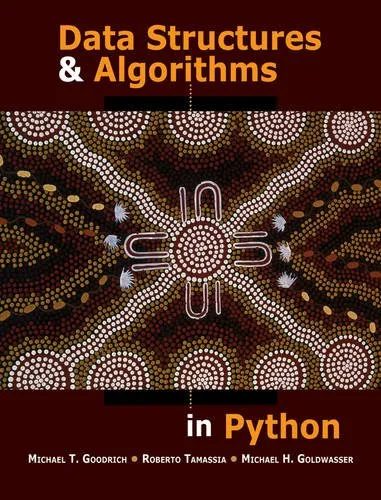
Data Structures and Algorithms in Python
Michael T. Goodrich,Roberto Tamassia,Michael H. Goldwasser
2013
View book
Book guide and evaluation
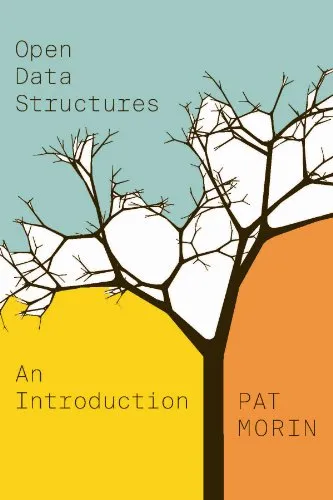
Pat Morin
0 reviews
Published
pages
views
Introduction "Open Data Structures: An Introduction" by Pat Morin is a comprehensive exploration of data structures and algorithms designed for students, educators, and professionals. This book stands apart by focusing on simplicity, efficiency, and open dissemination of knowl
Before you read
"Open Data Structures: An Introduction" by Pat Morin is a comprehensive exploration of data structures and algorithms designed for students, educators, and professionals. This book stands apart by focusing on simplicity, efficiency, and open dissemination of knowledge, with implementations provided in multiple popular programming languages. Its open-source nature ensures that anyone can learn and grow, regardless of budget or background. This introduction provides a deep dive into the content, value, and impact of this invaluable resource.
The book is structured as a thorough yet accessible guide for studying the fundamental data structures used in computer science. It is designed for readers who have some prior programming experience and are ready to expand their understanding of how data can be organized and manipulated efficiently. Topics include:
The book includes high-level discussions of theoretical concepts, alongside practical implementations in programming languages such as Python, Java, and C++ to meet the needs of a diverse audience. The goal is not only to teach readers common data structures but also to encourage a deeper appreciation of their underlying algorithms, how they relate to each other, and when to use them strategically in real-world programming challenges.
1. Universal understanding across languages: Code examples are provided in multiple programming languages, making the material accessible to a wider audience.
2. Efficiency is paramount: The book delves deeply into time complexity and space usage, ensuring that you not only know the "what" of data structures but also the "why" and "how" of choosing the best option.
3. Focus on open access and collaboration: The book is open-source and encourages modification and sharing. This ethos highlights the importance of learning without barriers.
4. Theory meets practice: Theoretical concepts are seamlessly intertwined with practical coding examples, bridging the gap between abstract knowledge and hands-on application.
"An open source textbook is not just a book that happens to be free; it is a book that begs for community, growth, and collaboration."
"Data structures and algorithms are the foundation of effective computer programming. Knowing them is akin to knowing the grammar of a language."
"The choice of a data structure or algorithm matters because every decision shapes the efficiency and robustness of applications."
"Open Data Structures: An Introduction" is a cornerstone resource because it anticipates the needs of modern programmers while staying rooted in universal computer science principles.
Unlike many commercial resources, this book removes the barriers of cost and restrictiveness by being entirely open-source. This open and practical approach is what makes the book both revolutionary and essential. It is designed for students building their foundational knowledge, educators seeking high-quality teaching material, and professionals brushing up on fundamentals to solve evolving computational challenges.
Furthermore, the book pushes the importance of understanding the trade-offs between different data structures. It's not enough to know what a linked list or a binary search tree is; the real skill comes from determining *when* and *how* to use them. This focus ensures that readers come away with both the theoretical and practical skills needed to excel in fields such as software development, data analysis, and systems engineering.
Ultimately, this book is not just about teaching you data structures and algorithms; it is about fostering an intuitive and deeper conceptual framework that underpins effective problem-solving in the world of computing.
Your question is answered in the context of this title and author. Each answer uses 2 points.
0 reviews, 4.5 average out of 5
Sign in to publish a review.
Ask a focused question and learn from the community.
Related references that continue this learning path.
Michael T. Goodrich,Roberto Tamassia,Michael H. Goldwasser
Narasimha Karumanchi