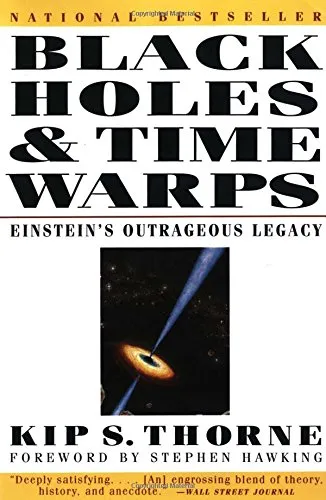
Black Holes and Time Warps: Einstein’s Outrageous Legacy
Kip S. Thorne,Stephen Hawking
1995
View book
Book guide and evaluation
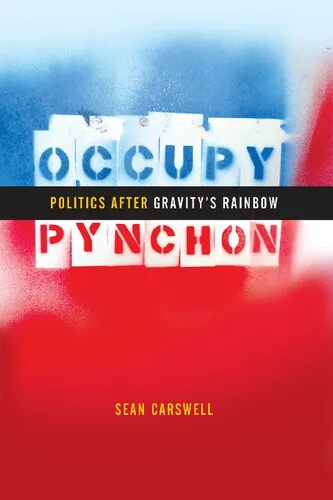
Sean Carswell
0 reviews
Published
pages
views
Introduction Welcome to the world of Thomas Pynchon—a place where the chaotic, the surreal, and the political collide. In this journey through "Occupy Pynchon: Politics after Gravity's Rainbow," I invite you to explore the depths of Pynchon's work, particularly his magnum opus
Before you read
Welcome to the world of Thomas Pynchon—a place where the chaotic, the surreal, and the political collide. In this journey through "Occupy Pynchon: Politics after Gravity's Rainbow," I invite you to explore the depths of Pynchon's work, particularly his magnum opus, "Gravity's Rainbow," through the lens of modern political and social movements. This book aims to bridge the seemingly disparate worlds of literary analysis and real-world activism, offering insights into how Pynchon's narratives resonate with today's socio-political challenges.
The narrative of "Occupy Pynchon: Politics after Gravity's Rainbow" is anchored in the exploration of political themes found within Pynchon's complex literature. The book dissects how Pynchon's portrayal of paranoia, control, and chaos in "Gravity's Rainbow" reflects the socio-political anxieties of both the past and present. We delve into how the novel’s multifaceted characters and enigmatic plotlines mirror the unpredictability of modern governance and the rise of movements such as Occupy Wall Street.
The book examines key symbols and motifs such as rockets, conspiracies, and technological control, presenting them as allegories for contemporary issues. By doing so, it creates a dialogue between Pynchon's fictional dystopias and the existential realities faced by individuals in the 21st century. Furthermore, it argues that Pynchon’s work can be seen as a blueprint for understanding and challenging systems of power.
Throughout "Occupy Pynchon: Politics after Gravity's Rainbow," several excerpts are highlighted to provide a glimpse into the book’s essence. Here are a few:
"Through Pynchon’s labyrinthine prose, we find a roadmap for decoding the complexities of contemporary society."
"Much like the erratic path of Pynchon’s rocket, our journey through the political landscape is uncertain and fraught with perils."
In the era of digital surveillance, political unrest, and global movements for justice, "Occupy Pynchon: Politics after Gravity's Rainbow" stands as a crucial text that not only engages with literary theory but also with practical political activism. It challenges readers to see beyond the pages of a novel and recognize the reflections of real-world dynamics within fictional settings. The book underscores the relevance of literary works in fostering critical thought and encourages readers to utilize these insights in the pursuit of societal progress.
By bridging the gap between Thomas Pynchon's enigmatic worlds and the pressing issues of today, this work provides a unique perspective on how literature can inform, inspire, and incite change. It calls to both literary enthusiasts and activists to use the lessons within Pynchon's novels as tools for navigating and transforming the current socio-political terrain.
Your question is answered in the context of this title and author. Each answer uses 2 points.
0 reviews, 3.9 average out of 5
Sign in to publish a review.
Ask a focused question and learn from the community.
Related references that continue this learning path.
Kip S. Thorne,Stephen Hawking