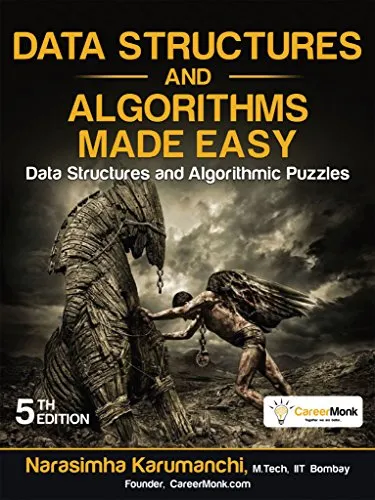
Data Structures and Algorithms Made Easy: Data Structures and Algorithmic Puzzles
Narasimha Karumanchi
2017
View book
Book guide and evaluation
James E. McDonough (auth.)
0 reviews
Published
pages
views
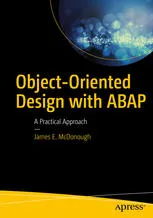
Introduction to "Object-Oriented Design with ABAP: A Practical Approach" Welcome to "Object-Oriented Design with ABAP: A Practical Approach", a comprehensive guide crafted to equip developers, architects, and technical enthusiasts with the tools and understanding they need
Before you read
Welcome to "Object-Oriented Design with ABAP: A Practical Approach", a comprehensive guide crafted to equip developers, architects, and technical enthusiasts with the tools and understanding they need to leverage the power of object-oriented programming (OOP) in the ABAP ecosystem. This book demystifies object-oriented design principles, aligning them with SAP ABAP for both beginners and seasoned professionals. By the end, readers will not only grasp fundamental concepts but also gain the confidence to write efficient, clean, and reusable code.
In the rapidly evolving SAP environment, object-oriented programming (OOP) has emerged as a critical skill for delivering high-quality, maintainable, and scalable solutions. However, for many developers coming from procedural ABAP backgrounds, the shift to OOP can be daunting. This book bridges that gap by offering a practical and approachable framework for applying object-oriented principles in real-world ABAP scenarios.
Beginning with foundational concepts, the book introduces object-oriented fundamentals such as encapsulation, inheritance, polymorphism, and abstraction. These concepts are explained using concrete examples, highlighting how they fit into SAP’s architectural landscape. Through a structured progression, it integrates these principles into design patterns, software frameworks, and typical scenarios that programmers encounter within their daily work environments.
One of the highlights is how the book balances theoretical aspects of software design with hands-on coding tasks. You'll learn how to identify ABAP use cases where OOP proves beneficial, and how to transition away from legacy procedural coding styles. Each chapter builds on the previous, ensuring a holistic understanding of both OOP principles and their direct application within SAP systems using ABAP.
"Object-oriented design is not just a method—it's a mindset. When applied to ABAP, it opens up a world of possibility for clean, scalable, and future-proof programming."
"The real power of ABAP lies in your ability to adapt to change. And nothing lets you embrace change more seamlessly than mastering object-oriented design."
The SAP world is in constant transformation, with a growing emphasis on clean code, automated testing, and scalable design. As more organizations adopt SAP S/4HANA and SAP's advanced suite of products, developers are increasingly expected to write modern, object-oriented code. This book addresses this gap by transitioning ABAP developers from traditional procedural approaches to more structured, OOP-centric methodologies.
This book is not just important for individuals—it is critical for teams and organizations looking to modernize their development techniques. By adopting object-oriented practices, SAP professionals can reduce technical debt, ensure long-term maintainability, and facilitate innovation in their projects. With its approachable writing style, practical examples, and focus on real-world application, this book is a valuable resource for anyone aiming to advance their SAP ABAP career in the modern era.
Whether you're a beginner looking to grasp the basics or an experienced developer striving to refine your skills, "Object-Oriented Design with ABAP: A Practical Approach" provides the clarity and knowledge you need to succeed in today’s competitive technical landscape.
Your question is answered in the context of this title and author. Each answer uses 2 points.
0 reviews, 4.5 average out of 5
Sign in to publish a review.
Ask a focused question and learn from the community.
Related references that continue this learning path.
Narasimha Karumanchi