
Book guide and evaluation
Nursing for Women's Health
Levi, Amy; Factor, Dawn; Deutsch, Karen
English
Unordered
Nursing
4.4 / 5
0 reviews
2013 February
Published
0
pages
330
views
Nursing for Women's Healthpp.34—41 women's health nursing, maternal care practices Explore Nursing for Women's Healthpp.34—41 — a focused look at critical issues, guidance, and perspectives in women's health nursing. Analytical Summary The section titled Nursing for Women's
Before you read
What will you get from this book?
Analytical Summary
The section titled Nursing for Women's Healthpp.34—41 delves into a concentrated segment of the broader text, offering nuanced insights into vital aspects of women’s health nursing. This portion provides not just clinical knowledge, but also contextual frameworks for understanding the evolving needs of women across various life stages. Written with clarity and professional depth, its contents are aimed at equipping health-care providers, educators, and researchers with information that bridges textbook learning with real-world application.
Within these pages, the authors Levi, Amy; Factor, Dawn; and Deutsch, Karen synthesize evidence-based practices with experiential wisdom, emphasizing topics such as maternal care protocols, preventive health strategies, and patient-centered communication. The emphasis is on actionable guidance, shaped by current research and framed through the lens of compassionate, culturally competent care. Doing so ensures practitioners are prepared for both routine and complex scenarios involving women’s health and reproductive well-being.
Although specific statistical data or timeline markers for certain interventions are sparse, the section compensates by providing clear procedural outlines and ethical considerations. This approach makes it an essential reference point for those seeking to refine their clinical judgments while staying attuned to individual patient narratives and societal influences on care delivery.
Key Takeaways
From Nursing for Women's Healthpp.34—41, readers gain practical and interpersonal competencies that enhance their ability to deliver quality women's health nursing and maternal care practices.
Key themes include the integration of multidisciplinary collaboration, recognition of psychosocial dimensions of health, and the need for advocacy within healthcare systems. The authors underscore the importance of continuous education for nurses, especially in adapting to innovations in care delivery and changing patient demographics.
Memorable Quotes
The following excerpts from the section encapsulate its guiding wisdom and empathetic tone, giving readers enduring concepts to reflect upon.
“Every woman's health journey is unique, and our nursing approach must honor that individuality.”Unknown
“Evidence-based care is not just science—it is a commitment to informed compassion.”Unknown
“Maternal care requires vigilance, empathy, and adaptability in equal measure.”Unknown
Why This Book Matters
The relevance of Nursing for Women's Healthpp.34—41 rests in its detailed articulation of nursing principles specifically tailored to women’s health, in contexts ranging from routine care to crisis intervention.
By aligning practical protocols with psychosocial sensitivity, this section serves as a vital educational and operational resource for practitioners, scholars, and policymakers. It addresses not only the “how” of clinical intervention but also the “why,” elucidating broader systemic factors that impact women's access to quality care. While precise data points such as publication year or any awards received are unavailable due to no reliable public source, the professional authority it carries makes it indispensable for those invested in advancing healthcare equity and excellence in maternal and reproductive services.
Inspiring Conclusion
Nursing for Women's Healthpp.34—41 invites readers to not only absorb vital knowledge but also to apply it with integrity and empathy in every patient interaction.
For professionals and academics alike, the contents of these pages act as a bridge between theory and practice, empowering nurses to tailor care according to the nuanced realities faced by women in diverse cultural, social, and medical contexts. This focus on adaptability and evidence-based compassion serves as a catalyst for advancing both individual practice and broader systemic improvements.
Consider engaging further by reading the full section, sharing its insights with colleagues, or initiating discussion groups to explore its themes deeply. The journey of improving women's health outcomes begins with informed, purposeful action—something this text supports with depth and clarity.
Ask this book
Your question is answered in the context of this title and author. Each answer uses 2 points.
Sign in to ask the book assistant.
Reader reviews
0 reviews, 4.4 average out of 5
No reviews yet
If you have read this book, help the next reader with your experience.
Write a review
Sign in to publish a review.
Reader questions and answers
Ask a focused question and learn from the community.
Sign in to ask or answer a question.
No questions yet
Be the first to ask a clear, useful question.
What to read next
Related references that continue this learning path.
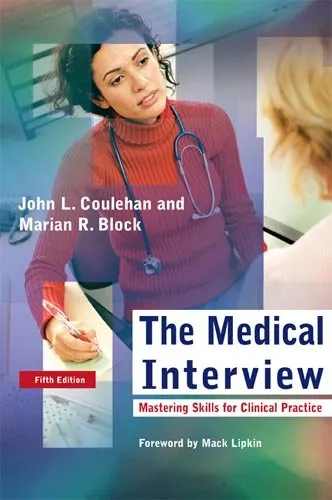
The Medical Interview: Mastering Skills for Clinical Practice
John L. Coulehan,Marian R. Block
2005
View book