
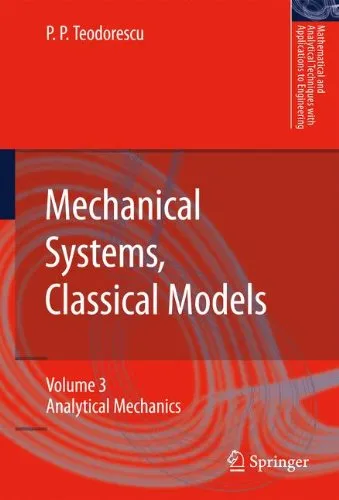
Mechanical Systems, Classical Models: Volume III: Analytical Mechanics
Prof. Dr. Petre P. Teodorescu (auth.)
2009
View book
Book guide and evaluation
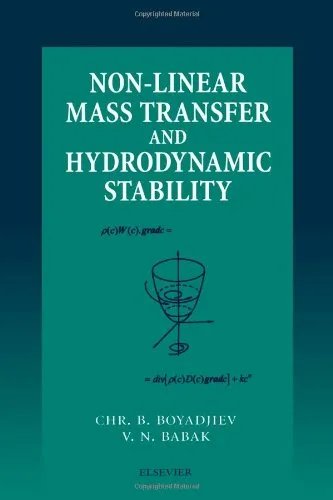
C.B. Boyadjiev,V.N. Babak
0 reviews
Published
pages
views
Introduction to "Non-Linear Mass Transfer and Hydrodynamic Stability" "Non-Linear Mass Transfer and Hydrodynamic Stability" is a comprehensive and rigorous exploration of the complex interplay between mass transfer phenomena and hydrodynamic stability. Authored by
Before you read
"Non-Linear Mass Transfer and Hydrodynamic Stability" is a comprehensive and rigorous exploration of the complex interplay between mass transfer phenomena and hydrodynamic stability. Authored by C.B. Boyadjiev and V.N. Babak, this book offers readers a deep dive into the intricacies of non-linear systems, their inherent instabilities, and the physical mechanisms driving the processes. It bridges theoretical principles with practical applications, making it an invaluable resource for researchers, engineers, and applied mathematicians in the fields of fluid mechanics, chemical engineering, and applied physics.
The book's primary focus lies in elucidating the mechanisms governing mass transfer under non-linear conditions. It addresses challenges encountered when these processes interact with hydrodynamic stability, presenting readers with methodologies and solutions to complex problems. Rich with analytical insights and mathematical rigor, it provides a well-rounded framework to understand, predict, and control non-linear systems, emphasizing real-world engineering applications.
At its core, the book delves into the intertwined dynamics of mass transfer and hydrodynamic stability with a strong emphasis on non-linear behavior. Beginning with foundational concepts, it gradually builds towards complex models and real-world applications. It systematically explores the role of hydrodynamic phenomena in altering mass transfer rates, particularly when non-linearities emerge in systems such as multi-phase flow, chemical reactions, and convective heat and mass transfer processes.
The early chapters focus on mathematical preliminaries and fundamental principles that govern mass transfer. They set the stage for the intricate discussions in subsequent sections, allowing readers to build conceptual clarity. Advanced topics include the analysis of convective instabilities, bifurcation theory, and the non-linear evolution of perturbations. The authors meticulously address the stability of flow systems in the presence of mass transfer, extending the scope to systems with complex boundary conditions and coupling effects.
Incorporating case studies and problem-based learning, the book provides practical examples of processes driven by non-linear dynamics, such as heat exchangers, chemical absorbers, and catalytic reactors. These case studies reinforce theoretical knowledge while enabling readers to design and optimize industrial processes. By the end of the book, readers are equipped with an operational understanding of non-linear mass transfer dynamics and stability mechanisms.
"Non-linear dynamics often reveal nature’s capacity for self-organization, but understanding these mechanisms requires analytical precision and creative thinking."
"Stability is the architecture of motion – it defines the difference between order and chaos in physical systems."
"Non-Linear Mass Transfer and Hydrodynamic Stability" stands as a pioneering work in the field of fluid mechanics and chemical engineering. As technological systems continue evolving towards complexity, understanding non-linear phenomena has become imperative. This book provides profound insights into destabilization mechanisms, equipping researchers and practitioners with the tools to navigate challenges in a variety of disciplines. By fostering a deeper comprehension of non-linear interrelations, this work helps advance innovations in process engineering, energy systems, and environmental technologies.
Furthermore, the book transcends its academic scope by incorporating real-world implications, making it an essential reference for industries relying on fluid flows, mass transfer, and chemical transformations. As a cornerstone in the intersection of applied mathematics and engineering, it empowers its audience to anticipate and mitigate instabilities, thereby enabling sustainable and efficient designs.
Your question is answered in the context of this title and author. Each answer uses 2 points.
0 reviews, 4.0 average out of 5
Sign in to publish a review.
Ask a focused question and learn from the community.
Related references that continue this learning path.
Prof. Dr. Petre P. Teodorescu (auth.)

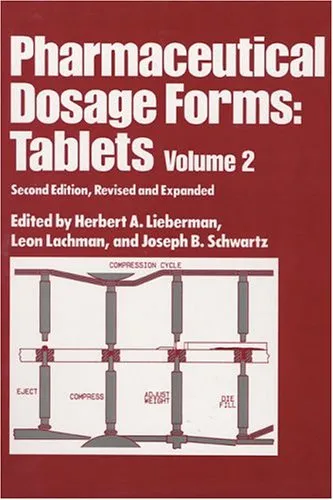
Herbert Lieberman,Leon Lachman,Joseph B. Schwartz