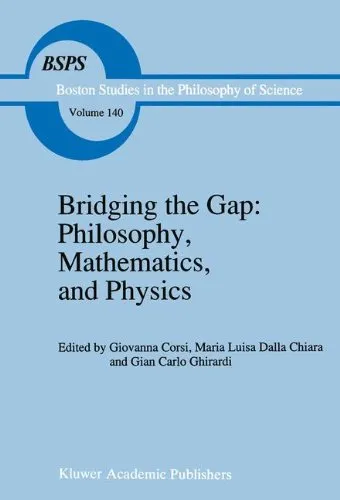
Bridging the Gap: Philosophy, Mathematics, and Physics: Lectures on the Foundations of Science
Giovanna Corsi,Maria Luisa Dalla Chiara,Gian Carlo Ghirardi (Editors)
1993
View book
Book guide and evaluation
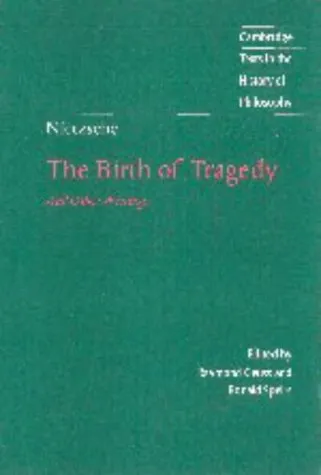
Friedrich Nietzsche,Raymond Geuss,Ronald Speirs
0 reviews
Published
pages
views
Introduction to "Nietzsche: The Birth of Tragedy and Other Writings" Friedrich Nietzsche's "The Birth of Tragedy and Other Writings" is a seminal text that delves deep into the philosophical underpinnings of art, culture, and human existence. As a profound and sometimes contro
Before you read
Friedrich Nietzsche's "The Birth of Tragedy and Other Writings" is a seminal text that delves deep into the philosophical underpinnings of art, culture, and human existence. As a profound and sometimes controversial thinker, Nietzsche provides invaluable insights into the interplay between the Apollonian and the Dionysian, the two artistic forces that he believes define humanity's cultural development. Accompanied by an incisive commentary from renowned scholars Raymond Geuss and Ronald Speirs, this collection enriches the reader's understanding of Nietzsche's early philosophical journey and its wider implications.
The book commences with Nietzsche's exploration of the duality of existence embodied in the Apollonian and the Dionysian principles. The Apollonian represents order, logic, and beauty, derived from the Greek god Apollo, while the Dionysian embodies chaos, passion, and ecstasy, linked to the god Dionysus. Nietzsche posits that these two forces coalesce to give rise to the 'tragic art,' especially evidenced in ancient Greek tragedy where the fusion of the two engenders both profound beauty and heart-wrenching despair.
Nietzsche further criticizes the cultural milieu of 19th-century Europe, especially the dominance of rationality and the suppression of Dionysian elements which, he argues, leads to a depleted cultural experience. He reflects on the degeneration of music and art in his time, using Richard Wagner as a paragon of how art should seek to restore the balance of Apollonian and Dionysian aspects.
The volume later incorporates writings that expand upon Nietzsche’s foundational ideas, including selections from his other works, letters, and reflections that provide a deeper view of his evolving thought processes and critique of culture and society.
“Without music, life would be a mistake.”
“We have art in order not to die of the truth.”
“Every great philosophy is a confession of its originator, and a kind of involuntary and unconscious memoir.”
"Nietzsche: The Birth of Tragedy and Other Writings" is critical for several reasons. Firstly, it introduces Nietzsche's core concepts that became foundational to not only his later works but also to existential and post-modern thought. The birth of modern perspectives on art, culture, and the human condition can be traced back to Nietzsche's pioneering ideas.
Moreover, this collection prompts readers to reconsider the role of art and aesthetics in society, urging a balance between reason and spontaneity. Nietzsche's thoughts invite reflection on the ways contemporary culture might resist lifeless rationality in favor of a more robust, Dionysian engagement with the world.
Finally, the commentary by Geuss and Speirs enriches the academic and historical understanding of Nietzsche's work, offering interpretative frameworks that make it accessible to both scholars and casual readers interested in philosophy and cultural criticism.
Your question is answered in the context of this title and author. Each answer uses 2 points.
0 reviews, 4.5 average out of 5
Sign in to publish a review.
Ask a focused question and learn from the community.
Related references that continue this learning path.
Giovanna Corsi,Maria Luisa Dalla Chiara,Gian Carlo Ghirardi (Editors)
Michael Epperson,Elias Zafiris
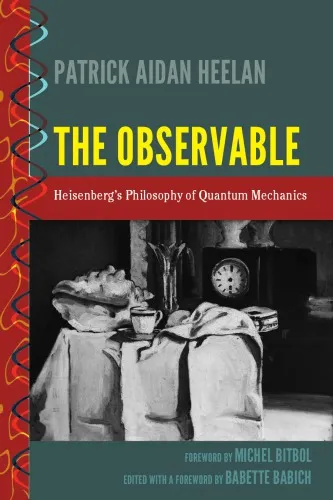
Patrick Aidan Heelan,Babette Babich (ed.)