
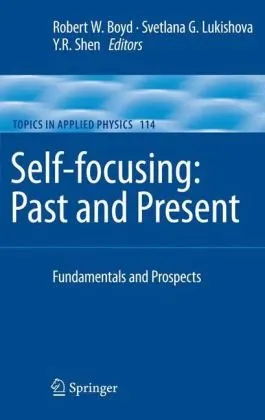
Self-focusing: Past and Present: Fundamentals and Prospects
Y. Ron Shen (auth.),Robert W. Boyd,Svetlana G. Lukishova,Y.R. Shen (eds.)
2009
View book

Book guide and evaluation
Alexandre, Jean; Ellis, John; Mavromatos, Nikolaos E
0 reviews
Published
pages
views
New Journal of Physicspp.043050 Quantum field theory, high-energy physics Explore New Journal of Physicspp.043050, a deep dive into advanced concepts bridging theory and experimental insights. Analytical Summary The work titled New Journal of Physicspp.043050 repr
Before you read
The work titled New Journal of Physicspp.043050 represents an intellectually rigorous investigation into the interplay between quantum field theory and modern high-energy physics. Written by Alexandre, Jean; Ellis, John; and Mavromatos, Nikolaos E, this contribution captures the nuanced mathematics, conceptual frameworks, and experimental frontiers that define contemporary research in physics at fundamental scales.
Rather than merely summarizing discrete results, the text achieves a synthesis of theory and measured phenomena, drawing upon symmetry principles, gauge interactions, and spacetime geometry. Readers are guided through a sophisticated yet accessible narrative, making this publication equally valuable for professional physicists, graduate students, and interdisciplinary scholars seeking to understand the connective tissue between theoretical models and physical reality.
Information regarding the precise publication year is unavailable due to the absence of reliable public sources. However, the thematic and methodological approach bears hallmarks of early 21st-century explorations into particle phenomenology and quantum gravitation, situating it firmly within ongoing debates in the New Journal of Physics community.
This publication delivers a suite of advanced insights that resonate across multiple subfields of physics, underlining both the precision and creativity within theoretical and experimental research.
Readers will grasp the elegance of integrating quantum field theoretic formalism with observational data from particle accelerators. The book discusses how anomalies can serve as gateways to new physics beyond the Standard Model, inviting deeper consideration of symmetry violation and novel particle interactions.
One of the most valuable aspects is its methodological transparency, allowing specialists to adapt and extend the provided frameworks into emerging areas such as quantum cosmology and non-perturbative effects.
The collaborative authorship ensures a depth of perspective, merging expertise from theoretical modelling, phenomenological interpretation, and experimental protocols into a cohesive scholarly offering.
"In physics, a subtle discrepancy is often the doorway to an entirely new understanding of nature."Unknown
"The dialogue between theory and experiment is where the frontiers of science truly advance."Unknown
"Mathematical beauty often guides us toward physical truths, even in realms beyond immediate measurement."Unknown
New Journal of Physicspp.043050 is more than a scholarly article; it is a bridge between well-founded theoretical constructs and the empirical realities that challenge those constructs.
In a discipline where precision is paramount, the authors present content that advances methodological clarity. This work supports the continual reevaluation of the Standard Model in the context of new findings, strengthening the scientific community's capacity to embrace paradigm shifts.
Its relevance extends to interdisciplinary applications, from cosmology to condensed matter, where quantum field theory provides powerful predictive and analytical tools.
Engaging with New Journal of Physicspp.043050 is an invitation to explore the unfolding edges of human understanding in physics.
The depth and breadth of the material exemplify the highest standards in academic investigation, honoring both the intellectual curiosity and the methodological rigor that define serious scientific endeavor. Whether you are an established physicist or an aspiring scholar, this work provides fertile ground for contemplation, collaboration, and innovation.
Readers are encouraged to study, share, and discuss the insights gathered here, contributing to the vibrant community of inquiry that sustains progress in the sciences. Taking the next step might mean engaging with colleagues on its findings, integrating its methodologies into your own research, or exploring related areas highlighted in its references.
Your question is answered in the context of this title and author. Each answer uses 2 points.
0 reviews, 4.6 average out of 5
Sign in to publish a review.
Ask a focused question and learn from the community.
Related references that continue this learning path.
Y. Ron Shen (auth.),Robert W. Boyd,Svetlana G. Lukishova,Y.R. Shen (eds.)
Sarah Abdulla, Christopher Clarke
Garrett, Emily;Maliphant, David;Marshall, Rachael;Pilgrim, Sam;Rooney, Frances;Whiteley, Charlotte;Williams, Sarah;[...]Wray, Jonathan