Discriminative Stimulus Properties of Drugs
Albert Weissman (auth.),Harbans Lal (eds.)
1977
View book
Book guide and evaluation
George F. Koob,Michel Le Moal
0 reviews
Published
pages
views
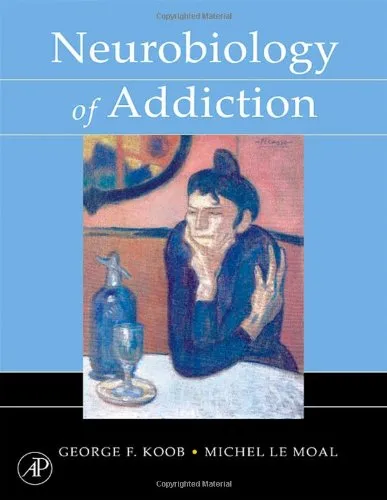
Introduction to the Neurobiology of Addiction Addiction remains one of the most pressing challenges in society, a complex and multifaceted condition that affects individuals, families, and communities. "Neurobiology of Addiction", authored by George F. Koob and Michel Le M
Before you read
Addiction remains one of the most pressing challenges in society, a complex and multifaceted condition that affects individuals, families, and communities. "Neurobiology of Addiction", authored by George F. Koob and Michel Le Moal, delves into the intricate biological processes that underlie addictive behaviors. Combining decades of research in neuroscience, psychology, and medicine, the book provides an in-depth exploration of the mechanisms driving addiction, the effects on the brain, and the implications for treatment strategies. As a comprehensive scientific guide, this book highlights the intersection of biology and behavior, helping readers understand why addiction is not merely a failure of willpower but a disorder embedded in brain function.
"Neurobiology of Addiction" offers a detailed discussion of the key concepts, theories, and research related to substance use disorders and the biology of compulsive behavior. The book begins by explaining the basic principles of addiction as a brain disorder, emphasizing the role of neurocircuitry and the brain's reward systems. It explores how substances such as alcohol, nicotine, and opioids hijack these systems, leading to the characteristic cycle of bingeing, withdrawal, and craving.
Each chapter dives into a specific aspect of addiction. Topics covered include the role of neurotransmitters such as dopamine and glutamate, the impact of chronic substance use on brain plasticity, and the emotional and stress-related dimensions of addiction. The authors also pay significant attention to genetic and environmental factors, providing a holistic perspective on how addiction develops. Moving beyond theory, the book examines treatment approaches, from pharmacological therapy to behavioral interventions, and discusses the potential of emerging technologies to revolutionize addiction recovery.
Grounded in both basic and clinical sciences, "Neurobiology of Addiction" serves not only as a foundational resource for neuroscientists, healthcare professionals, and researchers but also as a valuable reference for anyone who seeks a deeper understanding of addiction as a condition rooted in human biology.
"Neurobiology of Addiction" is an essential resource for understanding addiction in the modern age. By bridging the gap between molecular neuroscience and human behavior, the book provides insights into the biological mechanisms that shape compulsive drug use. It paves the way for evidence-based treatment strategies and offers hope for better outcomes in addressing addiction. The book's multidisciplinary approach ensures that it is relevant to researchers, clinicians, policymakers, and educators—anyone invested in tackling the global epidemic of addiction.
Beyond its scientific contributions, the book challenges the stigma surrounding addiction by reframing it as a brain disorder rather than a moral or personal flaw. This shift in perception is critical to fostering both compassion and innovation in the field. Combining rigor, clarity, and a commitment to understanding the human experience, "Neurobiology of Addiction" is a must-read for anyone seeking to comprehend one of the most profound and far-reaching challenges of our time.
Your question is answered in the context of this title and author. Each answer uses 2 points.
0 reviews, 4.5 average out of 5
Sign in to publish a review.
Ask a focused question and learn from the community.
Related references that continue this learning path.
Albert Weissman (auth.),Harbans Lal (eds.)
Travis Thompson,Roy Pickens (auth.),Travis Thompson,Roy Pickens (eds.)