Book guide and evaluation
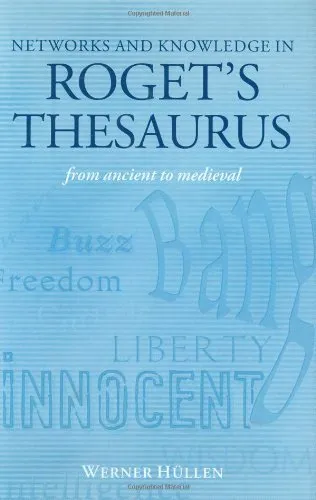
Networks and Knowledge in Roget’s Thesaurus
Werner Hüllen
English
Beginner
vocab
4.7 / 5
0 reviews
2009
Published
226
pages
446
views
Introduction to "Networks and Knowledge in Roget’s Thesaurus" Werner Hüllen's "Networks and Knowledge in Roget’s Thesaurus" provides an exploration into the intricate and interconnected world that Roget's Thesaurus represents. This scholarly work delves into the Thesauru
Before you read
What will you get from this book?
Introduction to "Networks and Knowledge in Roget’s Thesaurus"
Werner Hüllen's "Networks and Knowledge in Roget’s Thesaurus" provides an exploration into the intricate and interconnected world that Roget's Thesaurus represents. This scholarly work delves into the Thesaurus as more than just a list of synonyms. Instead, it symbolizes a complex system of classified knowledge, reflecting human understanding, thought processes, and linguistic capability from its inception to modern interpretations.
Detailed Summary of the Book
In the landscape of linguistic resources, few have achieved the iconic status of Roget's Thesaurus. Werner Hüllen meticulously dissects the historical development, structure, and function of Roget's Thesaurus to unravel its significance as a network of ideas. He traces the evolution of this seminal work from its roots in the 19th century to its diverse implications and applications today. Hüllen argues that the thesaurus, often perceived merely as a tool for finding synonyms, acts as a conceptual network that embodies the zeitgeist of its time. By examining Roget's unique classification system and thematic categorization, Hüllen sheds light on its organizing principles, which mirror the intellectual heritage of Western thought.
Key Takeaways
- The thesaurus is presented not just as a linguistic tool but as a representation of human knowledge structures and intellectual inquiry.
- The book reveals how Roget's organization of knowledge reflects philosophical traditions and the evolution of language itself.
- Readers gain insights into the timeless nature of Roget's system, adaptable to both historical and contemporary linguistic landscapes.
- Hüllen emphasizes the importance of conceptual networks, illustrating their role in shaping cognitive and linguistic frameworks.
Famous Quotes from the Book
"In Roget’s Thesaurus, we find a mirror reflecting the intellectual pursuits of humanity, poised between synonymy and meaning, language and knowledge."
"Language is more than communication; it is the edifice of understanding, meticulously cataloged in the pages of Roget’s Thesaurus."
Why This Book Matters
Hüllen's work is pivotal for scholars, linguists, and anyone intrigued by the history of ideas and the intricate web of language. "Networks and Knowledge in Roget’s Thesaurus" brings fresh insights into the perennial relationship between language and philosophy. The book challenges readers to perceive thesauri not just as static repositories of words but as dynamic, evolving networks of human thought. This perspective encourages ongoing appreciation and exploration of linguistic resources as foundational elements of intellectual discovery. By understanding Roget's contributions in this broader context, we can better appreciate the interconnectedness of ideas that underlie all forms of knowledge expression.
In summary, "Networks and Knowledge in Roget’s Thesaurus" offers a compelling narrative that transcends the conventional boundaries of linguistic studies, positioning Roget's work as an influential intellectual monument.
Ask this book
Your question is answered in the context of this title and author. Each answer uses 2 points.
Sign in to ask the book assistant.
Reader reviews
0 reviews, 4.7 average out of 5
No reviews yet
If you have read this book, help the next reader with your experience.
Write a review
Sign in to publish a review.
Reader questions and answers
Ask a focused question and learn from the community.
Sign in to ask or answer a question.
No questions yet
Be the first to ask a clear, useful question.
What to read next
Related references that continue this learning path.