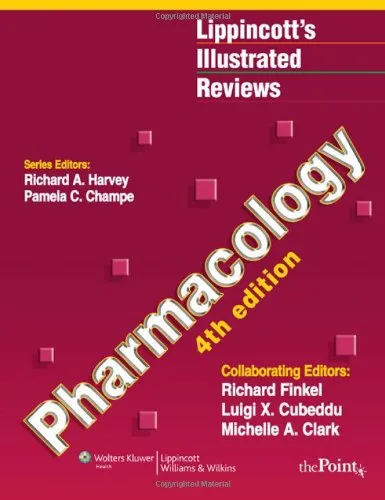
Pharmacology, 4th Edition (Lippincott’s Illustrated Reviews)
Richard A. Harvey,Pamela C. Champe
2008
View book
Book guide and evaluation
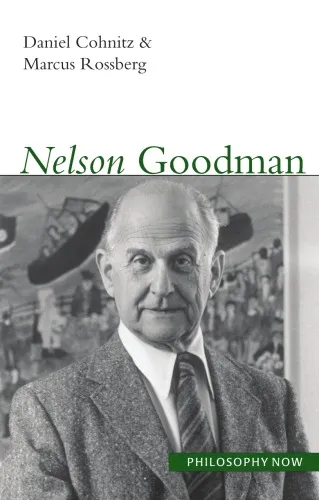
Daniel Cohnitz,Marcus Rossberg
0 reviews
Published
pages
views
Introduction to 'Nelson Goodman (Philosophy Now)' Understanding the philosophical landscape of the 20th century is incomplete without studying Nelson Goodman's influential contributions. This book provides an in-depth look at Goodman's pioneering work and his lasting impact on
Before you read
Understanding the philosophical landscape of the 20th century is incomplete without studying Nelson Goodman's influential contributions. This book provides an in-depth look at Goodman's pioneering work and his lasting impact on philosophy. Written by Daniel Cohnitz and Marcus Rossberg, this book is part of the renowned Philosophy Now series, which aims to present complex philosophical ideas in a clear and accessible manner.
Nelson Goodman was a philosopher who deeply interrogated the foundations of several domains, including art, language, and science. This book meticulously explores his most significant philosophical innovations, from his theory of counterfactuals to his new riddle of induction, famously known as the "grue paradox." The authors navigate through Goodman's key ideas such as 'the structure of appearance,' where Goodman challenges traditional notions of perception and space-time. Furthermore, the book delves into his revolutionary works on 'ways of worldmaking,' where Goodman proposes that our understanding of the world is through a framework of symbolic systems which construct diverse 'world versions.'
"The difference between science and art is not that they seek different worlds, but that they often speak in different tongues."
"To state that something is green is not merely to describe it as it is, but to classify it as it will be."
This book is essential reading for anyone interested in the intersection of philosophy, art, and cognitive science. Goodman's insights challenge conventional perspectives and offer an alternative path through which we may understand the structures of our world. His work on symbolic representation has far-reaching implications in fields as diverse as artificial intelligence, semiotics, and beyond. The authors, Cohnitz and Rossberg, present Goodman's ideas in a way that is not only enlightening but also deeply engaging, ensuring that readers come away with both a comprehensive understanding of Goodman’s philosophy and a sense of its relevance to contemporary issues.
Your question is answered in the context of this title and author. Each answer uses 2 points.
0 reviews, 4.5 average out of 5
Sign in to publish a review.
Ask a focused question and learn from the community.
Related references that continue this learning path.
Richard A. Harvey,Pamela C. Champe
Richard A. Harvey,Michelle A. Clark,Richard Finkel,Jose A. Rey,Karen Whalen
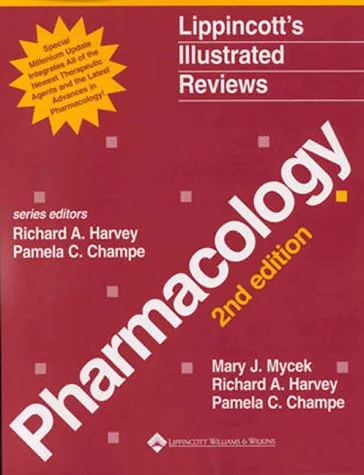
Mary J. Mycek,Richard A. Harvey PhD,Pamela C. Champe