Book guide and evaluation
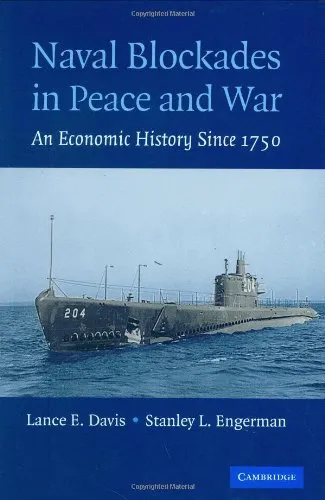
Naval blockades peace and war
Lance E. Davis,Stanley L. Engerman
English
Intermediate
novel
4.5 / 5
0 reviews
2006
Published
465
pages
558
views
Welcome to the intricate world of naval blockades where the strategic mastery of sea power plays a crucial role in both warfare and diplomacy. "Naval Blockades: Peace and War" by Lance E. Davis and Stanley L. Engerman delves into the historical, economic, and political implicat
Before you read
What will you get from this book?
Welcome to the intricate world of naval blockades where the strategic mastery of sea power plays a crucial role in both warfare and diplomacy. "Naval Blockades: Peace and War" by Lance E. Davis and Stanley L. Engerman delves into the historical, economic, and political implications of blockades throughout history, providing a detailed narrative that enriches our understanding of global conflicts and resolutions.
Detailed Summary of the Book
The book navigates through an expansive timeline, analyzing the role of naval blockades from the early 18th century to the 20th century. The authors illustrate how these blockades were not merely military tools but were also significant economic and political strategies that influenced international relations. Throughout this historical journey, Davis and Engerman explore various major blockades, from the Napoleonic Wars to the World Wars, and assess their effectiveness, legality, and impact on the nations involved.
Naval blockades often had the dual purpose of disrupting enemy supplies while also coercing neutral parties into economic and diplomatic concessions. The book sheds light on the legal frameworks surrounding blockades, including the declarations and subsequent changes in international law. Davis and Engerman critically examine the ramifications of these blockades, highlighting how they not only affected wartime activities but also had prolonged impacts during peacetime, reshaping economies and societies.
Key Takeaways
- Naval blockades have been pivotal throughout history as a tactical means to exert control and influence over enemy nations.
- Understanding the legality and implications of blockades is essential, as it permeates through international law and affects global relations.
- The economic impact of blockades transcends immediate wartime effects, influencing trade, prosperity, and diplomatic relations long after conflicts have ended.
- Analyzing successful and failed blockades offers valuable lessons in strategic planning, international law adherence, and economic considerations in warfare.
Famous Quotes from the Book
"A naval blockade is as much a battle of will and economic endurance as it is a demonstration of military might."
"The success of a blockade hinges not only on its enforcement but also on the psychological impact it imparts on both the enemy and the global community."
"In the theater of war, naval blockades serve as orchestras of power, orchestrating the rhythms of commerce and conflict."
Why This Book Matters
In understanding the complex web of global politics and military strategy, "Naval Blockades: Peace and War" stands out as a scholarly yet accessible work that enriches our knowledge of naval history. The meticulous analysis provided by Davis and Engerman not only highlights the importance of naval blockades but also integrates them within the broader context of world economies and international relations.
This book is indispensable for historians, political analysts, and military enthusiasts, serving as a comprehensive resource on how naval strategies impact global affairs. By examining the past, readers gain valuable insights into current and future maritime strategies and the continual evolution of naval power. Thus, "Naval Blockades: Peace and War" is not just a historical account; it is a timeless guide to understanding an enduring element of geopolitical strategy.
Ask this book
Your question is answered in the context of this title and author. Each answer uses 2 points.
Sign in to ask the book assistant.
Reader reviews
0 reviews, 4.5 average out of 5
No reviews yet
If you have read this book, help the next reader with your experience.
Write a review
Sign in to publish a review.
Reader questions and answers
Ask a focused question and learn from the community.
Sign in to ask or answer a question.
No questions yet
Be the first to ask a clear, useful question.
What to read next
Related references that continue this learning path.

The Brothers Karamazov (Vintage Classics) (Everyman's Library, #70)
Fyodor Dostoyevsky, Richard Pevear, Larissa Volokhonsky;Malcolm V. Jones
1992
View book