
Robert of Chester’s (?) Redaction of Euclid’s Elements, the so-called Adelard II Version: Volume II
Dr. Hubert L. L. Busard,Prof. Dr. Menso Folkerts (auth.)
1992
View book
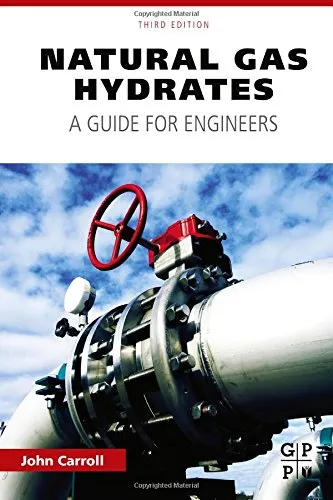
Book guide and evaluation
John Carroll
0 reviews
Published
pages
views
Introduction to 'Natural Gas Hydrates, Third Edition: A Guide for Engineers' Natural gas hydrates have fascinated scientists and engineers for decades, not only for their complex structure but also for their practical applications and implications in the oil and gas indu
Before you read
Natural gas hydrates have fascinated scientists and engineers for decades, not only for their complex structure but also for their practical applications and implications in the oil and gas industry. The third edition of Natural Gas Hydrates: A Guide for Engineers, written by John Carroll, offers a comprehensive and in-depth exploration of the subject, tailor-made for engineers seeking a deeper understanding of hydrate systems and how to address challenges they pose in real-world applications. This book serves as an essential guide to both theoretical foundations and practical methodologies for managing hydrate formation effectively in a variety of industrial scenarios.
The third edition of this highly regarded book builds upon its predecessors by incorporating the latest research findings, advanced methodologies, and state-of-the-art technologies used in the prediction, prevention, and management of gas hydrate formation. Hydrates, crystalline water-based solids that trap natural gas molecules, can create significant problems in pipelines, processing plants, and machinery due to blockages and operational inefficiencies.
The book begins with a foundational understanding of natural gas hydrates, exploring their chemistry, structure, and thermodynamics. It progresses to detailed discussions on the conditions under which hydrates form, current methods to detect hydrate formation, and how engineers can mitigate those risks using inhibitors, thermal techniques, and pressure modification. Special attention is given to computational methods, which have become integral in predicting hydrate behavior and applying mitigation strategies efficiently.
The third edition also takes a closer look at modern topics, such as the economic implications of hydrate formation, environmental considerations, and the potential for natural gas hydrates as a future energy resource. With practical case studies and insights drawn from industry experiences, the book addresses real-world scenarios, equipping engineers with actionable knowledge. Readers are guided step-by-step through examples, equations, and problem-solving processes designed to be applicable both for seasoned engineers and those newer to the field.
"Natural gas hydrates are among the great enigmas of the energy industry—simultaneously presenting challenges and untapped opportunities."
"A thorough understanding of hydrate behavior is not just a scientific curiosity but a necessity for safe and efficient gas production and transport."
"While hydrates are a source of operational risk today, their potential as an energy resource of tomorrow cannot be ignored."
Natural gas hydrates play a critical role in the energy industry, and their impact continues to grow as the world seeks new and sustainable sources of energy. For engineers working in oil and gas exploration, production, and processing, understanding hydrates is essential for maintaining system integrity and optimizing workflows. Beyond immediate industrial applications, hydrates’ potential as a significant source of natural gas has sparked global interest, making them a subject of focus for energy researchers and policymakers alike.
This book provides engineers with the tools they need to not only mitigate the risks associated with hydrate formation but also to explore their vast potential. By bridging the gap between theoretical concepts and practical applications, this guide empowers readers to approach hydrate challenges with confidence and innovation. Whether you’re a practicing engineer, researcher, or student, Natural Gas Hydrates, Third Edition is a vital resource that equips you with both current knowledge and forward-looking insights into one of the most intriguing phenomena of the energy world.
Your question is answered in the context of this title and author. Each answer uses 2 points.
0 reviews, 4.5 average out of 5
Sign in to publish a review.
Ask a focused question and learn from the community.
Related references that continue this learning path.
Dr. Hubert L. L. Busard,Prof. Dr. Menso Folkerts (auth.)
E.G. Derouane,Valentin Parmon,Francisco Lemos,Fernando Ramoa Ribeiro