Book guide and evaluation
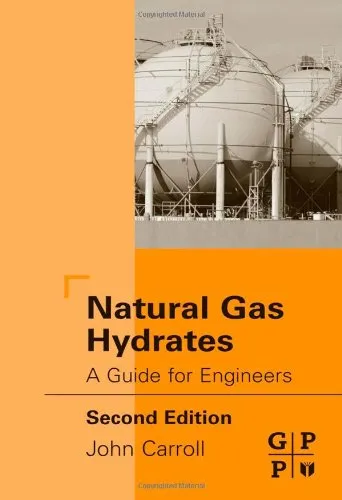
Natural Gas Hydrates A Guide for Engineers
John Carroll
English
Beginner
Mathematics
4.5 / 5
0 reviews
2009
Published
277
pages
454
views
Introduction to "Natural Gas Hydrates: A Guide for Engineers" Natural gas hydrates represent one of the most fascinating and practical areas of engineering and scientific research. These crystalline compounds have vast implications for energy production, environmental sa
Before you read
What will you get from this book?
Introduction to "Natural Gas Hydrates: A Guide for Engineers"
Natural gas hydrates represent one of the most fascinating and practical areas of engineering and scientific research. These crystalline compounds have vast implications for energy production, environmental safety, and flow assurance challenges within the oil and gas industry. My book, "Natural Gas Hydrates: A Guide for Engineers", serves as a comprehensive resource for engineers, researchers, and industry professionals seeking to understand, manage, and leverage the unique properties of gas hydrates.
The world of natural gas hydrates is intricate yet highly relevant. From pipeline blockages to the exploration of potential energy reservoirs, hydrates play both a challenging and promising role. This book provides a deep dive into the technical, chemical, and practical aspects of hydrates, presenting solutions to real-world engineering problems while exploring the vast opportunities they offer in future energy markets.
Summary of the Book
This book is a detailed exploration of natural gas hydrates tailored specifically for engineers and professionals in related domains. It begins by introducing the basics of hydrates—their formation, structure, and unique properties—before moving on to practical engineering applications and challenges. Throughout, the book emphasizes the dual importance of hydrates as a flow assurance challenge and as a potential source of clean, abundant energy.
The content spans topics such as understanding the fundamentals of hydrate thermodynamics, methods to prevent hydrate formation in pipelines, hydrate phase diagrams, and how environmental factors influence their behavior. Additionally, it addresses the technical approaches used to manage hydrates in extraction and transportation systems.
One of the standout features of this book is its focus on providing actionable insights for engineers. Whether you are designing a new pipeline system, ensuring the safety and reliability of offshore production, or exploring novel applications for hydrates, this guide offers a practical blueprint. The concepts presented are enriched with real-world examples, equations, and methodologies that can be directly applied to everyday engineering tasks.
The book’s conclusion expands upon the future of hydrates, delving into their role as a potential energy source. This paints a picture of how gas hydrates could contribute to addressing global energy challenges whilst maintaining sustainability.
Key Takeaways
- Clear and concise explanation of natural gas hydrate fundamentals.
- Detailed description of hydrate formation, prevention, and removal techniques in pipelines and engineering systems.
- Practical insights into hydrate phase diagrams, flow assurance strategies, and modeling tools.
- An exploration of gas hydrates as a potential energy source for the future.
- Numerical examples and case studies to bridge theory with engineering practice.
Famous Quotes from the Book
“Understanding hydrates is not merely an academic pursuit; it is an essential aspect of maintaining flow assurance, reducing operational risks, and unlocking future energy opportunities.”
“Gas hydrates, while challenging, also represent one of the most remarkable natural phenomena—offering both engineering puzzles and untapped resources for a sustainable future.”
Why This Book Matters
As the energy industry continues to evolve, the significance of addressing challenges like gas hydrates cannot be overstated. Whether it’s ensuring the reliability of energy transportation systems or exploring innovative ways to meet global energy needs, understanding hydrates is critical. Engineers and researchers who grasp the complexities of hydrates are better equipped to design efficient systems, prevent costly operational issues, and lead the charge toward sustainable energy solutions.
"Natural Gas Hydrates: A Guide for Engineers" bridges the gap between theoretical research and practical application. With its emphasis on engineering solutions, detailed examples, and future-focused discussion, this book solidifies its place as a definitive guide for professionals in the field. It empowers engineers with the tools and knowledge they need to tackle real-world problems while offering a glimpse into the exciting opportunities that gas hydrates hold in global energy development.
In an era where innovation and sustainability are paramount, this book equips readers to make informed decisions and address one of the industry's most intriguing challenges with confidence and expertise.
Ask this book
Your question is answered in the context of this title and author. Each answer uses 2 points.
Sign in to ask the book assistant.
Reader reviews
0 reviews, 4.5 average out of 5
No reviews yet
If you have read this book, help the next reader with your experience.
Write a review
Sign in to publish a review.
Reader questions and answers
Ask a focused question and learn from the community.
Sign in to ask or answer a question.
No questions yet
Be the first to ask a clear, useful question.
What to read next
Related references that continue this learning path.
Sustainable Strategies for the Upgrading of Natural Gas: Fundamentals, Challenges, and Opportunities: Proceedings of the NATO Advanced Study ... II: Mathematics, Physics and Chemistry)
E.G. Derouane,Valentin Parmon,Francisco Lemos,Fernando Ramoa Ribeiro
2005
View book