
Carbon-related materials in recognition of Nobel Lectures by Prof. Akira Suzuki in ICCE
Endo, Tamio;Hui, David;Kaneko, Satoru;Mele, Paolo;Tanaka, Katsuhisa;Tsuchiya, Tetsuo;Yoshimura, Masahiro
2017
View book
Book guide and evaluation
Émile Zola,George Holden
0 reviews
Published
pages
views
Introduction to "Nana" "Nana" is a remarkable novel penned by Émile Zola, one of the most influential figures of the French naturalism movement. Published in 1880, the novel is a pivotal part of the acclaimed "Les Rougon-Macquart" series, depicting the social and moral lan
Before you read
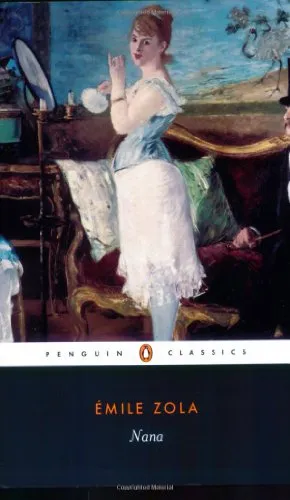
"Nana" is a remarkable novel penned by Émile Zola, one of the most influential figures of the French naturalism movement. Published in 1880, the novel is a pivotal part of the acclaimed "Les Rougon-Macquart" series, depicting the social and moral landscape of Paris during the late 19th century. Renowned for its vivid descriptions and profound psychological insight, "Nana" delves into themes of decadence, desire, and the societal constraints of the time.
The narrative of "Nana" revolves around the enchanting yet destructive figure of Nana Coupeau, a courtesan in the opulent backdrop of Second Empire Paris. Nana's trajectory is a mirror to the decadence of Parisian society, as she rises to fame from her performances at the Théâtre des Variétés. A character driven by both primitive appetites and innocent desires, Nana's interactions serve as a catalyst for chaos among the lives of Paris's elite, unraveling the bourgeois moral pretensions beneath her allure.
The story begins with Nana's debut in a theatrical production where her ineffable charm rather than talent mesmerizes the audience. Quickly gaining notoriety, she becomes the object of fascination and desire, manipulating those around her with a cavalier attitude towards both love and money. As she entangles herself with various influential men, from aristocrats to politicians, she leaves a trail of ruin and despair.
As an archetype of the femme fatale, Nana is not merely a person but an embodiment of unbridled sexuality and corruption. However, Zola intricately portrays her as a victim of the very society she exploits, exploring her psychological dimensions with empathy. Her life spirals as rapidly as her rise, leading to a tragic yet inevitable end that mirrors the fallibility of the glamorized society she thrives in.
"Nana was becoming part of the air they breathed, infecting the city, as the wind carried her every word to the farthest suburbs."
""Our fault, count? Oh, it's not ours! We didn't order her, Nana just turned up!"
These quotes emphasize Zola's masterful command of narrative, weaving together themes of corruption and societal critique with poetic language.
"Nana" holds a seminal place in the canon of French literature due to its unflinching exploration of character and society. Zola's ability to transform personal narrative into broader societal criticism remains deeply impactful, drawing attention to issues of gender, class, and moral decay. The novel's blend of realism and naturalism sets it apart as a crucial study of the human condition, relevant not only in its historical context but also in its timeless human insights.
Furthermore, Zola's work remains a powerful force in the discussion of literary styles and techniques. His vivid depiction of the era's zeitgeist continues to inspire writers and thinkers across generations, cementing "Nana" as an essential text for anyone interested in the complexities of human nature and societal dynamics.
Your question is answered in the context of this title and author. Each answer uses 2 points.
0 reviews, 4.0 average out of 5
Sign in to publish a review.
Ask a focused question and learn from the community.
Related references that continue this learning path.
Endo, Tamio;Hui, David;Kaneko, Satoru;Mele, Paolo;Tanaka, Katsuhisa;Tsuchiya, Tetsuo;Yoshimura, Masahiro