

Gray's anatomy for students
Drake, Richard Lee;Gray, Henry;Mitchell, Adam W. M.;Vogl, Wayne
2015
View book
Book guide and evaluation
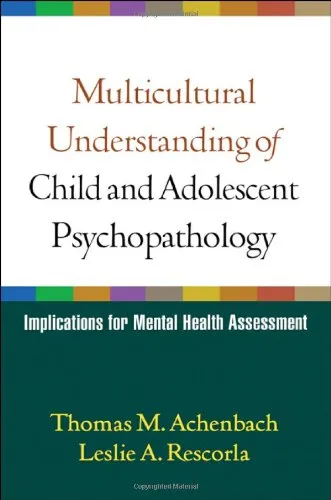
Thomas M. Achenbach,Leslie A. Rescorla
0 reviews
Published
pages
views
Introduction In a world where cultural diversity plays an increasingly important role in shaping human behavior, gaining an accurate understanding of child and adolescent psychopathology requires a thoughtful and nuanced perspective. "Multicultural Understa
Before you read
In a world where cultural diversity plays an increasingly important role in shaping human behavior, gaining an accurate understanding of child and adolescent psychopathology requires a thoughtful and nuanced perspective. "Multicultural Understanding of Child and Adolescent Psychopathology: Implications for Mental Health Assessment" by Thomas M. Achenbach and Leslie A. Rescorla delves into this critical and often under-explored topic, offering groundbreaking insights into how developmental, cultural, and contextual factors shape mental health outcomes. This foundational work serves as an invaluable resource for mental health professionals, researchers, and students who strive to provide equitable care in an increasingly globalized society.
Whether you are an academic looking to refine your research methodologies or a clinician seeking to enhance your diagnostic acumen, this book is designed to equip readers with the knowledge and tools they need to better serve culturally diverse populations. It addresses core questions regarding the consistency of diagnostic criteria across cultures, how cultural factors influence the expression of mental health conditions, and what steps can be taken to ensure culturally sensitive and effective mental health assessments for children and adolescents.
In this introduction, we will explore the key elements of the book, including its detailed summary, noteworthy insights, famous quotes, and why this book holds significant value in the realms of psychology and mental health practice.
Achenbach and Rescorla meticulously analyze how widely used tools for assessing mental health can—and should—be adapted for cross-cultural use. The authors focus on the importance of an empirically grounded approach to assessing psychopathology, which promotes consistency and reliability after accounting for cultural variability.
The book is divided into sections that explore conceptual frameworks, methodologies, practical applications, and the broader implications of culturally informed approaches to mental health assessment. Achenbach and Rescorla incorporate evidence from an impressive array of data sources, covering research conducted in multiple countries and regions. This gives the text additional relevance as it provides global, rather than solely Western, perspectives. Readers are guided through case studies, comparative analyses, and critiques of existing assessment systems, which foster a comprehensive understanding of issues such as cultural syndromes, translation challenges, and the role of language in assessment.
The authors emphasize that while diagnostic categories and symptoms often overlap across different countries and cultures, there are marked cultural differences in the manifestation of psychological difficulties. By addressing these distinctions, the book challenges readers to adopt an integrative and culturally inclusive approach to identifying, assessing, and treating mental health disorders.
"Understanding children and adolescents through a multicultural lens requires not only empirical rigor but also a deep sensitivity to the ways in which culture shapes their worldviews, behaviors, and emotional experiences."
"Cultural differences are not obstacles but opportunities for enriching our understanding of human development and psychopathology."
This book matters because of its unique contribution to global mental health research and practice. In a field historically dominated by Western perspectives, it provides the much-needed inclusion of data and insights from diverse cultural contexts. It underscores the imperative for mental health professionals to move beyond standardized approaches, advocating for individualized assessments that respect cultural identities and differences.
Moreover, the book plays a vital role in advancing health equity by demonstrating how culturally informed practices lead to better diagnosis, treatment, and care for young individuals from varying backgrounds. In a time when mental health challenges are increasingly recognized as global public health priorities, the concepts outlined in this book are essential to ensuring that no population is marginalized or overlooked.
Your question is answered in the context of this title and author. Each answer uses 2 points.
0 reviews, 4.9 average out of 5
Sign in to publish a review.
Ask a focused question and learn from the community.
Related references that continue this learning path.
Drake, Richard Lee;Gray, Henry;Mitchell, Adam W. M.;Vogl, Wayne

Betty J. Ackley;Gail B. Ladwig;Mary Beth Flynn Makic

Barbara Montgomery Dossey,Lynn Keegan,Cathie E. Guzzetta