Book guide and evaluation
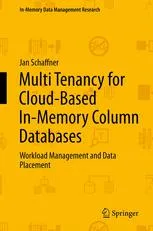
Multi Tenancy for Cloud-Based In-Memory Column Databases: Workload Management and Data Placement
Jan Schaffner (auth.)
English
Beginner
NoSQL
4.5 / 5
0 reviews
2014
Published
140
pages
355
views
Introduction to Multi Tenancy for Cloud-Based In-Memory Column Databases In the dynamic world of cloud computing, the need for efficient data management frameworks is more crucial than ever. As more enterprises shift towards cloud-based solutions, the intricacies of multi-tena
Before you read
What will you get from this book?
Introduction to Multi Tenancy for Cloud-Based In-Memory Column Databases
In the dynamic world of cloud computing, the need for efficient data management frameworks is more crucial than ever. As more enterprises shift towards cloud-based solutions, the intricacies of multi-tenancy in databases have emerged as pivotal areas of focus. Multi Tenancy for Cloud-Based In-Memory Column Databases: Workload Management and Data Placement delves into the complexities and solutions associated with these topics.
Detailed Summary of the Book
The book is a comprehensive exploration into the realm of multi-tenancy within the domain of in-memory columnar databases. It begins by setting the stage with a thorough understanding of the current cloud landscape and the role of in-memory capabilities in enhancing performance. In-memory column databases are renowned for their speed and efficiency, but integrating them into a multi-tenant architecture presents unique challenges. This book meticulously unravels these complexities, focusing on workload management and data placement strategies that ensure optimal performance and isolation.
Key chapters explore architectural considerations, algorithmic approaches for dynamic workload allocation, and the nuances of balancing multiple tenant requirements while maintaining data integrity and security. The book provides a robust framework for database administrators and cloud architects seeking to implement scalable and efficient multi-tenant solutions.
Key Takeaways
- Understanding the fundamentals of in-memory columnar databases and their advantages in cloud environments.
- Insights into the architecture of multi-tenant systems and the challenges associated with them.
- Advanced techniques for workload management, ensuring high performance and equitable resource distribution among tenants.
- Strategic data placement methodologies that optimize storage efficiency and access speed.
- Practical guidance on maintaining data security and privacy within a shared database infrastructure.
Famous Quotes from the Book
"The shift to cloud computing demands more than just lifting and shifting existing databases; it requires a rethinking of data architecture fundamentals."
"Effective multi-tenancy isn't just about shared resources—it's about crafting an environment where every tenant feels like the sole user."
"In-memory databases have redefined speed and efficiency benchmarks, but achieving these in a cloud setting requires strategic workload management."
Why This Book Matters
The importance of this book lies in its timeliness and relevance to the ongoing shift in how businesses handle data storage and processing. With enterprises increasingly relying on cloud infrastructures, understanding the principles of multi-tenancy becomes essential for IT professionals. This book provides not only theoretical insights but also practical solutions that can be directly applied to real-world scenarios. It bridges the gap between traditional database management and the modern demands of cloud computing, offering a roadmap for successful implementation of multi-tenant systems.
Moreover, the book addresses the perennial concerns of data privacy and security, which are magnified in a multi-tenant environment. By providing a clear blueprint for managing these challenges, the book equips database administrators and system architects with the tools they need to ensure that cloud-based databases are both efficient and secure.
Ask this book
Your question is answered in the context of this title and author. Each answer uses 2 points.
Sign in to ask the book assistant.
Reader reviews
0 reviews, 4.5 average out of 5
No reviews yet
If you have read this book, help the next reader with your experience.
Write a review
Sign in to publish a review.
Reader questions and answers
Ask a focused question and learn from the community.
Sign in to ask or answer a question.
No questions yet
Be the first to ask a clear, useful question.
What to read next
Related references that continue this learning path.
Data Management in Cloud, Grid and P2P Systems: 5th International Conference, Globe 2012, Vienna, Austria, September 5-6, 2012. Proceedings
Ibrahima Gueye,Idrissa Sarr,Hubert Naacke (auth.),Abdelkader Hameurlain,Farookh Khadeer Hussain,Franck Morvan,A Min Tjoa (eds.)
2012
View book