

Systems Thinking in Europe
Rafael Rodríguez-Delgado (auth.),M. C. Jackson,G. J. Mansell,R. L. Flood,R. B. Blackham,S. V. E. Probert (eds.)
1991
View book
Book guide and evaluation
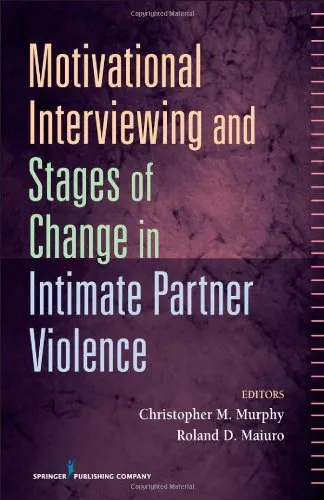
Christopher M. Murphy,Roland D. Maiuro
0 reviews
Published
pages
views
Introduction to "Motivational Interviewing and Stages of Change in Intimate Partner Violence" Addressing intimate partner violence (IPV) requires an integrated and empathetic approach that not only acknowledges the complex dynamics underpinning abusive behaviors but also s
Before you read
Addressing intimate partner violence (IPV) requires an integrated and empathetic approach that not only acknowledges the complex dynamics underpinning abusive behaviors but also supports those engaging in such behaviors to foster meaningful and sustainable change. "Motivational Interviewing and Stages of Change in Intimate Partner Violence" is a comprehensive guide aimed at helping professionals use evidence-based techniques like motivational interviewing (MI) and the transtheoretical model of change (TTM). This book provides a structured framework for working with individuals who perpetrate IPV and seeks to create pathways toward accountability, self-reflection, and constructive transformation.
Motivational interviewing, rooted in empathy and collaboration, is a patient-centered therapeutic method that encourages personal decision-making and internal motivation. Paired with Prochaska and DiClemente's stages of change model, MI becomes a powerful tool to help individuals navigate the complexities of behavior modification while allowing space for ambivalence and resistance. This book integrates theory, research, and practical applications to guide professionals in addressing violence effectively and compassionately.
The book is meticulously structured to provide a deep understanding of how motivational interviewing and the stages of change model can work synergistically to address intimate partner violence. It begins with an exploration of the psychological and behavioral roots of IPV, providing insights into the patterns and cycles that often sustain abusive relationships. Through case studies and real-world examples, the authors illustrate how denial, resistance, and ambivalence play a role in maintaining abusive behavior.
The core of the book revolves around practical applications of motivational interviewing techniques that foster self-awareness and encourage abusers to take responsibility for their actions. It explains each stage of change—precontemplation, contemplation, preparation, action, and maintenance—and how interventions can target specific psychological and emotional barriers in each phase. The book also emphasizes the importance of cultural sensitivity, safety planning, and working within multidisciplinary teams, making it a valuable resource for therapists, counselors, social workers, and criminal justice professionals.
"Motivation for change is not something one can hand over; it must be unearthed and nurtured within the individual."
"Understanding ambivalence is a cornerstone of effective intervention—change is rarely linear."
"Safety does not come from merely 'ending violence'; it stems from transformative accountability."
Intimate partner violence is a societal issue that affects millions of individuals across the globe, leaving devastating physical, emotional, and psychological impacts. Current practices often fail to address the underlying motivational and behavioral dynamics tied to IPV—focusing merely on punishment or correction without fostering genuine change. "Motivational Interviewing and Stages of Change in Intimate Partner Violence" fills this gap by offering a humanistic, evidence-based approach that fosters personal growth and accountability for those engaging in harmful behaviors.
The book also emphasizes the importance of empowering professionals to work beyond punitive systems, advocating for interventions that align both with the realities of human psychology and the necessity for systemic change. Through its clear writing, research-informed strategies, and actionable guidance, this book serves as a vital resource for anyone committed to creating safer, healthier relationships and communities.
Your question is answered in the context of this title and author. Each answer uses 2 points.
0 reviews, 4.5 average out of 5
Sign in to publish a review.
Ask a focused question and learn from the community.
Related references that continue this learning path.
Rafael Rodríguez-Delgado (auth.),M. C. Jackson,G. J. Mansell,R. L. Flood,R. B. Blackham,S. V. E. Probert (eds.)
David B. Rosengren
William R. Miller Phd,Stephen P Rollnick PhD,William R. Miller,Stephen Rollnick