Nudge: Improving Decisions About Health, Wealth, and Happiness
Richard H. Thaler,Prof. Cass R. Sunstein
2008
View book
Book guide and evaluation
Herb Goldberg;Robert T. Lewis
0 reviews
Published
pages
views
Introduction to 'Money Madness - The Psychology of Saving, Spending, Loving, and Hating Money' Everywhere you turn, money has a presence. It dictates the choices we make, the emotions we feel, and the relationships we foster. 'Money Madness - The Psychology of Sa
Before you read
Everywhere you turn, money has a presence. It dictates the choices we make, the emotions we feel, and the relationships we foster. 'Money Madness - The Psychology of Saving, Spending, Loving, and Hating Money' delves into the intricate relationship individuals have with money, revealing how it can dominate thoughts, behaviors, and emotions. Designed not just for economists or financial planners, but for anyone who has ever pondered the true meaning and impact of money in their lives, this book provides a comprehensive look into the psyche of financial decision-making.
In 'Money Madness', authors Herb Goldberg and Robert T. Lewis walk readers through the multidimensional world of money psychology. The book dissects money's role as an emotional catalyst, social symbol, and mental barometer. It is structured to illuminate why individuals have such varied responses to wealth and financial challenges. Through the exploration of money in different life contexts—be it in relationships, personal fulfillment, or as a tool of power—the authors endeavor to answer one pivotal question: Why does money have such a profound effect on us?
Goldberg and Lewis utilize a blend of psychological theory and practical advice, offering readers not just insights but real-world applications. They discuss the complications and conflicts arising from money interaction by exploring various archetypes—savers, spenders, lovers, and haters of money. Each archetype is analyzed in detail, providing vivid character studies that readers can relate to and learn from.
The book offers several critical insights:
“Money is not just a currency; it’s a mirror reflecting our deepest insecurities and desires.”
"The way you treat money is a direct reflection of how you treat yourself."
"In relationships, money is the third person that silently weaves its way into every conversation and decision."
'Money Madness' is an essential read in a world where financial decisions are omnipresent yet often misunderstood. It bridges the gap between economic choices and psychological motivations, offering guidance on how to achieve both financial security and emotional contentment. The insights offered are particularly relevant in today's age of consumerism and economic disparity, providing tools to navigate the complexities of modern financial life.
The book's relevance is further amplified by its ability to cater to a diverse audience. Whether you're a spender drowning in debt, a saver punishing yourself with extreme frugality, or simply someone puzzled by your own financial habits, this book holds the potential to transform your relationship with money, making it healthier and more conscious.
Your question is answered in the context of this title and author. Each answer uses 2 points.
0 reviews, 4.0 average out of 5
Sign in to publish a review.
Ask a focused question and learn from the community.
Related references that continue this learning path.
Richard H. Thaler,Prof. Cass R. Sunstein
Vicki Robin,Joe Dominguez,Monique Tilford
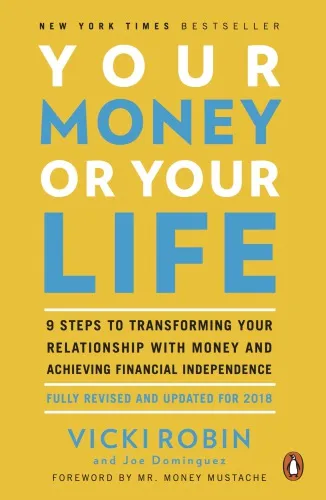
Vicki Robin;Joe Dominguez;Mr. Money Mustache