

Solutions Architect's Handbook: Kick-start your career as a solutions architect by learning architecture design principles and strategies, 2nd Edition
Saurabh Shrivastava,Neelanjali Srivastav
2022
View book
Book guide and evaluation
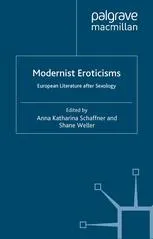
Anna Katharina Schaffner,Shane Weller (eds.)
0 reviews
Published
pages
views
Introduction to Modernist Eroticisms: European Literature After Sexology Modernist literature represents a turning point in how human sexuality was perceived, articulated, and represented. Modernist Eroticisms: European Literature After Sexology, edited by Anna Katharina Schaf
Before you read
Modernist literature represents a turning point in how human sexuality was perceived, articulated, and represented. Modernist Eroticisms: European Literature After Sexology, edited by Anna Katharina Schaffner and Shane Weller, delves into a fascinating chapter in cultural and literary history: how the emerging field of sexology in the late nineteenth and early twentieth centuries redefined the literary landscape of modernism in Europe.
Sexology, an interdisciplinary field that sought to study and understand human sexual behavior scientifically, profoundly influenced literary production throughout the modernist period. The book argues that the ideas circulating within this domain not only enabled a deeper exploration of erotic themes in literature but also redefined the relationship between the body, desire, and textual form. In this introduction, you'll discover the book's themes, objectives, and significance, as well as its insightful approach to examining critically acclaimed works of European literature within the framework of modernist eroticisms.
The book is structured around the complex interplay between modernist literature and the scientific discourse of sexology. Through a series of scholarly essays by prominent academics, Modernist Eroticisms investigates how writers such as James Joyce, Marcel Proust, D.H. Lawrence, and others drew upon the language and scientific insights of sexology to craft their narratives of desire, intimacy, and transgressive sexuality.
One of the key arguments of the book is that modernist literature, far from merely reflecting contemporary discourses on sexuality, actively shaped and expanded debates on sexual norms, deviations, and freedoms. In their exploration of eroticism, modernist authors often revolted against Victorian prudery, incorporating candid and sometimes fragmented descriptions of human desires that resonated with the radical contours of sexological study.
The essays span a variety of themes, including the medicalization of sexuality, the cultural politics of sexual identities, and the aesthetics of erotic transgression. Schaffner and Weller ensure that this volume captures the sheer diversity and complexity of European modernism by including writers from multiple traditions and genres. This interdisciplinary approach—bridging literature, psychoanalysis, sociology, and philosophy—underscores the intricate ways in which modernist eroticism continues to intrigue and challenge readers and scholars today.
"Modernist literature is inconceivable outside the revolutionary insights introduced by sexology, for it was here that authors found the vocabulary of their deepest provocations."
"Eroticism in modernist literature cannot be disentangled from the larger anxieties and aspirations of an era preoccupied with the boundaries of individual freedom."
In a time when questions about sexuality, identity, and freedom are more urgent than ever, Modernist Eroticisms offers invaluable insights into the origins of contemporary debates on eros and its representation. By illuminating the historical intersections between literature and sexology, the book equips readers with a nuanced understanding of how literature does more than reflect society—it shapes its values and norms.
The text is especially vital for those interested in modernism, cultural studies, and the history of sexuality. It bridges historical and theoretical gaps, inviting readers to think critically about how complex ideas migrate between disciplines and genres. Additionally, it encourages literary enthusiasts and scholars alike to rethink the ethical, aesthetic, and political stakes of erotic representation in narrative form.
Ultimately, Modernist Eroticisms sheds light on literature's power to provoke, challenge, and transform our understanding of human experience. Whether you are a student, researcher, or lover of modernist texts, this book is an essential contribution to ongoing discussions about literary modernism and the human condition.
Your question is answered in the context of this title and author. Each answer uses 2 points.
0 reviews, 4.1 average out of 5
Sign in to publish a review.
Ask a focused question and learn from the community.
Related references that continue this learning path.
Saurabh Shrivastava,Neelanjali Srivastav

Saurabh Shrivastava,Neelanjali Srivastav

Rafael Rodríguez-Delgado (auth.),M. C. Jackson,G. J. Mansell,R. L. Flood,R. B. Blackham,S. V. E. Probert (eds.)