
Sustaining Lean: Case Studies in Transforming Culture (Enterprise Excellence)
AME - Association for
2008
View book
Book guide and evaluation
Ronald Schleifer
0 reviews
Published
pages
views
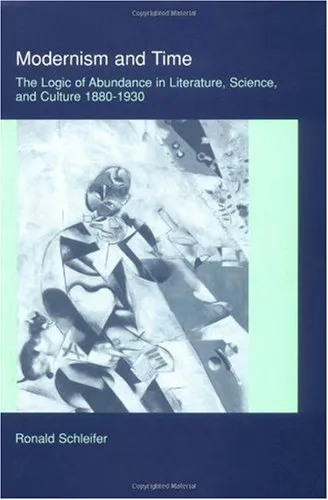
Introduction to 'Modernism and Time: The Logic of Abundance in Literature, Science, and Culture, 1880-1930' Published as a deep exploration of the intertwined relationship between modernism and temporal change across the late 19th and early 20th centuries, 'Modernism and
Before you read
Published as a deep exploration of the intertwined relationship between modernism and temporal change across the late 19th and early 20th centuries, 'Modernism and Time' examines how literature, science, and culture reflect and respond to the concept of time. This book delves into how writers, scientists, and thinkers challenged traditional notions of linear chronology by experimenting with perceptions of time, abundance, and creativity during the transformative period of 1880-1930. It situates modernism not just as an aesthetic or literary movement but as a broader cultural and intellectual shift that embraced new definitions of progress, innovation, and human experience within the expansive framework of time.
From literary giants like James Joyce and Virginia Woolf to groundbreaking scientific figures such as Albert Einstein, the book demonstrates how these key modernists conceptualized the universe and individual lives as imbued with temporal abundance rather than scarcity. Through an inter-disciplinary approach, it addresses questions that remain profoundly relevant today: How does our understanding of time shape our perception of the world? In what ways do modernist aesthetics embody this new logic of time? And how did advancements across scientific and cultural fields reshape collective thought?
The book offers a comprehensive investigation of modernism as a reflection of seismic shifts in the way humans understood and experienced time. It begins by contextualizing the late 19th and early 20th-century landscape, highlighting how discoveries in physics, biology, and psychology disrupted the previously held Newtonian and positivist notions of a universally constant and linear time. It examines how Einstein's theory of relativity recalibrated the very fabric of time and space, introducing the concept of simultaneity and temporal diversity.
In its literary exploration, the book probes into key modernist figures such as T.S. Eliot, Marcel Proust, James Joyce, and Virginia Woolf. These writers disentangled the linear narrative to focus on fragmented, subjective, and cumulative experiences of time. For instance, Woolf's To the Lighthouse exemplifies the flux of temporal dynamics, while Joyce's Ulysses compresses an entire epoch into the framework of a single day.
Moving beyond literature, the book integrates insights from biology, psychology, and economics—fields that also embraced the layered multiplicity of time during this era. Sigmund Freud's psychoanalytic theory unraveled complex temporal experiences embedded within memory and the subconscious. Similarly, economic theories of growth and abundance (as opposed to static equilibrium models) reflected an increasing acceptance of dynamic temporal processes.
The overarching argument throughout the chapters is that modernism's reimagining of time is characterized by an ethos of abundance. Instead of finite, linear, and limited views of temporality, the modernist period revels in richness, simultaneity, and the pluralism of temporal experience, rejecting scarcity-driven models of existence.
"Modernism is not merely an aesthetic experiment but a revolutionary reconfiguration of time itself."
"The logic of abundance emerges in the recognition that time is not a uniform thread but a kaleidoscope of overlapping experiences."
"In rejecting scarcity, modernism invites us to see human consciousness—and by extension, human culture—as exuberantly capacious."
Modernism is often considered one of the most transformative cultural movements in history. By exploring the relationship between modernism and time, 'Modernism and Time: The Logic of Abundance' offers new perspectives that link literature, science, and history to contemporary concerns about how we understand time and progress. This book matters because it challenges conventional interpretations of an era that continues to shape modern thought. It invites readers to recognize modernism not just as a style of writing or art, but as a profound philosophical response to the evolving world.
Additionally, its interdisciplinary approach ensures that modernism is understood in a rich and holistic manner, engaging readers across literary, scientific, and cultural fields. Whether you are a student of literary studies, science, or philosophy, this book serves as both an insightful examination of a pivotal historical moment and a guide to understanding modernism as a timeless, abundant resource for rethinking time and human experience.
Your question is answered in the context of this title and author. Each answer uses 2 points.
0 reviews, 4.0 average out of 5
Sign in to publish a review.
Ask a focused question and learn from the community.
Related references that continue this learning path.
AME - Association for
Stephen Jay Gould
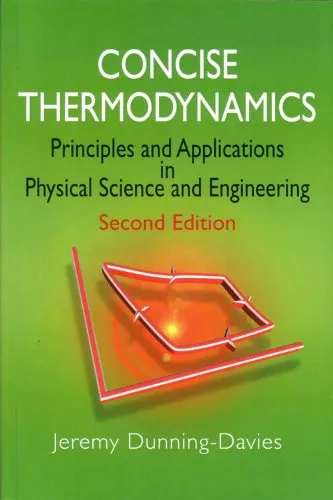
Jeremy Dunning-Davies