

Solutions Architect's Handbook - Third Edition: Kick-start your career with architecture design principles, strategies, and generative AI techniques
Saurabh Shrivastava,Neelanjali Srivastav
2024
View book
Book guide and evaluation
Anna Katharina Schaffner (auth.)
0 reviews
Published
pages
views
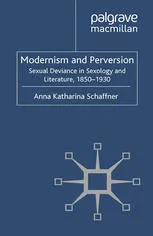
Modernism and Perversion: Sexual Deviance in Sexology and Literature, 1850–1930 Modernism and Perversion: Sexual Deviance in Sexology and Literature, 1850–1930 by Anna Katharina Schaffner is a seminal work that explores the intricate connections between sexology and litera
Before you read
Modernism and Perversion: Sexual Deviance in Sexology and Literature, 1850–1930 by Anna Katharina Schaffner is a seminal work that explores the intricate connections between sexology and literary modernism during a transformative period in cultural history. This book delves into how scientific discourses on sexual deviance influenced and, in turn, were shaped by the avant-garde literature of the late nineteenth and early twentieth centuries. It offers a profound analysis of the cultural anxieties and intellectual debates surrounding human sexuality, deviancy, and morality during an era characterized by radical shifts in societal norms.
The book analyzes the intersection of sexuality, science, and literature between 1850 and 1930, a period marked by profound cultural and intellectual change. Anna Katharina Schaffner examines how sexologists, such as Richard von Krafft-Ebing, Sigmund Freud, and Havelock Ellis, defined and categorized sexual deviance, including behaviors and identities that deviated from heteronormative standards. These early works in sexology laid the groundwork for understanding human sexuality, but they also reflected societal prejudices and regulatory mechanisms designed to control perceived moral transgressions.
Meanwhile, this era witnessed the emergence of modernist writers such as James Joyce, D.H. Lawrence, Virginia Woolf, and Marcel Proust, whose literary works often tackled themes of sexual identity and transgression in revolutionary ways. Schaffner argues that there was a dynamic exchange between the nascent field of sexology and avant-garde literature, whereby modernist writers both drew upon and challenged the parameters established by sexologists. These literary figures pushed boundaries not only in content but also in form, using experimental techniques to disrupt conventional narratives and explore the fragmented nature of human desire and identity.
The book thoroughly investigates how literary modernism questioned normative frameworks, using sexuality as a lens to explore broader societal taboos and cultural shifts. By scrutinizing texts that often provoked outrage and censorship, Schaffner unveils the complex ways art interacted with scientific theories to aid in understanding the fluid and multifaceted nature of human sexuality during this pivotal historical moment.
"Both sexology and literature sought to uncover hidden truths about human sexuality, albeit through radically different methods—one analytical, the other imaginative."
"The destabilization of normative constructs in modernist literature offered a symbolic liberation from the rigid taxonomies imposed by early sexology."
"Sexual deviance, rather than being purely pathologized, became a site of artistic inquiry and a metaphor for exploring broader epistemological ruptures."
Modernism and Perversion is not merely an academic text; it is an essential lens through which readers can better understand the profound cultural shifts that occurred from the Victorian era to the early twentieth century. By illuminating the symbiotic relationship between sexology and literary modernism, this book sheds light on how science and art mutually influenced one another during a time of significant change in attitudes toward sexuality.
It also holds contemporary relevance by examining how cultural narratives around sexual identity and morality evolve. In an era that continues to grapple with questions of inclusivity, representation, and the fluidity of human sexuality, Schaffner’s work provides historical context for ongoing debates. The book serves as a bridge between the past and the present, urging readers to investigate how intellectual and artistic movements shape societal perceptions of human desire and identity.
Whether you’re a scholar of modernist literature, a student of sexology’s history, or a curious reader interested in the interplay between science and art, Modernism and Perversion offers invaluable insights into a fascinating era. Its interdisciplinary approach ensures that it appeals to a wide range of audiences, fostering deeper understanding of the forces that shaped modern sexual discourse.
Your question is answered in the context of this title and author. Each answer uses 2 points.
0 reviews, 4.5 average out of 5
Sign in to publish a review.
Ask a focused question and learn from the community.
Related references that continue this learning path.
Saurabh Shrivastava,Neelanjali Srivastav
Pat Rogers (editor)

Schaffner,Anna Katharina