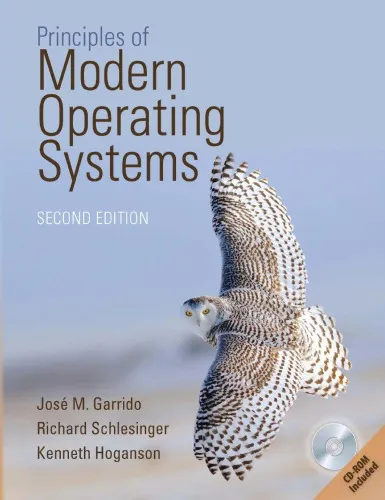
Principles Of Modern Operating Systems
Jose M Garrido,Richard Schlesinger,Kenneth Hoganson
2011
View book
Book guide and evaluation
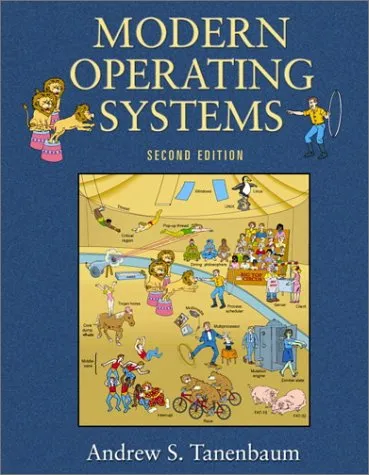
Andrew S. Tanenbaum
0 reviews
Published
pages
views
Introduction to 'Modern Operating Systems (2nd Edition) (GOAL Series)' Welcome to the realm of operating systems, where complexity meets simplicity, and innovation meets utility. 'Modern Operating Systems (2nd Edition) (GOAL Series)' by Andrew S. Tanenbaum is a cornerstone in
Before you read
Welcome to the realm of operating systems, where complexity meets simplicity, and innovation meets utility. 'Modern Operating Systems (2nd Edition) (GOAL Series)' by Andrew S. Tanenbaum is a cornerstone in the field of computer science, designed to illuminate the intricate architecture and responsibilities of operating systems. Crafted with precision and an educator's insight, this book remains a crucial resource for students, educators, and professionals eager to deepen their understanding of operating systems.
The book begins with introductory chapters that lay the groundwork by describing the purpose and history of operating systems. Tanenbaum meticulously unravels the complexities embedded within operating system architecture, allowing readers to gain foundational knowledge before delving into specific topics.
The text systematically examines core concepts such as process management, memory management, file systems, and input/output systems. Topics like deadlocks and resource management are covered extensively, providing readers with insights into how these systems handle contention and synchronization. The book also ventures into more advanced areas like distributed systems, security, and multimedia systems, offering a comprehensive overview that is both broad and deep.
Each chapter is structured to build on previous material, grounding complex concepts in practical examples. Through clear descriptions and thoughtful analogies, Tanenbaum demystifies the mechanisms that breathe life into computer systems, making them accessible without oversimplification. Moreover, the textbook includes various exercises and problems, challenging readers to apply what they have learned in meaningful ways.
"Operating systems are all about managing complexity: a vast array of software subsystems, each running concurrently, and each with its own complex set of problems."
"The art of good software design is in the ability to hide the complexity in elegant interfaces without over-simplification."
'Modern Operating Systems' is not merely an academic textbook; it is a beacon of clarity in a field notoriously complex and vast. Tanenbaum's work is revered for its pedagogical brilliance and practical relevance, making it essential reading for anyone serious about understanding how computers work at a fundamental level.
This edition enriches the reader's journey with updated content that reflects the advancements and ever-evolving landscape of technology. Its meticulous approach to explaining minute details ensures that both novices and seasoned practitioners find valuable insights and knowledge within its pages.
Above all, this book matters because it builds a bridge between theory and practice, empowering readers with the skills necessary to navigate and contribute to the world of computing effectively. Whether for academic purposes, professional endeavors, or personal curiosity, 'Modern Operating Systems' offers indispensable wisdom and guidance.
Persian Summary
Your question is answered in the context of this title and author. Each answer uses 2 points.
0 reviews, 4.2 average out of 5
Sign in to publish a review.
Ask a focused question and learn from the community.
Related references that continue this learning path.
Jose M Garrido,Richard Schlesinger,Kenneth Hoganson
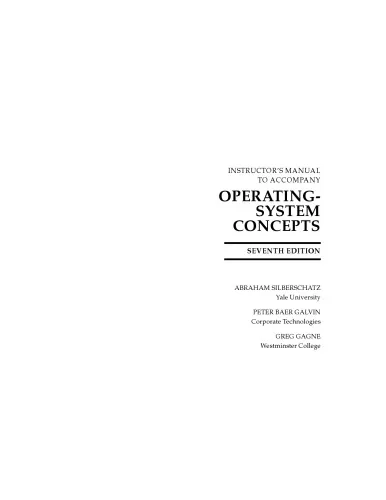
Abraham Silberschatz,Peter Baer Galvin,Greg Gagne