
Book guide and evaluation
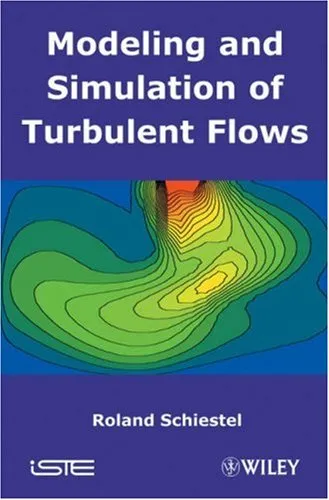
Modeling and Simulation of Turbulent Flows
Roland Schiestel
English
Beginner
Physics
4.4 / 5
0 reviews
2008
Published
751
pages
203
views
This title provides the fundamental bases for developing turbulence models on rational grounds. The main different methods of approach are considered, ranging from statistical modelling at various degrees of complexity to numerical simulations of turbulence. Each of these various
Before you read
What will you get from this book?
This title provides the fundamental bases for developing turbulence models on rational grounds. The main different methods of approach are considered, ranging from statistical modelling at various degrees of complexity to numerical simulations of turbulence. Each of these various methods has its own specific performances and limitations, which appear to be complementary rather than competitive. After a discussion of the basic concepts, mathematical tools and methods for closure, the book considers second order closure models. Emphasis is placed upon this approach because it embodies potentials for clarifying numerous problems in turbulent shear flows. Simpler, generally older models are then presented as simplified versions of the more general second order models. The influence of extra physical parameters is also considered. Finally, the book concludes by examining large Eddy numerical simulations methods. Given the book’s comprehensive coverage, those involved in the theoretical or practical study of turbulence problems in fluids will find this a useful and informative read.
Ask this book
Your question is answered in the context of this title and author. Each answer uses 2 points.
Sign in to ask the book assistant.
Reader reviews
0 reviews, 4.4 average out of 5
No reviews yet
If you have read this book, help the next reader with your experience.
Write a review
Sign in to publish a review.
Reader questions and answers
Ask a focused question and learn from the community.
Sign in to ask or answer a question.
No questions yet
Be the first to ask a clear, useful question.
What to read next
Related references that continue this learning path.


Modern Computer Vision with PyTorch: A Practical Roadmap From Deep Learning Fundamentals to Advanced Applications and Generative AI, 2nd Edition
V Kishore Ayyadevara,Yeshwanth Reddy
2023
View book