Book guide and evaluation
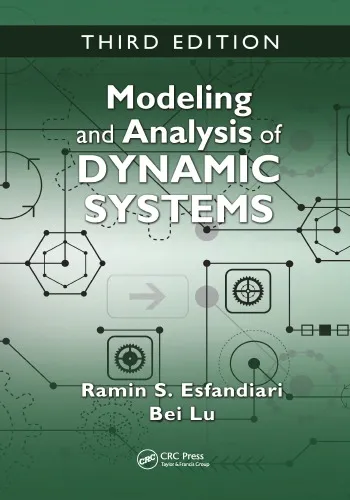
Modeling and Analysis of Dynamic Systems, Third Edition
Esfandiari, Ramin S.;Lu, Bei
English
Beginner
Mathematics
4.6 / 5
0 reviews
2018
Published
619
pages
588
views
Introduction to 'Modeling and Analysis of Dynamic Systems, Third Edition' Welcome to an engaging exploration of dynamic systems through the lens of the third and most advanced edition of 'Modeling and Analysis of Dynamic Systems.' This comprehensive text serves as an essential
Before you read
What will you get from this book?
Introduction to 'Modeling and Analysis of Dynamic Systems, Third Edition'
Welcome to an engaging exploration of dynamic systems through the lens of the third and most advanced edition of 'Modeling and Analysis of Dynamic Systems.' This comprehensive text serves as an essential resource for students, professionals, and enthusiasts in engineering, mathematics, and related disciplines who seek a deeper understanding of dynamic systems and their applications.
Detailed Summary
In its third installment, 'Modeling and Analysis of Dynamic Systems' expands upon the fundamental concepts established in earlier editions while integrating cutting-edge methodologies suitable for contemporary challenges. This edition emphasizes a well-rounded approach toward modeling, simulation, and practical analysis of dynamic systems, balancing theoretical underpinnings with real-world applications.
The book provides exhaustive coverage of topics essential to understanding complex dynamic systems. By delving into differential equation models, system transformation, and state-space analysis, readers gain comprehensive insights into the behavior and control of such systems. One of the hallmarks of this book is its structured progression from foundational principles to advanced methodologies, making it accessible to readers of varying expertise levels.
Additionally, the third edition places significant emphasis on MATLAB® for simulation, offering a hands-on experience that bridges theory with practice. Readers are equipped with the tools necessary to perform dynamic analysis, evaluate system responses, and implement simulations effectively.
Key Takeaways
- Comprehensive understanding of both linear and nonlinear dynamic systems.
- Application of Laplace transforms and system transfer functions to simplify complex systems for analysis.
- Mastery of state-space models and the role they play in modern control systems.
- Practical instruction in MATLAB® for modeling, analysis, and simulation of dynamic systems.
- Insights into system stability, control, and performance optimization.
Famous Quotes
"Understanding the dynamic nature of systems is akin to comprehending the pulse of technological advancement."
"The interplay of theory and practice in system dynamics tells a story that is both riveting and enlightening."
Why This Book Matters
This book serves as a cornerstone in the field of dynamic systems, offering indispensable insights that marry theoretical rigor with practical applications. The third edition addresses not only the basics but also the more nuanced aspects of system dynamics, ensuring it remains a relevant and essential text amidst evolving technological landscapes.
Its meticulous integration of MATLAB® underscores its pedagogical strengths, enhancing learning through interactive engagement. Whether used as a textbook for graduate-level courses or a reference for practitioners, this book facilitates a profound comprehension of how dynamic systems work and how they can be manipulated to achieve desired outcomes.
The collaborative authorship by Esfandiari and Lu reflects a synergy of perspectives that enriches the narrative with depth and clarity. This makes the book not just an academic resource, but a beacon guiding both current and future generations in understanding and harnessing the power of dynamic systems.
Ask this book
Your question is answered in the context of this title and author. Each answer uses 2 points.
Sign in to ask the book assistant.
Reader reviews
0 reviews, 4.6 average out of 5
No reviews yet
If you have read this book, help the next reader with your experience.
Write a review
Sign in to publish a review.
Reader questions and answers
Ask a focused question and learn from the community.
Sign in to ask or answer a question.
No questions yet
Be the first to ask a clear, useful question.
What to read next
Related references that continue this learning path.