Book guide and evaluation
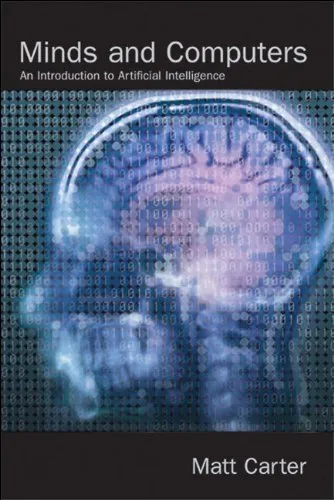
Minds and Computers: The Philosophy of Artificial Intelligence
Matt Carter
English
Beginner
Artificial Intelligence (AI)
3.5 / 5
0 reviews
2007
Published
232
pages
537
views
Welcome to the fascinating journey through the intersection of human cognition and artificial intelligence, as explored in 'Minds and Computers: The Philosophy of Artificial Intelligence.' This book delves into the philosophical questions that arise when machines emulate huma
Before you read
What will you get from this book?
Welcome to the fascinating journey through the intersection of human cognition and artificial intelligence, as explored in 'Minds and Computers: The Philosophy of Artificial Intelligence.' This book delves into the philosophical questions that arise when machines emulate human thought and the implications this has for our understanding of the mind.
Detailed Summary
'Minds and Computers' offers a comprehensive overview of the philosophical issues surrounding artificial intelligence (AI). The book tackles foundational questions such as: "Can machines think?" and "What is the mind?" It critically examines the roots of these questions, drawing from philosophy, cognitive science, and computer science.
The narrative begins with the historical context of AI, discussing the evolution of the field from its inception to modern advancements. The book captures the thoughts of renowned philosophers and scientists, analyzing theories like the Turing Test, the Chinese Room Argument, and the philosophy of mind. Through these discussions, it provides readers with a framework to understand how AI reflects our own cognitive processes.
By addressing both the potential and the limitations of AI, this work encourages readers to ponder the moral and ethical dimensions of artificial intelligence. What does it mean for machines to possess intelligence? How do we determine the boundaries of machine consciousness? 'Minds and Computers' invites readers to explore these intriguing questions with scholarly depth.
Key Takeaways
- The relationship between human intelligence and machine intelligence is more complex than it appears on the surface.
- AI challenges our traditional notions of cognition, necessitating a re-evaluation of what constitutes a 'mind'.
- Philosophical tools can help us grapple with ethical dilemmas posed by AI advancements.
- Understanding AI's capabilities requires an interdisciplinary approach, blending insights from computer science, philosophy, and psychology.
Famous Quotes From the Book
“The question is not whether machines can think, but what we can learn about ourselves from machines that appear to think.”
“Philosophy and AI are entwined in a dance, revealing and concealing the mysteries of cognition.”
Why This Book Matters
'Minds and Computers' stands out due to its multidisciplinary approach to exploring AI. It is not just a technical examination but a philosophical inquiry into the very nature of intelligence and consciousness. This makes it an essential read for those interested in understanding the moral, ethical, and existential questions tied to AI's ascent.
In a world where AI technologies are rapidly advancing, the importance of questioning the implications of creating machines that might one day reflect human-like cognition cannot be understated. 'Minds and Computers' offers a rich, thought-provoking exploration, encouraging readers to reflect deeply on what it means to create technology in our image and how this impacts our future.
This book is invaluable for students, educators, philosophers, scientists, and anyone dedicated to understanding the full spectrum of challenges and opportunities presented by artificial intelligence. It equips readers with a thorough philosophical foundation to engage with one of the most pressing intellectual challenges of our time.
Ask this book
Your question is answered in the context of this title and author. Each answer uses 2 points.
Sign in to ask the book assistant.
Reader reviews
0 reviews, 3.5 average out of 5
No reviews yet
If you have read this book, help the next reader with your experience.
Write a review
Sign in to publish a review.
Reader questions and answers
Ask a focused question and learn from the community.
Sign in to ask or answer a question.
No questions yet
Be the first to ask a clear, useful question.
What to read next
Related references that continue this learning path.
How to Compete in the Age of Artificial Intelligence: Implementing a Collaborative Human-Machine Strategy for Your Business
Soumendra Mohanty,Sachin Vyas
2018
View book

The Measure of All Minds: Evaluating Natural and Artificial Intelligence
José Hernández-Orallo
2017
View book