

Book guide and evaluation
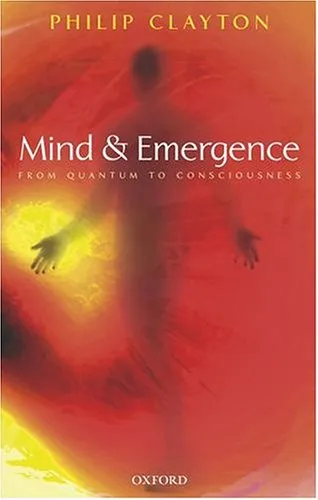
Mind and Emergence - From Quantum to Consciousness
Philip Clayton
English
Beginner
Art
4.4 / 5
0 reviews
2005
Published
249
pages
261
views
Introduction to "Mind and Emergence: From Quantum to Consciousness" "Mind and Emergence: From Quantum to Consciousness" is a thought-provoking exploration of some of the most profound and complex questions about human existence and the nature of reality. Written by Philip Clay
Before you read
What will you get from this book?
Introduction to "Mind and Emergence: From Quantum to Consciousness"
"Mind and Emergence: From Quantum to Consciousness" is a thought-provoking exploration of some of the most profound and complex questions about human existence and the nature of reality. Written by Philip Clayton, this book delves into the intersections of philosophy, science, theology, and consciousness studies. By examining how emergent phenomena arise from the complexity of systems, the book addresses the intriguing transitions from physical processes at the quantum level to subjective experiences and conscious awareness. It is a compelling contribution to contemporary debates about the mind-body connection, the philosophy of science, and the profound mysteries of human consciousness.
Detailed Summary of the Book
At its core, the book seeks to explain how seemingly unrelated levels of reality—such as quantum mechanics, biological processes, and human consciousness—are interconnected through "emergence." It tackles questions about the relationship between the material and non-material aspects of the universe, providing a nuanced account of how complex systems give rise to entirely new properties. This process of emergence offers insights into how consciousness could arise out of physical processes within the brain.
Clayton begins by laying the groundwork for the philosophical and scientific basis of emergence. He discusses how reductionist approaches, focused solely on breaking systems into their constituent parts, often fail to fully explain higher-level phenomena. Instead, he introduces emergentist thinking, which posits that new properties and behaviors emerge at higher levels of complexity that cannot be explained solely in terms of lower-level components.
The midsection of the book dives into consciousness as the most striking example of emergence. Clayton examines how subjective experience, intentionality, and self-awareness transcend the purely physical processes of the brain, while still being deeply rooted in them. By engaging with quantum mechanics, neurobiology, and systems theory, he presents a compelling case for a non-reductive approach to mind and brain studies.
The book concludes with philosophical, theological, and ethical reflections on what emergence and consciousness mean for the nature of reality and humanity's place within it. By arguing against strict materialism and dualism, Clayton proposes a middle path—one that respects the complexity of the natural world while leaving room for metaphysical and existential questions.
Key Takeaways
- Emergence is the process through which complex systems produce new properties and patterns that cannot be reduced to their simpler components.
- Reductionism and dualism are inadequate frameworks for understanding consciousness and the mind-body relationship.
- The study of consciousness requires an interdisciplinary approach, bridging philosophy, science, and theology.
- Quantum mechanics offers intriguing insights into the uncertainty and interconnectedness underlying reality, which could hold implications for understanding the mind.
- Human consciousness is both deeply rooted in biological processes and irreducible to them, offering space for metaphysical exploration.
Famous Quotes from the Book
"Emergence is not a repudiation of science, but an invitation to science to consider its limits and possibilities in the face of complexity."
"Consciousness remains one of science's greatest mysteries, precisely because it bridges the gulf between matter and mind."
"To deny the emergent properties of systems is to deny the richness and unpredictability of reality itself."
Why This Book Matters
"Mind and Emergence: From Quantum to Consciousness" is a vital text for anyone seeking to bridge the divide between science and the humanities. It offers a fresh perspective on age-old questions about the nature of self, existence, and the interconnectedness of reality. The book challenges dogmatic materialism while welcoming rigorous scientific inquiry, making it a valuable resource for academics, philosophers, theologians, and curious readers alike.
Moreover, its interdisciplinary approach fosters a deeper appreciation for the complexity of existence and the role of human consciousness within it. For people grappling with questions about free will, the soul, or the limitations of scientific reductionism, this book provides not just answers, but also opportunities for further exploration.
Ultimately, by addressing the phenomenon of emergence and its connection to consciousness, Clayton paves the way for a more integrated understanding of mind and reality. It is a must-read for anyone seeking to grasp the profound mysteries of who we are and how we are connected to the cosmos.
Ask this book
Your question is answered in the context of this title and author. Each answer uses 2 points.
Sign in to ask the book assistant.
Reader reviews
0 reviews, 4.4 average out of 5
No reviews yet
If you have read this book, help the next reader with your experience.
Write a review
Sign in to publish a review.
Reader questions and answers
Ask a focused question and learn from the community.
Sign in to ask or answer a question.
No questions yet
Be the first to ask a clear, useful question.
What to read next
Related references that continue this learning path.


Modern Computer Vision with PyTorch: A Practical Roadmap From Deep Learning Fundamentals to Advanced Applications and Generative AI, 2nd Edition
V Kishore Ayyadevara,Yeshwanth Reddy
2023
View book