

Book guide and evaluation
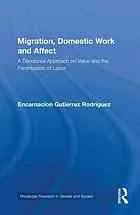
Migration, domestic work and affect : a decolonial approach on value and the feminization of labor
Encarnacion Gutierrez Rodriguez
English
Beginner
Strategic Management
4.3 / 5
0 reviews
2010
Published
235
pages
614
views
Introduction Welcome to 'Migration, Domestic Work and Affect: A Decolonial Approach on Value and the Feminization of Labor,' a comprehensive exploration of the complex intersections between migration, domestic work, and the affective dimensions that shape them. This book delve
Before you read
What will you get from this book?
Introduction
Welcome to 'Migration, Domestic Work and Affect: A Decolonial Approach on Value and the Feminization of Labor,' a comprehensive exploration of the complex intersections between migration, domestic work, and the affective dimensions that shape them. This book delves into the broader social, economic, and cultural frameworks that influence the feminization of labor, especially in the context of globalization and transnational movements.
Detailed Summary
The book begins by setting the historical and theoretical context, examining how colonial legacies shape contemporary labor dynamics. It critiques traditional economic theories for often overlooking the less visible, yet crucial, role of affect in understanding labor relations. Through a decolonial lens, the text challenges the Eurocentric perspectives that tend to dominate discussions around migration and work.
Furthermore, 'Migration, Domestic Work, and Affect' emphasizes the lived experiences of migrant domestic workers, mostly women, who navigate a myriad of social challenges. Their stories illuminate the intricate entanglements of power, race, and gender that define their labor conditions. By centering their voices, the book highlights the emotional dimensions of domestic work and how these contribute to new forms of value beyond monetary compensation.
This work also critiques the feminization of labor, arguing that women’s work has become a commodity, particularly in global care chains. It stresses the significance of understanding how cultural narratives and economic policies interlock to shape labor markets that privilege certain forms of work while rendering others invisible.
Key Takeaways
- A nuanced perspective on how affect influences labor practices and economic value.
- A robust critique of the ways in which global capitalism exploits gendered labor.
- Deep insights into the colonial roots of current labor practices.
- The importance of recognizing and valuing the emotional and affective components of domestic work.
Famous Quotes from the Book
"Seeing domestic work through a decolonial lens means recognizing that care work, often dismissed as unskilled, is in fact central to the global economy."
"Affective labor cannot be understood without considering the histories of migration and colonialism that have shaped its existence."
Why This Book Matters
This book is a vital contribution to contemporary discussions on migration and labor. By employing a decolonial approach, it deciphers the hidden processes that govern global labor markets and the roles migrant women play within them. Its emphasis on the affective dimension of labor not only broadens the scope of economic value but also proposes a more humanized understanding of work. In acknowledging and valuing these often-overlooked aspects, the book advocates for policy changes that recognize the critical contributions of migrant labor to global societies.
Ask this book
Your question is answered in the context of this title and author. Each answer uses 2 points.
Sign in to ask the book assistant.
Reader reviews
0 reviews, 4.3 average out of 5
No reviews yet
If you have read this book, help the next reader with your experience.
Write a review
Sign in to publish a review.
Reader questions and answers
Ask a focused question and learn from the community.
Sign in to ask or answer a question.
No questions yet
Be the first to ask a clear, useful question.
What to read next
Related references that continue this learning path.
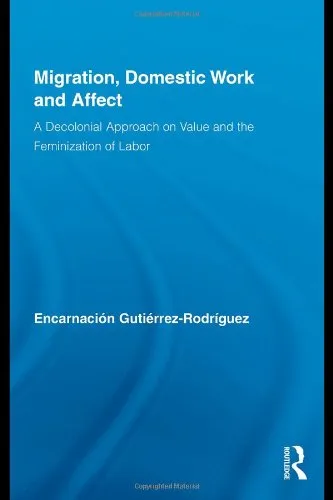
Migration, Domestic Work and Affect: A Decolonial Approach on Value and the Feminization of Labor (Routledge Research in Gender and Society)
Encarnacion Gutierrez Rodriguez
2010
View book

Global Migration, Gender, and Health Professional Credentials: Transnational Value Transfers and Losses
Margaret Walton-Roberts (editor)
2022
View book