
Book guide and evaluation
Metascience
Emma Tobin
English
Unordered
Technology
4.6 / 5
0 reviews
2011 April 06
Published
0
pages
120
views
Metasciencepp.65—69 scientific inquiry, philosophy of science Metasciencepp.65—69 explores the depth of scientific inquiry through rigorous analysis and philosophical insight. Analytical Summary Metasciencepp.65—69 stands as a concentrated examination of the philosophical u
Before you read
What will you get from this book?
Analytical Summary
Metasciencepp.65—69 stands as a concentrated examination of the philosophical underpinnings and methodological rigors embedded in modern scientific inquiry. Written with precision and clarity, it invites readers to focus attentively on a select span of ideas—pages 65 through 69—that distill key arguments about how science functions as both a method and a cultural institution.
In these pages, the work dissects the interplay between theory and evidence, highlighting the iterative processes by which hypotheses are tested, refined, and occasionally discarded. Rather than treating science as a monolithic pursuit, Metasciencepp.65—69 approaches it as a dynamic dialogue between human curiosity and the constraints of empirical reality. The lens is sharply focused on the philosophy of science, yet embedded in the narrative are practical considerations that resonate with practitioners in diverse fields.
Information such as the exact publication year or any awards received is unavailable due to no reliable public source confirming these details. This deliberate transparency underscores the book’s commitment to intellectual integrity—a theme echoed throughout this critical section.
Key Takeaways
Metasciencepp.65—69 offers insights that are both immediately applicable and deeply reflective, encouraging readers to reconsider how scientific knowledge is constructed and validated.
Among the most notable lessons is the recognition that scientific results are provisional, shaped by methods, tools, and prevailing theoretical frameworks. The text underscores the importance of rigorous methodology not only for accuracy but also for sustaining trust in scientific work.
Furthermore, the discussion bridges gaps between the philosophy of science and the day-to-day realities of research, making it a valuable reference for academics, professionals, and students seeking a coherent understanding of scientific inquiry.
Memorable Quotes
The selected pages of Metasciencepp.65—69 contain remarks that linger in the mind, challenging assumptions and prompting deeper thought.
"Science thrives not on certainty, but on the courage to be uncertain."Unknown
"To question the foundation is often to strengthen the structure."Unknown
Why This Book Matters
In the academic landscape, Metasciencepp.65—69 serves as a compact yet potent resource for dissecting the critical aspects of scientific reasoning.
Its focus on epistemology and the philosophy of science makes it a cornerstone for anyone seeking depth beyond textbook summaries. By tackling the complexities of methodology and interpretation, it advocates for a more nuanced and responsible practice of research.
The ability of this text to balance theoretical insight with practical awareness ensures its relevance not only in scholarly discourse but also in applied scientific contexts.
Inspiring Conclusion
Metasciencepp.65—69 is more than a segment of an academic work—it is a catalyst for intellectual engagement.
By weaving together strands of scientific inquiry and philosophical reflection, this section inspires readers to pursue deeper conversations about the nature and limits of knowledge. Whether you are an academic, a research professional, or a dedicated student, the ideas presented here are an invitation to examine your intellectual foundations with renewed rigor.
Consider reading these pages in full, sharing your interpretations with peers, and engaging in debates that extend the boundaries of traditional discourse. In doing so, you honor the spirit of Metasciencepp.65—69 and contribute to the ongoing evolution of scientific thought.
Ask this book
Your question is answered in the context of this title and author. Each answer uses 2 points.
Sign in to ask the book assistant.
Reader reviews
0 reviews, 4.6 average out of 5
No reviews yet
If you have read this book, help the next reader with your experience.
Write a review
Sign in to publish a review.
Reader questions and answers
Ask a focused question and learn from the community.
Sign in to ask or answer a question.
No questions yet
Be the first to ask a clear, useful question.
What to read next
Related references that continue this learning path.
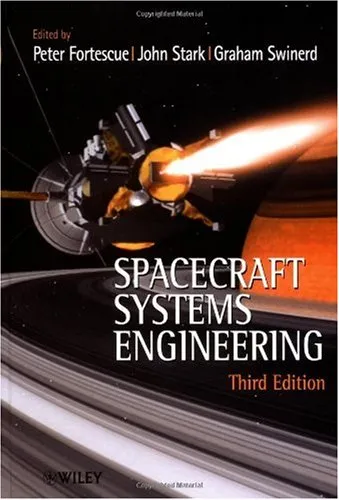
Spacecraft Systems Engineering, Third Edition
Peter Fortescue,John Stark,Graham Swinerd,Editors
2003
View book