Book guide and evaluation
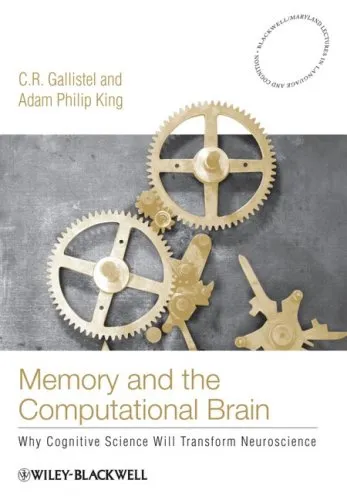
Memory and the computational brain: why cognitive science will transform neuroscience
C. R. Gallistel,Adam Philip King
English
Intermediate
novel
4.0 / 5
0 reviews
2009
Published
335
pages
587
views
Welcome to an exploration of the intricate connections between memory, cognition, and the brain through the enlightening lens of cognitive science in the book "Memory and the Computational Brain: Why Cognitive Science Will Transform Neuroscience" by C. R. Gallistel and Adam P
Before you read
What will you get from this book?
Welcome to an exploration of the intricate connections between memory, cognition, and the brain through the enlightening lens of cognitive science in the book "Memory and the Computational Brain: Why Cognitive Science Will Transform Neuroscience" by C. R. Gallistel and Adam Philip King. This book provides a groundbreaking discourse that promises to reshape our understanding of how the brain operates and stores information, presenting compelling arguments and sophisticated theories that are bound to revolutionize contemporary neuroscience.
Detailed Summary of the Book
In "Memory and the Computational Brain," Gallistel and King challenge traditional perspectives on how memory and brain function are conceptualized in neuroscience. They propose that the brain should be viewed not just as a biological organ but as an intricate computational network capable of extraordinary feats. The book delves into the concept of information as it relates to brain processes, emphasizing that cognitive processes — especially memory — can be best understood through computational theories.
The authors argue that the physical structure of the brain should be appreciated as a series of codes and algorithms that embody cognitive science's fundamental principles. They explore the trends in cognitive neuroscience, focusing on how computational models offer more accurate and profound insights into how the brain encodes, stores, and retrieves information. By comparing neurons to the components of a computer, the book illustrates how information processing theories can shed new light on neural substrates and cognitive functions.
Key Takeaways
- The brain is essentially a computational device that processes information, challenging traditional biological perspectives.
- Memory is not simply stored in the brain but is dynamically encoded and retrieved through complex neural codes.
- Cognitive science is pivotal in advancing neuroscience, offering transformative insights into brain-behavior relationships.
- Understanding the brain requires an interdisciplinary approach, merging neuroscience, psychology, computer science, and cognitive science.
Famous Quotes from the Book
"The limits of our perceptions are bound by the constraints of our computational abilities."
"Memory, often thought immutable, is in fact an agile ballet of processes influenced by algorithmic underpinnings."
Why This Book Matters
"Memory and the Computational Brain" underlines the importance of cognitive science in the current and future landscape of neuroscience. It encourages researchers, scholars, and academics to rethink and question traditional approaches to understanding the brain. This book stands as a pivotal resource for anyone keen on bridging the gap between cognitive theories and neurobiological science.
By grounding neuroscience in computational models, Gallistel and King foster a deeper comprehension of cognitive phenomena, offering substantial evidence that could ultimately lead to breakthroughs in mental health, artificial intelligence, and neural engineering. For students, researchers, and enthusiasts of cognitive science and neuroscience, this book is crucial in navigating and deciphering the complexity of brain functions and memory.
Ask this book
Your question is answered in the context of this title and author. Each answer uses 2 points.
Sign in to ask the book assistant.
Reader reviews
0 reviews, 4.0 average out of 5
No reviews yet
If you have read this book, help the next reader with your experience.
Write a review
Sign in to publish a review.
Reader questions and answers
Ask a focused question and learn from the community.
Sign in to ask or answer a question.
No questions yet
Be the first to ask a clear, useful question.
What to read next
Related references that continue this learning path.