
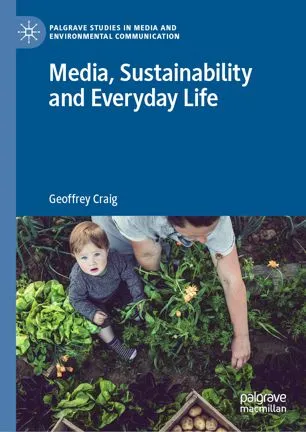
Book guide and evaluation
Media, Sustainability and Everyday Life
Geoffrey Craig
English
Intermediate
Technology
4.5 / 5
0 reviews
2019
Published
245
pages
465
views
Media, Sustainability and Everyday Life environmental communication, sustainable media practices Explore Media, Sustainability and Everyday Life and uncover how media shapes sustainable habits and daily decision-making. Analytical Summary In Media, Sustainability and Everyd
Before you read
What will you get from this book?
Analytical Summary
In Media, Sustainability and Everyday Life, Geoffrey Craig offers a meticulous scholarly investigation into the intricate connections between media systems, sustainability discourse, and the routines of daily living. Written for a diverse audience of academics, professionals, and informed citizens, the work bridges theory and practice by elucidating how various media—traditional, digital, and emerging—mediate sustainability narratives and influence ecological consciousness at the micro and macro levels.
This book engages deeper questions about the role of media in shaping perceptions and actions towards environmental sustainability. It considers news reporting, advertising, entertainment, and social media as vital cultural agents that can inspire change or reinforce existing unsustainable patterns. Craig critically examines both the empowering and constraining aspects of media’s influence, revealing how communicative frameworks can support sustainable transitions in everyday life.
Drawing from interdisciplinary research, including media studies, environmental sociology, and communication theory, the text situates sustainability not merely as a policy goal but as a lived reality. Readers encounter case studies, theoretical models, and empirical data that open space for reflection on their own media consumption practices and the potential for fostering responsible environmental engagement.
Key Takeaways
The insights from Media, Sustainability and Everyday Life reveal tangible ways to understand and harness media for sustainable outcomes.
Firstly, sustainability communication is multidirectional, involving both top-down messaging from institutions and grassroots narratives from communities.
Secondly, everyday interactions with media—whether watching a documentary, reading a news article, or engaging with online platforms—subtly shape one’s environmental values and behaviours.
Thirdly, fostering sustainable media practices requires critical literacy, enabling individuals to discern not just content, but context, intent, and impact.
Fourthly, the book underlines the importance of cross-sector collaboration among media professionals, policy-makers, educators, and activists to strengthen sustainable discourse.
Memorable Quotes
“Media shapes not just what we know about sustainability, but how we feel it in our daily lives.”Unknown
“Every tweet, article, and film can be a building block in constructing a more sustainable future.”Unknown
“Critical media literacy is essential for separating genuine sustainability practices from greenwashing.”Unknown
Why This Book Matters
In an era marked by climate urgency and evolving media landscapes, Media, Sustainability and Everyday Life acts as both a guide and a mirror.
The relevance of this book lies in its capacity to connect personal media habits with global sustainable development objectives. It interrogates not only content but also the systems that propagate messages—broadcast networks, digital algorithms, and social influencers—highlighting their potential to be catalysts for ecological responsibility.
Information unavailable on awards or exact publication year, as no reliable public source confirms these details. Nevertheless, its thematic resonance is timeless, standing as an indispensable resource for policy work, educational curricula, and community-based sustainability initiatives.
Inspiring Conclusion
Ultimately, Media, Sustainability and Everyday Life invites readers to re-examine the stories they consume and share. The text is both a compendium of insights and a call to action, encouraging an active stance towards sustainable media engagement.
By understanding how media frames our perceptions of sustainability, readers can become informed participants in shaping a future where daily life harmonizes with ecological imperatives. This book’s authoritative analysis and accessible style make it a valuable tool for anyone committed to bridging the gap between communication and environmental responsibility.
Now is the moment to read, share, and discuss Media, Sustainability and Everyday Life in your circles—transforming awareness into action and contributing to a more sustainable world.
Ask this book
Your question is answered in the context of this title and author. Each answer uses 2 points.
Sign in to ask the book assistant.
Reader reviews
0 reviews, 4.5 average out of 5
No reviews yet
If you have read this book, help the next reader with your experience.
Write a review
Sign in to publish a review.
Reader questions and answers
Ask a focused question and learn from the community.
Sign in to ask or answer a question.
No questions yet
Be the first to ask a clear, useful question.
What to read next
Related references that continue this learning path.
Understanding Media Cultures: Social Theory and Mass Communication 2nd Edition
Nicholas Stevenson
2002
View book