
Mathematical Structures of the Universe
Michał Heller,Michał Eckstein,Sebastian Szybka
2014
View book
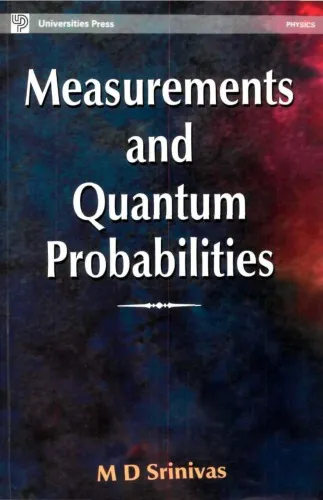
Book guide and evaluation
M.D.Srinivas
0 reviews
Published
pages
views
Introduction to "Measurements and Quantum Probabilities" "Measurements and Quantum Probabilities" embarks on a profound journey into the nuances and complexities of quantum mechanics, aiming to demystify one of the most enigmatic aspects of the physical world: the measurem
Before you read
"Measurements and Quantum Probabilities" embarks on a profound journey into the nuances and complexities of quantum mechanics, aiming to demystify one of the most enigmatic aspects of the physical world: the measurement problem and the role of probabilities in quantum theory. Written by M.D. Srinivas, this book offers a comprehensive exploration of the mathematical foundations, philosophical interpretations, and scientific implications of measurement and probabilities in quantum systems.
By bridging theoretical concepts with mathematical precision, this book caters to both the seasoned physicist seeking in-depth insights and the inquisitive learner aiming to appreciate the broader implications of quantum theory. The work is deeply analytical yet maintains an engaging narrative that ensures accessibility without compromising rigor.
The core of "Measurements and Quantum Probabilities" lies in unraveling the meaning and significance of quantum measurements. Quantum theory diverges from classical physics by introducing probabilities at the very foundation of its description of nature. This book tackles these probabilities as central to understanding the outcomes of quantum measurements, rooting the discussion in both mathematical frameworks and interpretational debates.
The book opens with an introductory overview of probability theory and its evolution, establishing a strong foundation for understanding the role of probability in science. It next delves into the specifics of quantum mechanics, dissecting the axiomatic structure of the theory, including Hilbert spaces, observables, and the Born interpretation of probability.
A significant portion of the book explores the measurement problem, where the act of observing a quantum system seemingly collapses its wave function into a definite state. Various interpretations of quantum mechanics—such as the Copenhagen interpretation, the Many-Worlds theory, and objective collapse theories—are critically examined, emphasizing their divergent views on measurement and probability.
Beyond its philosophical inquiries, the book adopts a highly technical approach, rigorously examining quantum probability distributions, density matrices, and their applications in describing measurement processes. Advanced topics like quantum entanglement, Bell's theorem, and decoherence are also extensively covered, showcasing the interplay between theory and experimental validation.
The book concludes by emphasizing the implications of quantum mechanics in foundational physics, technology (like quantum computing), and our understanding of reality itself, encouraging readers to contemplate the philosophical ramifications of this profound yet puzzling theory.
"To measure is to interact, and to interact is to fundamentally alter the fragile quantum system we seek to observe."
"The language of quantum probabilities is not mere mathematics—it is a translation of nature's own dialect."
"In quantum mechanics, the act of looking is just as significant as what we look at."
"Measurements and Quantum Probabilities" is an essential resource for anyone seeking to grapple with the foundational questions of quantum physics. Unlike many treatments that either oversimplify or delve too deeply into mathematical abstraction, this book strikes an unparalleled balance. Its treatment of quantum measurements as a fundamental concept makes it particularly valuable for students and researchers striving to connect quantum mechanics' theoretical scaffolding with practical applications.
Furthermore, the book’s holistic approach—encompassing rigorous mathematics, philosophical debates, and emerging quantum technologies—ensures that it appeals to a broad audience. By illuminating the inherent probabilistic nature of our universe and the role of observation in determining reality, this book stimulates both intellectual curiosity and deeper comprehension of the quantum world. "Measurements and Quantum Probabilities" is more than a text—it’s an invitation to engage with the profound mysteries of our existence.
Your question is answered in the context of this title and author. Each answer uses 2 points.
0 reviews, 4.6 average out of 5
Sign in to publish a review.
Ask a focused question and learn from the community.
Related references that continue this learning path.
Michał Heller,Michał Eckstein,Sebastian Szybka
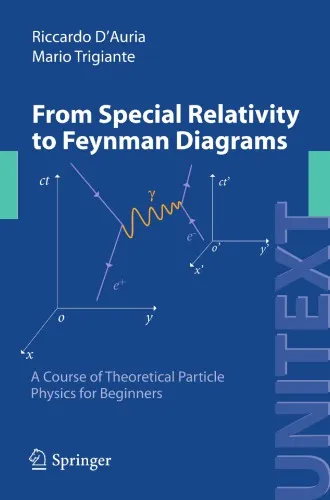
D'Auria, Riccardo;Trigiante, Mario
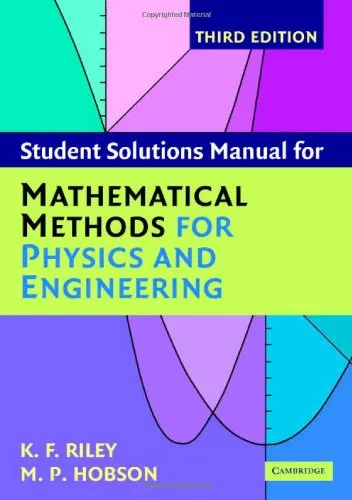
K. F. Riley,M. P. Hobson
K. F. Riley,M. P. Hobson