
Book guide and evaluation
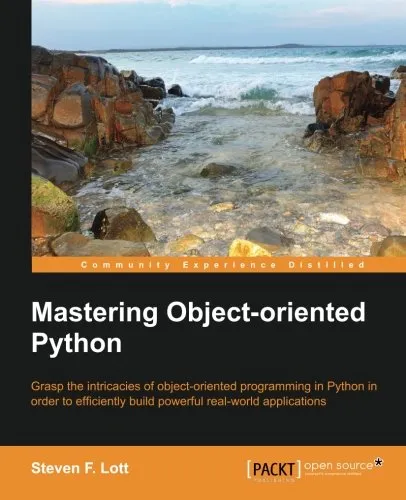
Mastering Object-oriented Python
Steven F. Lott
English
Beginner
Software Development
4.9 / 5
0 reviews
2014
Published
634
pages
594
views
Grasp the intricacies of object-oriented programming in Python in order to efficiently build powerful real-world applications Overview Create applications with flexible logging, powerful configuration and command-line options, automated unit tests, and good documentation. Use th
Before you read
What will you get from this book?
Grasp the intricacies of object-oriented programming in Python in order to efficiently build powerful real-world applications Overview Create applications with flexible logging, powerful configuration and command-line options, automated unit tests, and good documentation. Use the Python special methods to integrate seamlessly with built-in features and the standard library Design classes to support object persistence in JSON, YAML, Pickle, CSV, XML, Shelve, and SQL In Detail This practical example-oriented guide will teach you advanced concepts of object-oriented programming in Python. This book will present detailed examples of almost all of the special method names that support creating classes that integrate seamlessly with Python's built-in features. It will show you how to use JSON, YAML, Pickle, CSV, XML, Shelve, and SQL to create persistent objects and transmit objects between processes. The book also covers logging, warnings, unit testing, configuration files, and how to work with the command line. This book is broken into three major parts: Pythonic Classes via Special Methods; Persistence and Serialization; Testing, Debugging, Deploying, and Maintaining. The special methods are broken down into several focus areas: initialization, basics, attribute access, callables, contexts, containers, collections, numbers, and more advanced techniques such as decorators and mixin classes. What you will learn from this book Understand the different design patterns for the __init__() method Discover the essential features of Python 3's abstract base classes and how you can use them for your own applications Design callable objects and context managers that leverage the with statement Perform object serialization in formats such as JSON, YAML, Pickle, CSV, and XML Employ the Shelve module as a sophisticated local database Map Python objects to a SQL database using the built-in SQLite module Transmit Python objects via RESTful web services Devise strategies for automated unit testing, including how to use the doctest and the unittest.mock module Parse command-line arguments and integrate this with configuration files and environment variables Approach This book follows a standard tutorial approach with approximately 750 code samples spread through the 19 chapters. This amounts to over 5,900 lines of code that illustrate each concept.
Ask this book
Your question is answered in the context of this title and author. Each answer uses 2 points.
Sign in to ask the book assistant.
Reader reviews
0 reviews, 4.9 average out of 5
No reviews yet
If you have read this book, help the next reader with your experience.
Write a review
Sign in to publish a review.
Reader questions and answers
Ask a focused question and learn from the community.
Sign in to ask or answer a question.
No questions yet
Be the first to ask a clear, useful question.
What to read next
Related references that continue this learning path.
![Cover of Beginning Programming with Python for Dummies [2nd ed.]](https://s3.refhub.ir/images/thumb/Beginning_Programming_with_Python_for_Dummies_27237.webp)