Book guide and evaluation
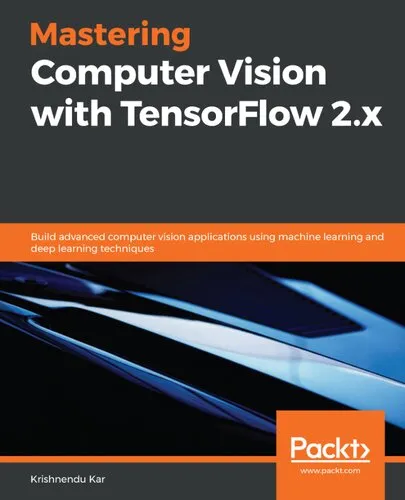
Mastering Computer Vision with TensorFlow 2.x: Build advanced computer vision applications using machine learning and deep learning techniques
Krishnendu Kar
English
Beginner
Machine Learning
4.6 / 5
0 reviews
2020
Published
419
pages
463
views
Apply neural network architectures to build state-of-the-art computer vision applications using the Python programming language Key Features Gain a fundamental understanding of advanced computer vision and neural network models in use today Cover tasks such as low-level vision,
Before you read
What will you get from this book?
Apply neural network architectures to build state-of-the-art computer vision applications using the Python programming language Key Features Gain a fundamental understanding of advanced computer vision and neural network models in use today Cover tasks such as low-level vision, image classification, and object detection Develop deep learning models on cloud platforms and optimize them using TensorFlow Lite and the OpenVINO toolkitBook Description Computer vision allows machines to gain human-level understanding to visualize, process, and analyze images and videos. This book focuses on using TensorFlow to help you learn advanced computer vision tasks such as image acquisition, processing, and analysis. You'll start with the key principles of computer vision and deep learning to build a solid foundation, before covering neural network architectures and understanding how they work rather than using them as a black box. Next, you'll explore architectures such as VGG, ResNet, Inception, R-CNN, SSD, YOLO, and MobileNet. As you advance, you'll learn to use visual search methods using transfer learning. You'll also cover advanced computer vision concepts such as semantic segmentation, image inpainting with GAN's, object tracking, video segmentation, and action recognition. Later, the book focuses on how machine learning and deep learning concepts can be used to perform tasks such as edge detection and face recognition. You'll then discover how to develop powerful neural network models on your PC and on various cloud platforms. Finally, you'll learn to perform model optimization methods to deploy models on edge devices for real-time inference. By the end of this book, you'll have a solid understanding of computer vision and be able to confidently develop models to automate tasks. What you will learn Explore methods of feature extraction and image retrieval and visualize different layers of the neural network model Use TensorFlow for various visual search methods for real-world scenarios Build neural networks or adjust parameters to optimize the performance of models Understand TensorFlow DeepLab to perform semantic segmentation on images and DCGAN for image inpainting Evaluate your model and optimize and integrate it into your application to operate at scale Get up to speed with techniques for performing manual and automated image annotationWho this book is for This book is for computer vision professionals, image processing professionals, machine learning engineers and AI developers who have some knowledge of machine learning and deep learning and want to build expert-level computer vision applications. In addition to familiarity with TensorFlow, Python knowledge will be required to get started with this book.Table of Contents Computer Vision and Tensorflow Fundamentals Content Recognition using Local Binary Pattern Face Recognition and Tracking using Viola Jones Algorithm & OpenCV Deep learning on images Neural Network Architecture & Models Visual Search using Transfer Learning Object Detection using YOLO Semantic Segmentation and Neural Style Transfer Action Recognition using Multitask Deep Learning Object Classification and Detection using RCNN Deep Learning on Edge Devices with GPU/CPU Optimization Cloud Computing Platform for Computer Vision
Ask this book
Your question is answered in the context of this title and author. Each answer uses 2 points.
Sign in to ask the book assistant.
Reader reviews
0 reviews, 4.6 average out of 5
No reviews yet
If you have read this book, help the next reader with your experience.
Write a review
Sign in to publish a review.
Reader questions and answers
Ask a focused question and learn from the community.
Sign in to ask or answer a question.
No questions yet
Be the first to ask a clear, useful question.
What to read next
Related references that continue this learning path.
Python Machine Learning. Machine Learning and Deep Learning with Python, scikit-learn and TensorFlow
Sebastian Raschka,Vahid Mirjalili
2017
View book
Learn TensorFlow 2.0: Implement Machine Learning And Deep Learning Models With Python
Pramod Singh,Avinash Manure
2020
View book