Principles and Practice of Managing Pain: A Guide for Nurses and Allied Health Professionals
Gareth Parsons,Wayne Preece
2010
View book
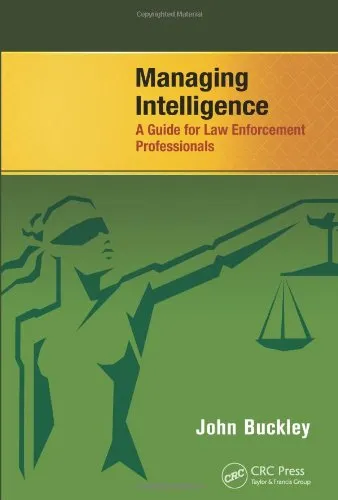
Book guide and evaluation
John Buckley
0 reviews
Published
pages
views
Welcome to an enlightening journey through the intricate world of intelligence management, specifically crafted for law enforcement professionals. In this comprehensive introduction to "Managing Intelligence: A Guide for Law Enforcement Professionals," we delve into the foundat
Before you read
Welcome to an enlightening journey through the intricate world of intelligence management, specifically crafted for law enforcement professionals. In this comprehensive introduction to "Managing Intelligence: A Guide for Law Enforcement Professionals," we delve into the foundations, methodologies, and innovations that are reshaping the way intelligence is managed within the realm of law enforcement.
The landscape of law enforcement is continually evolving, with intelligence playing a crucial role in shaping strategies and operations. "Managing Intelligence" provides a thorough exploration of this vital function, equipping law enforcement professionals with the necessary tools to adapt and excel in their roles. This book systematically unravels the complex nature of intelligence work, from data collection and analysis to decision-making and dissemination.
Our journey begins with a historical perspective, tracing the evolution of intelligence practices in law enforcement. This sets the stage for a deeper understanding of contemporary methods, including technological advancements that are revolutionizing the field. Detailed discussions cover the processes of gathering intelligence, turning data into actionable insights, and employing these insights to bolster public safety and operational efficiency.
Furthermore, the book addresses the ethical considerations and legal frameworks that govern intelligence operations, ensuring that practitioners are both effective and compliant. With an emphasis on real-world application, "Managing Intelligence" includes case studies and examples that illustrate successful practices and common pitfalls.
"Intelligence, in its most effective form, is not merely about information gathering but about insight creation, transforming data into wisdom."
"The value of intelligence lies not in its accumulation, but in its application with purpose and precision."
"Managing Intelligence" stands out as a pivotal resource for law enforcement professionals, offering a blueprint for navigating the complexities of intelligence work in today's fast-paced environment. As threats evolve and become more sophisticated, so too must the strategies and methodologies employed by those entrusted with public safety. This book offers not just theoretical knowledge but practical tools that can be directly applied to improve intelligence operations.
In a field where accurate and timely intelligence can make the difference between success and failure, "Managing Intelligence" serves as an indispensable guide for anyone committed to excellence in law enforcement. Its insights will not only enhance the capabilities of individual practitioners but will also contribute to broader organizational and societal safety.
Whether you are a seasoned intelligence officer, a law enforcement leader, or a policy maker, this book is designed to be your go-to resource. Equip yourself with the insights and tools needed to excel in managing intelligence and become a pivotal force in the ongoing efforts to protect and serve communities more effectively.
Persian Summary
Your question is answered in the context of this title and author. Each answer uses 2 points.
0 reviews, 5.0 average out of 5
Sign in to publish a review.
Ask a focused question and learn from the community.
Related references that continue this learning path.
Gareth Parsons,Wayne Preece
Don McGreal,Ralph Jocham