

Systems Engineering Principles and Practice (Wiley Series in Systems Engineering and Management)
Alexander Kossiakoff,William N. Sweet,Sam Seymour,Steven M. Biemer
2011
View book
Book guide and evaluation
Rudolph M. Navari (eds.)
0 reviews
Published
pages
views
Welcome to the comprehensive guide on managing chemotherapy-induced nausea and vomiting (CINV): Management of Chemotherapy-Induced Nausea and Vomiting: New Agents and New Uses of Current Agents. This book delves into the intricacies of CINV, offering cutting-edge insights into
Before you read
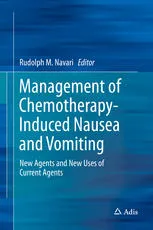
Welcome to the comprehensive guide on managing chemotherapy-induced nausea and vomiting (CINV): Management of Chemotherapy-Induced Nausea and Vomiting: New Agents and New Uses of Current Agents. This book delves into the intricacies of CINV, offering cutting-edge insights into new pharmacological agents and innovative uses of existing treatments.
The book is a meticulous compilation of emerging research and clinical practices that addresses the critical issue of CINV, a common and distressing side effect of cancer therapy. The narrative is structured to provide healthcare professionals, researchers, and students with an in-depth understanding of the mechanisms, challenges, and solutions associated with this condition. This volume explores both the traditional and the novel therapeutic strategies, emphasizing evidence-based approaches to enhance patient comfort and improve treatment adherence.
The initial chapters lay a foundation by discussing the pathophysiology of nausea and vomiting, detailing how chemotherapy impacts these physiological processes. Subsequently, the book evaluates established medications, such as 5-HT3 antagonists, NK1 receptor antagonists, and corticosteroids, scrutinizing their efficacy and safety profiles.
In subsequent sections, readers are introduced to new pharmacological agents that have shown promise in clinical trials. Experimental approaches, including cannabinoid use and the role of olanzapine, are scrutinized, offering readers a glimpse into future trends in CINV management. Each chapter is supported by case studies and a detailed analysis of clinical trials, underscoring practical applications across diverse clinical scenarios.
“Addressing the symptomatic burden of chemotherapy is vital not only for improving quality of life but also for maintaining the therapeutic efficacy of cancer treatment.”
“The future of CINV management lies at the intersection of pharmacology and individualized patient care.”
This book stands as a pivotal resource for anyone involved in the care of cancer patients. By providing an exhaustive review of both current and potential anti-nausea treatments, it equips clinicians with the necessary tools to tackle CINV effectively. As the landscape of cancer treatment evolves, so must the approaches to managing side effects. The book's focus on both present applications and future directions makes it an essential read for staying abreast of the advancements in oncology.
Furthermore, the emphasis on evidence-based practice ensures that readers can translate knowledge into real-world clinical improvements, ultimately reducing the incidence of treatment discontinuation due to intolerable side effects. By fostering an understanding of how to balance efficacy with quality of life, this book champions a patient-centric ethos in cancer care.
Your question is answered in the context of this title and author. Each answer uses 2 points.
0 reviews, 4.4 average out of 5
Sign in to publish a review.
Ask a focused question and learn from the community.
Related references that continue this learning path.
Alexander Kossiakoff,William N. Sweet,Sam Seymour,Steven M. Biemer

Alexander Kossiakoff,William N. Sweet,Sam Seymour,Steven M. Biemer

John M. Nicholas,Herman Steyn

John M. Nicholas,Herman Steyn